

Ofwat’s initiative is transforming UK water infrastructure using 3D printing technology.
- United Utilities and Scottish Water are utilising 3D printing for infrastructure projects.
- 3D printed parts improve cost efficiency and environmental impact for utilities.
- New printing hub at Wigan marks a significant step in 3D concrete printing.
- Innovative Printfrastructure Project is pioneering daily use of 3D printing.
United Utilities and Scottish Water are at the forefront of a technological transformation in water infrastructure, utilising advanced 3D printing techniques as part of Ofwat’s ambitious Water Breakthrough Challenge. This initiative, which began with the Printfrastructure project, aims to implement innovative 3D printing methods using both concrete and polymer materials for infrastructure development.
The PrintCity project at Manchester Metropolitan University is leading the way by developing replacement parts through 3D scanning and printing. Notably, United Utilities has successfully integrated components such as wastewater jet nozzles, CCTV skid plates, and water monitoring instrument troughs into their daily operations. This advancement allows companies to reduce dependency on external suppliers by producing essential components in-house, thus tackling issues related to equipment availability and rising costs.
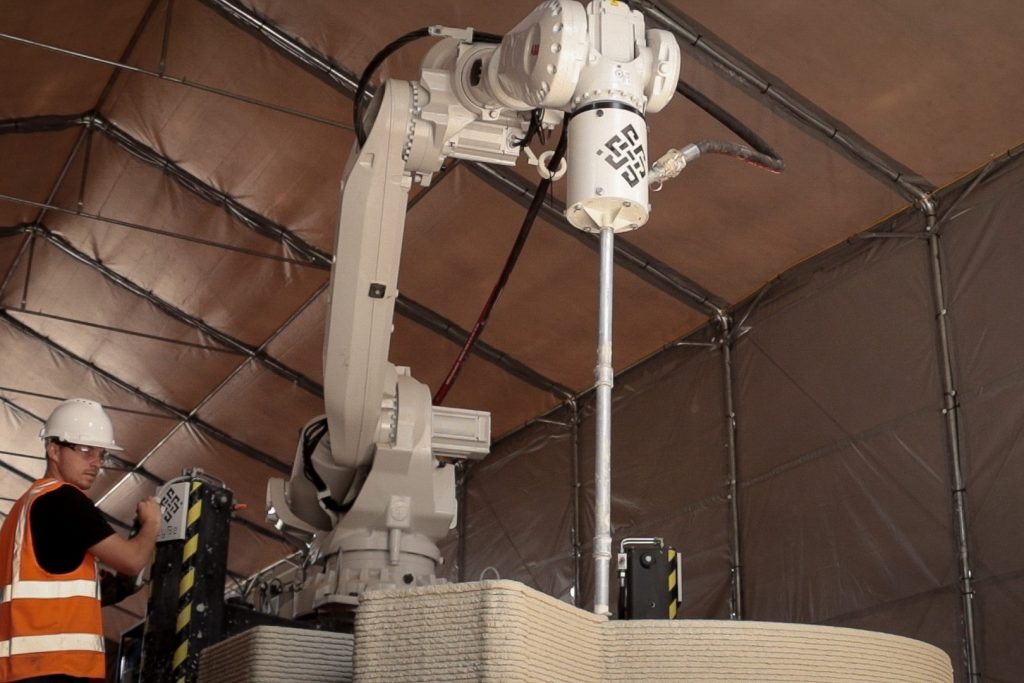
The strategic use of on-demand 3D printing not only boosts operational efficiency but also aids in achieving environmental objectives. By reducing material waste and shortening delivery times, these practices contribute to significant cost savings and a smaller ecological footprint. The establishment of a temporary 3D concrete printing hub at Wigan Wastewater Treatment Works showcases the industry’s commitment to exploring scalable solutions. This hub, created in collaboration with ChangeMaker3D, printed substantial infrastructure elements like sewer overflow chambers and containment walls, making them ready for implementation by United Utilities and Scottish Water.
Lisa Mansell, United Utilities’ chief engineer of innovation and carbon, noted the transformative potential of 3D printing, highlighting its ability to improve efficiency and environmental outcomes. The practical outcomes of this technology are already evident, with polymer spare parts delivering noticeable savings in carbon, cost, and labour. These innovations are set to redefine industry standards, as custom parts designed for better durability become part of standard practice.
Nick Hurst from PrintCity emphasised the project’s impact by turning 3D printing into a conventional tool within the sector, achieving significant savings and enhancing design durability. Similarly, Ian Watt from Scottish Water pointed out the substantial carbon, cost, and labour reductions achieved through these innovative methods, anticipating further scale-up and adoption across the sector.
3D printing is poised to become an integral part of sustainable and efficient water infrastructure development.
