
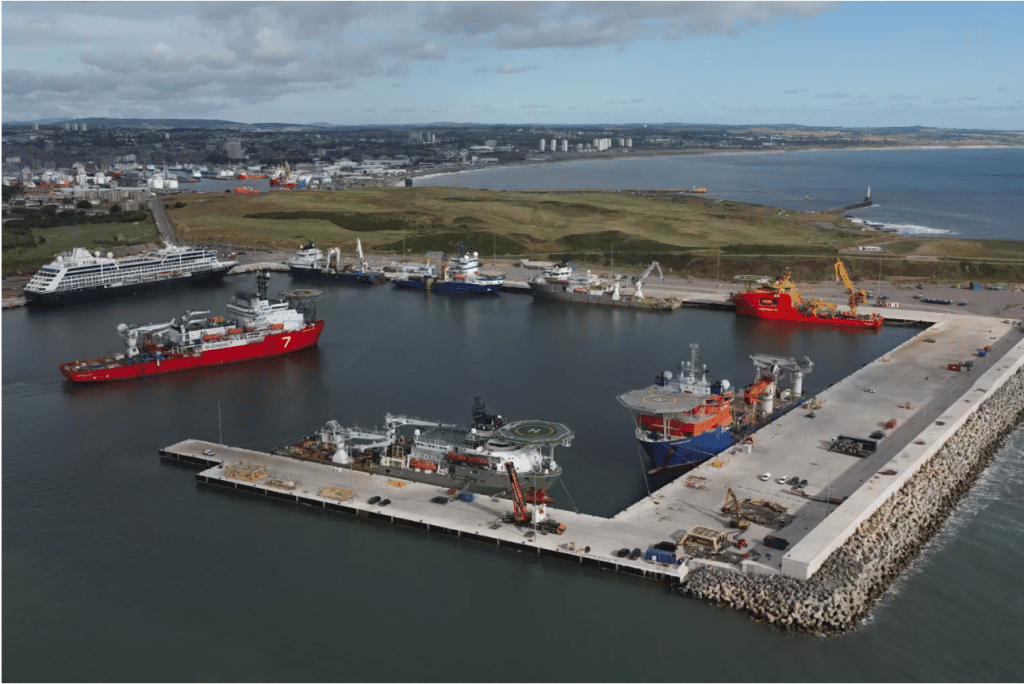

The UK must rapidly expand port infrastructure to meet offshore wind goals.
- Offshore wind is both a decarbonisation and economic opportunity for the UK.
- Floating wind technology could add £43.6bn and 29,000 jobs to the UK by 2050.
- Significant investment in ports is needed, with up to £4bn required by 2030.
- Centralised strategy and expedited processes are crucial for success.
The UK’s ambition to lead in offshore wind depends heavily on the rapid expansion of its port infrastructure. Currently, the nation only has a few ports capable of supporting the scale required for offshore wind farms. The urgency of the situation is underscored by the need to quickly ramp up port capabilities to match the demand for both fixed and floating offshore wind projects.
The potential of offshore wind extends beyond just decarbonising electricity supplies; it represents a significant economic opportunity. By embracing emerging technologies like floating offshore wind, the UK could see an economic boost of £43.6 billion by 2050, as analysed by the Offshore Renewable Energy (ORE) Catapult innovation centre. This growth in the wind sector could also create over 29,000 jobs, marking a substantial contribution to the economy.
However, such transformation requires massive investment in infrastructure. A report from the Floating Offshore Wind Taskforce projects that around £4 billion is needed to develop suitable port facilities by 2030. This investment is necessary not only to serve the Scottish waters and the Celtic Sea but also to capitalise on global green energy investments. Port redevelopment is a formidable task, with individual projects costing between £200M and £300M, but the possible returns are considerable and far-reaching.
The cooperation between offshore wind developers and their supply chains is critical in meeting the UK government’s decarbonisation targets by 2035. This cooperation hinges on equivalent investment in supporting infrastructure from the government. Two essential criteria for the success of port expansion projects are speed and openness. The infrastructure developed should be accessible to any renewable energy developer, avoiding bottlenecks and fostering innovation.
Speedy execution of port expansions is vital, given the time-sensitive nature of these developments. The conventional public-sector procurement processes often introduce delays incompatible with the urgent needs of this sector. To overcome this, a national procurement strategy could be implemented. Such a strategy would streamline processes, integrate various stakeholders, and offer a cohesive roadmap that aligns with the overarching goals of clean energy expansion.
For any offshore wind project, a comprehensive approach considering all influencing factors—including environmental assessments, grid connectivity, and stakeholder engagement—is essential. Drawing on experience from critical sectors, it’s evident that meticulous risk management, integrated planning, and active supply chain involvement are paramount to the successful delivery of these projects. With the right strategy in place, offshore wind could be transformative, providing renewable power and sustainable employment.
The right strategic approach can make port expansion a cornerstone of the UK’s renewable energy future.
