
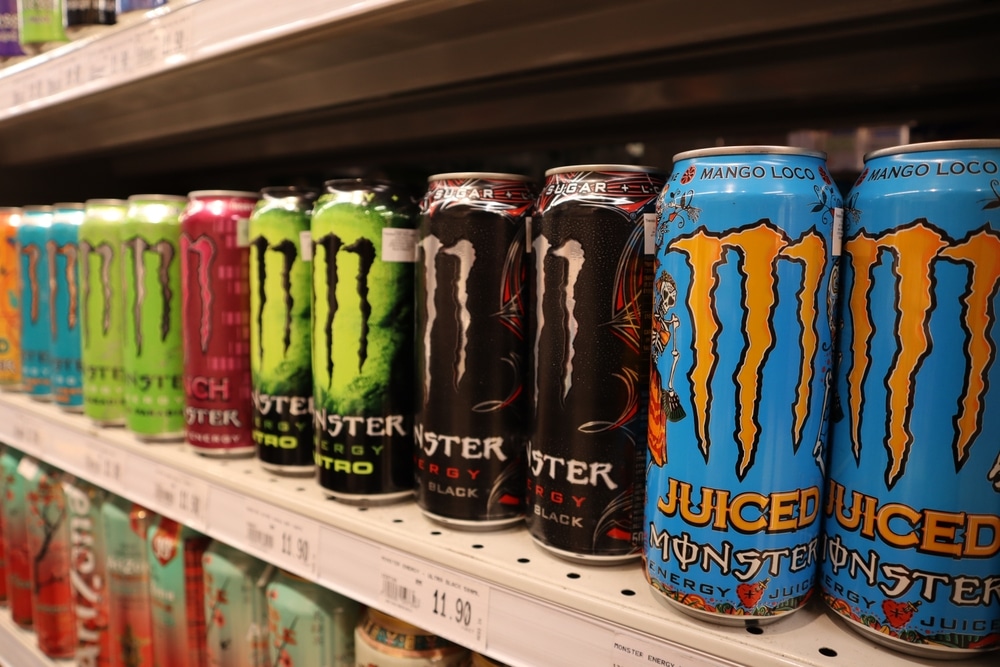

Monster Beverage encounters financial setbacks as demand wanes.
- Profit and sales fall short of Wall Street estimates amid consumer spending cuts.
- Net sales recorded at £1.45bn, narrowly missing the analyst’s forecast of £1.47bn.
- Adjusted profit per share reaches 40 cents, below the expected 43 cents.
- Company shares experience a 3% drop amidst these revelations.
In recent times, Monster Beverage has witnessed disappointing financial outcomes due to a noticeable decline in demand. This development has resulted in profits and sales figures that have not met Wall Street forecasts. As consumers continue to feel the pinch of the cost-of-living crisis, they appear to be shifting towards more affordable, non-branded alternatives, impacting Monster Beverage’s market performance.
For the third quarter, Monster Beverage reported net sales of £1.45 billion, falling short of the estimated £1.47 billion. The shortfall was identified based on data compiled by LSEG and reported by Reuters. This period of weaker performance underscores the challenges faced by the energy drinks company in maintaining its sales momentum amidst shifting consumer preferences.
The company’s adjusted profit was reported at 40 cents per share. This figure fell below analysts’ projections of 43 cents per share, underlining the pressure on the company’s profit margins. Following this announcement, Monster Beverage’s market shares saw a decline of approximately 3% as investors responded to the financial report.
These struggles are not isolated to Monster Beverage. Earlier this week, Coca-Cola Europacific Partners also reported mixed results, with third quarter sales inching up by a modest 2.4%, albeit facing challenges such as softer volumes in Europe due to variable weather conditions and changing consumer demand. Coca-Cola’s Chief Executive, Damian Gammell, acknowledged these difficulties while maintaining that the company experienced a ‘solid’ year overall.
Monster Beverage’s recent financial performance highlights the broader challenges faced by the beverage industry as consumer spending habits evolve.
