
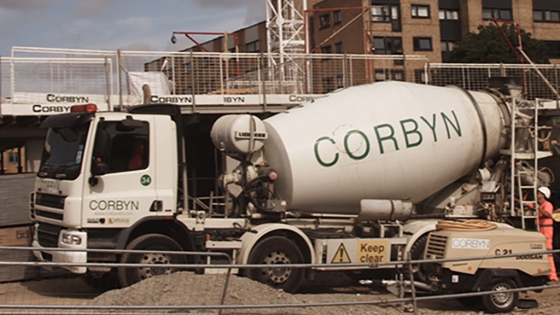

Corbyn Construction, a prominent London-based groundworks specialist, is poised to appoint an administrator following financial struggles.
- Despite a pre-tax profit of £435,000 in the year ending June 2023, Corbyn faces financial instability, as indicated by a recent notice of intention to appoint an administrator.
- The company’s previous financial year saw a significant £5.1 million loss, despite a turnover of £46.1 million.
- With a notable presence in London’s construction sector, Corbyn has worked with major clients including Hill, Weston Homes, and Telford Homes.
- The construction industry continues to face high insolvency rates, highlighting the fragile nature of current business models.
Corbyn Construction, a key player in London’s groundworks sector, is preparing to appoint an administrator after financial difficulties surfaced. The company managed a £435,000 pre-tax profit with a turnover of £32.8 million for the year ending in June 2023. However, they have recently filed a notice indicating an intention to appoint an administrator, signalling deeper financial troubles.
In the prior financial year, Corbyn Construction reported a stark contrast in their financial performance, recording a £5.1 million loss despite a higher turnover of £46.1 million. This downturn reflects ongoing challenges in the construction industry and perhaps issues specific to the company’s operations and management.
Corbyn Construction has made significant contributions to the capital’s skyline, delivering groundworks and concrete frameworks for mixed-use and residential buildings up to 29 storeys. Their clientele includes major developers such as Hill, Weston Homes, and Telford Homes, entities that have relied on Corbyn’s expertise for completing expansive projects.
The financial struggles of Corbyn highlight a broader trend within the construction sector, which suffers from the highest insolvency rates as noted by the Office for National Statistics. Despite a slight decrease in firms entering administration this year compared to last, the industry remains vulnerable, with business models described as “highly fragile” by experts.
This trend is evident as only 28 construction firms entered administration in October 2024, compared to 37 in the previous year, indicating some improvement but still reflecting underlying vulnerabilities that persist in the market.
The financial issues at Corbyn reflect broader sector vulnerabilities, stressing the fragile state of construction businesses today.
