
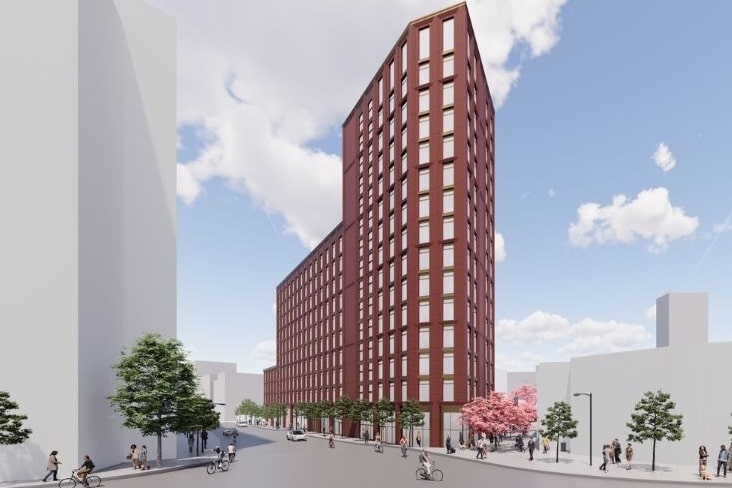

Birmingham’s student housing landscape is set for transformation as Sama Investment Group submits significant new plans.
- The proposed development, located in the city’s China Quarter, aims to create a mix of four, ten, and fifteen-storey buildings.
- This project targets a brownfield site on Pershore Street, with a vision to accommodate 301 students.
- Founder Bilal Ahmed highlights the strategic importance of supporting the local educational ecosystem and housing market.
- The development seeks to enhance Birmingham’s appeal to its vast student population of 183,000.
Birmingham is set for a potential transformation in its student accommodation offerings as Sama Investment Group recently submitted plans for a major development. The location for this ambitious project, the China Quarter, holds significant cultural and strategic value within the city. With its eye on the future, the planned construction will see a variety of buildings at four, ten, and fifteen storeys, bringing a modern touch to the area.
The use of a brownfield site on Pershore Street underscores a commitment to urban renewal and efficient land use. The plan is designed to provide housing for 301 students, addressing a critical need within Birmingham’s growing educational sector. By utilising previously unused land, the development promises not only new living spaces but also an enhancement to the city’s urban layout.
Bilal Ahmed, Sama Investment Group’s founder and executive chairman, emphasises that this initiative will do more than merely offer accommodation. “Our proposals for Pershore Street will transform this vacant brownfield site to deliver a flagship scheme that will bring much-needed student accommodation to the city, while also supporting the wider growth of the area,” he affirmed. Ahmed’s vision positions the project as a catalyst for broader urban and economic development, particularly within the vibrant Chinese Quarter.
This development is poised to significantly bolster Birmingham’s capacity to host its substantial student population, which numbers approximately 183,000. By providing high-quality living spaces, the project supports both the students and the city’s educational institutions. Furthermore, by focusing on accommodation, the initiative can potentially relieve pressure on the local housing market, freeing up rental properties for other city residents.
The project’s ambition reflects a forward-thinking approach to urban development, aiming not only to meet immediate housing needs but also to contribute to the long-term growth of Birmingham’s educational and residential landscape.
Sama’s proposal represents a transformative opportunity for Birmingham’s housing and educational infrastructure, marking a step forward in urban redevelopment.
