
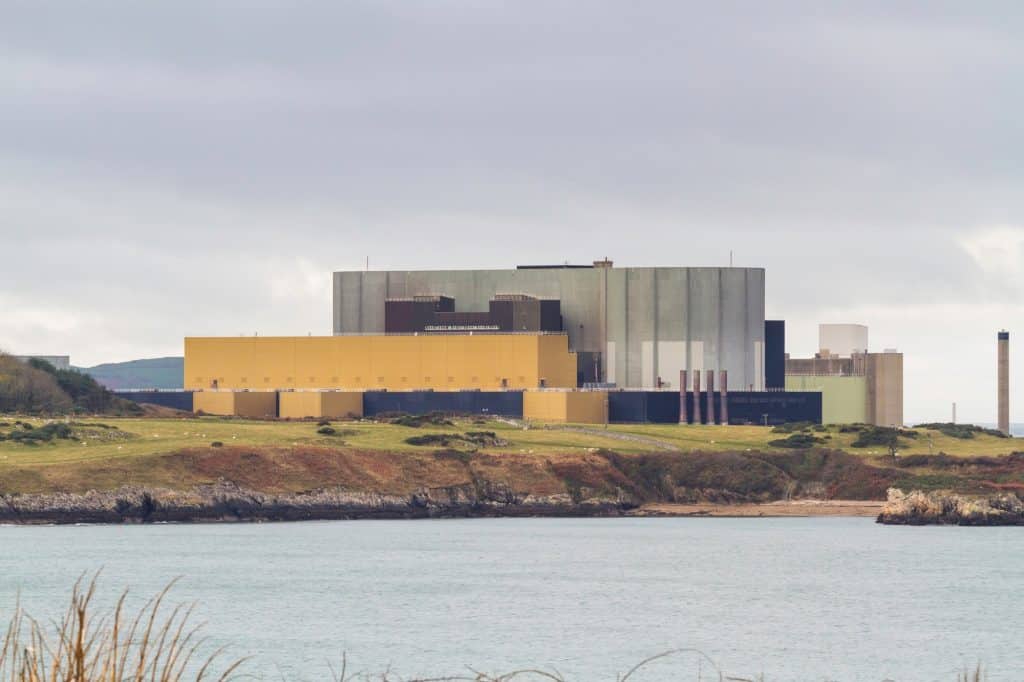

The Wylfa nuclear site on Anglesey faces significant waste storage challenges.
- Independent experts visited Wylfa to assess its current waste handling capabilities.
- The site, with its two reactors offline, is expected to undergo future nuclear development.
- Wylfa’s economic importance to Anglesey highlights the urgent need for improved waste facilities.
- Authorities assure safety but acknowledge current storage conditions are sub-optimal.
The Wylfa nuclear power site, a critical economic hub on Anglesey, is under scrutiny following a recent visit by the Committee on Radioactive Waste Management (CoRWM). This visit was part of their ongoing analysis of waste management practices across the UK. Experts noted the site’s pressing need for improved waste storage solutions.
Wylfa currently faces the reality of two inactive reactors—Reactor 2 ceased operations in 2012, while Reactor 1 was shut down in December 2015 after 44 years. Although the government has acquired the site for future nuclear endeavours, specifics regarding the scope, funding, and timeline of such projects remain unclear.
The CoRWM update highlighted that the nuclear power station at Wylfa was crucial for providing jobs, emphasising the potential impacts of any delays or changes in development plans on the local community. According to Sasha Wynn Davies of the Wales Nuclear Forum, Wylfa’s future development is vital for the island’s economic and social prosperity, whether through large-scale nuclear projects or small modular reactors.
While CoRWM confirmed that current waste storage is safe, they stressed that conditions are not optimal, as some waste is stored in makeshift sites. It was clarified that these materials are not nuclear fuels but other operational by-products. The committee was overall positive, describing the visit as enlightening, providing crucial insights for their future work.
Stuart Law, the site manager, was lauded for his long-standing commitment and knowledge of the plant’s operations. His experience, spanning 32 years, is seen as invaluable as the industry faces generational changes. The Nuclear Restoration Services (NRS), tasked with decommissioning Wylfa, views CoRWM’s observations as constructive, underscoring plans to build a new waste clearance facility.
Uncertainty looms over Wylfa’s future; discussions with South Korea’s Kepco for a gigawatt-scale plant are ongoing but not definitive. With a previous government committing to Wylfa for major nuclear projects, the current position remains ambivalent, with small reactors as a possibility. Such ambiguity necessitates a resolved approach toward waste management to maintain safety and efficacy.
Immediate attention to waste storage conditions at Wylfa is necessary to support its anticipated future development and safeguard its economic contribution to Anglesey.
