
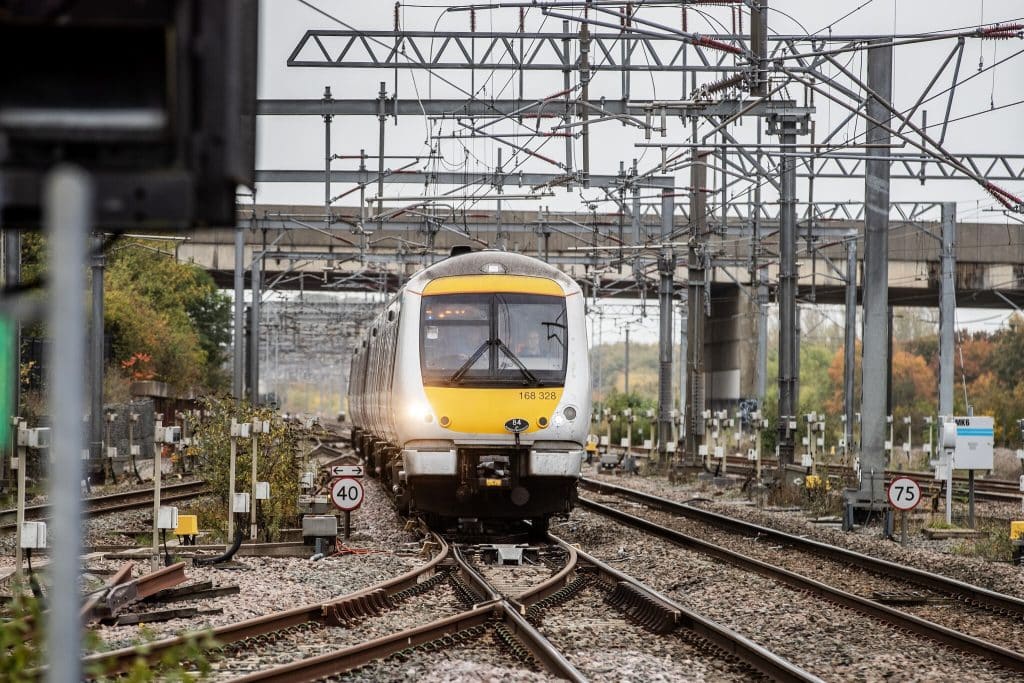

East West Railway Company (EWR Co) confirms electrification of the Oxford to Cambridge line.
- The line will utilise discontinuous electrification, balancing overhead and battery power.
- A 10-week non-statutory consultation on the project’s strategies is set to commence.
- This consultation will gather public feedback on future route developments and adjustments.
- The electrification aligns with the UK’s move towards a sustainable, low-carbon transport infrastructure.
The East West Railway Company (EWR Co) has officially declared the electrification of the new railway line connecting Oxford to Cambridge. This decision follows extensive deliberations and criticism regarding the initial plans for a diesel-powered railway, prompting a change towards a more environmentally friendly project.
Discontinuous electrification will be employed, which involves installing overhead line equipment (OLE) wherever feasible. This method powers trains electrically and simultaneously charges onboard batteries, enabling continuous travel even in sections where OLE installation is impracticable due to complex ground conditions or existing infrastructure obstacles. This method has proven successful in previous similar projects, notably on Transport for Wales’ Core Valley Lines.
EWR Co’s decision mitigates construction challenges and curbs visual disruption along the railway, especially in environmentally sensitive areas. However, the company is yet to specify the commencement date for the electrification work. The initial passenger services, which will run between Oxford and Bletchley/Milton Keynes, aim to start in 2025, albeit initially using diesel trains.
A 10-week consultation will begin on 14 November 2024, allowing stakeholders to review and comment on planned connections from Bicester to Cambridge. This consultation seeks to explore various facets such as new rail routes, infrastructure upgrades, station developments, and service pattern proposals. Feedback from these consultations will play a noteworthy role in shaping the further strategic approach of EWR Co.
During the consultation, EWR Co will host a series of events across the line’s route. These events are a part of their initiative to include public opinion in refining their railway planning to ensure it meets community and environmental needs. David Hughes, CEO of EWR Co, highlighted the consultation as a crucial step towards a sustainable rail system that supports the collective transport needs of the region.
This consultation and electrification strategy marks a significant step toward enhancing sustainable transport across the Oxford-Cambridge arc.
