
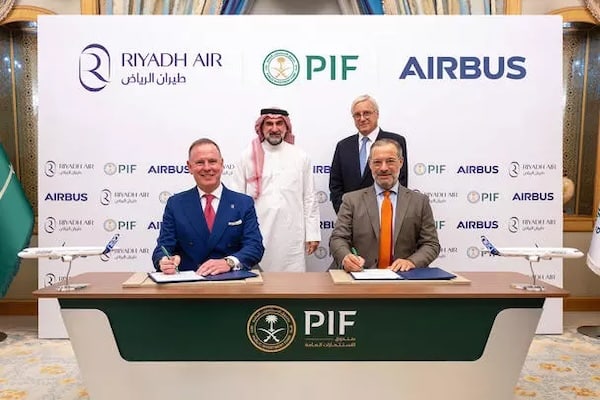

Riyadh Air has committed to a substantial investment in its fleet with a new order for Airbus aircraft. This strategic decision underscores the airline’s dedication to expanding its operations and reinforcing its market position. Notably, such an acquisition aligns with their broader ambitions.
The order includes 60 A321neo aircraft, known for their efficiency and sustainability benefits. By embracing these advancements, Riyadh Air aims to enhance its flight operations and satisfy growing market demands. Positioned as a significant player, the airline is set to launch operations by 2025 and extend its reach globally.
Riyadh Air’s Strategic Expansion
Riyadh Air’s recent agreement with Airbus foregrounds its strategic objectives within the aviation sector. The order entails 60 A321neo aircraft, part of a sweeping initiative to build a modern fleet. Recognised for its superior efficiency, the A321neo bolsters Riyadh Air’s commitment to sustainability while enhancing operational reach. Riyadh’s sights are set on a significant presence globally, aligning with its network strategy for over 100 destinations by 2030.
This substantial Airbus order complements Riyadh Air’s previous acquisition of 39 Boeing 787-9 Dreamliners. Such investments highlight an aggressive expansion tactic aimed at fortifying Saudi Arabia’s aviation presence. The combined fleet, set for operation in 2025, signifies a robust infrastructure prepared for the demands of international travel.
Incorporating these new aircraft into its lineup, Riyadh Air aims to achieve smooth flight operations across its burgeoning network. Detailed planning and strategic partnerships underscore this ambitious undertaking. With aviation at a transformational phase, Riyadh Air’s proactive measures aim to redefine air travel standards.
Economic Impact and Sustainability
Riyadh Air’s order is seen as a catalyst for economic growth within the region. The implementation of new technologies in their fleet aligns with global trends towards eco-friendly aviation solutions. Ensuring one of the industry’s most sustainable fleets, Riyadh Air’s strategy responds to increasing environmental concerns.
The airline’s latest fleet acquisitions underline its dedication to Saudi Arabia’s 2030 Vision, emphasising economic diversification. This move supports both local industry growth and global aviation trends.
Sustainability remains central to Riyadh Air’s mission. By integrating the A321neo, known for reduced emissions, the airline commits to minimising its environmental footprint. Such proactive steps reflect broader industry shifts towards greener aviation practices.
Leadership Perspectives
Guidance from Riyadh Air’s leadership team has been pivotal in navigating this substantial aircraft acquisition. Chief Executive Tony Douglas articulates confidence in the airline’s role within the industry’s evolution, emphasising its commitment to sustainability and economic impact.
Douglas highlighted the purchase as a step towards achieving operational excellence and boosting the Saudi Arabian aviation landscape. His forward-thinking approach ensures Riyadh Air is positioned as a frontrunner in innovation and efficiency.
Under Douglas’s management, Riyadh Air is set to play a crucial role in regional aviation development, with strategic frameworks poised to support continuous growth.
Collaborations and Partnerships
Riyadh Air’s agreement with Airbus showcases significant partnership potential, laying a foundation for future collaborations. Such alliances are integral in harnessing technological advancements within aviation.
This partnership marks a pivotal step in Riyadh Air’s strategic goals, encouraging a collaborative ethos that benefits all stakeholders involved.
By working collectively with industry giants like Airbus, Riyadh Air leverages technology to enhance service delivery and achieve operational success.
The Saudi Vision 2030 Alignment
The airline’s ambitious fleet development is in harmony with Saudi Arabia’s Vision 2030, aiming to transform economic dynamics and diversify its portfolio. This alignment underscores Riyadh Air’s role as a catalyst in driving national objectives.
Through this multi-billion dollar investment, the airline not only expects to enhance international connectivity but also foster economic resilience.
Aligning with Vision 2030, Riyadh Air seeks to invigorate the kingdom’s tourism industry while promoting sustainable practices. This initiative illustrates a forward-thinking approach to national development.
Addressing Market Demands
Riyadh Air’s strategic expansion responds to surging market demands, with a focus on meeting global customer expectations through modern fleets and enhanced service standards.
The order reflects insights into passenger preferences, prioritising comfort and eco-friendliness, crucial for maintaining competitiveness.
In a dynamic aviation market, the airline’s responsive strategy is designed to offer superior customer experiences, fulfilling growing demands with precision.
Stakeholder Perspectives
Industry stakeholders express optimism about Riyadh Air’s potential impact on the aviation landscape. Analysts view the order as a positive indicator of the airline’s commitment to addressing modern travel needs.
Stakeholders see Riyadh Air’s approach as a progressive step, with the potential to reshape industry standards.
Their support is echoed in industry discussions highlighting Riyadh Air’s alignment with global aviation advancements.
Technological Innovations
Technological integration is at the heart of Riyadh Air’s expansion, with a focus on efficiency and passenger comfort. The A321neo’s capabilities enhance operational dynamics, positioning the airline at the forefront of innovation.
The aircraft’s inclusion marks a significant milestone in the airline’s technological journey, capitalising on advancements to improve service quality and sustainability.
These innovations are pivotal in driving Riyadh Air’s competitive edge, reflecting the broader industry shift towards advanced, eco-conscious aviation solutions.
Strategic investments in cutting-edge technology empower Riyadh Air to set new benchmarks in the market. The airline thus exemplifies an adaptive, progress-driven model essential for future success.
Global Aviation Ecosystem Contribution
Riyadh Air’s activities contribute significantly to the global aviation ecosystem, showcasing a commitment to advancing the sector. Such efforts align with international sustainability and efficiency goals.
The airline’s strategic moves are indicative of broader trends within the aviation industry, highlighting its role in shaping future travel landscapes.
By integrating modern fleets, Riyadh Air enhances global connectivity, reinforcing its position within the international aviation community.
Future Prospects
Looking ahead, Riyadh Air’s trajectory suggests a promising future underpinned by strategic investment and innovation. The airline is well-placed to address future aviation challenges confidently.
As global travel dynamics evolve, Riyadh Air’s comprehensive strategy prepares it for enhanced operational capabilities, aligning with emerging trends.
The airline’s sustained focus on sustainability and expansion positions it advantageously for future opportunities. Riyadh Air’s ongoing developments are poised to leave a lasting impact on the aviation industry.
Riyadh Air’s strategic initiatives mark a promising era for Saudi aviation, aligning with global trends. The airline’s investments in modern fleets not only enhance operational efficiency but also support sustainability goals. As preparations for its 2025 launch progress, Riyadh Air is poised to redefine air travel standards.

