
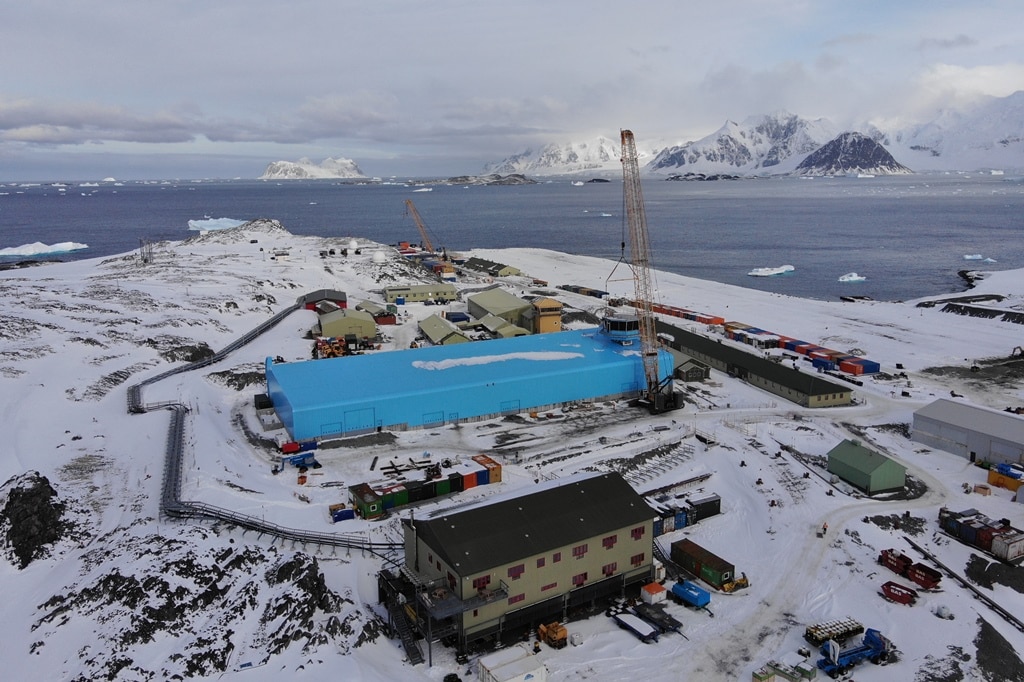

Specialist teams have embarked on a significant construction project in the icy environment of Antarctica.
- The main focus is the completion of the Discovery Building at the Rothera Research Station, enhancing scientific operations.
- Construction efforts include clearing accumulated snow and finalising both interior and exterior elements.
- Advanced systems are being tested to ensure the building is ready for use by April 2025.
- This initiative is part of a broader modernisation programme aimed at transforming Antarctic research.
The onset of a new construction season in Antarctica sees specialist teams arriving at the Rothera Research Station. Their primary objective is the completion of the Discovery Building, a state-of-the-art scientific support facility poised to bolster the station’s operations. Initially, the teams must contend with the harsh Antarctic conditions, beginning with the clearance of snow that has accumulated over the winter months.
By November, the construction focus will shift towards completing the building’s interior, installing cutting-edge systems, and finalising the wind deflector and roof. These systems are crucial for the building’s operation, as they will undergo rigorous testing to ensure everything is ready for British Antarctic Survey’s (BAS) needs by April 2025. Such detailed work necessitates expertise and precision, given the extreme fluctuation in temperatures that characterise the region, ranging from minus 22 to plus 15 degrees Celsius.
Main contractor Bam, alongside consultants from Ramboll, Sweco, GA Barnies, Turner & Townsend, and Hugh Broughton Architects, spearheads this ambitious project. The Discovery Building represents a crucial phase in BAS’s ongoing modernisation efforts, which have already seen significant milestones such as operational wharves at King Edward Point and Rothera. These have been upgraded to accommodate the new RRS Sir David Attenborough vessel.
The Rothera runway also saw enhancements, being resurfaced with improved lighting and drainage systems, which are designed to optimise snow removal operations. Such improvements are integral to maintaining essential access and logistics capabilities in this remote region.
The Discovery Building itself is designed to meet the evolving demands of the scientific community. It features integrated spaces for offices, training, recreation, and medical facilities, all managed by an intelligent building system. This system adapts to variable occupancy, ensuring efficient use of resources throughout the Antarctic seasons.
Elen Jones, the programme director at BAS, has expressed excitement over the progress made and the impending operational readiness of the Discovery Building. This project symbolises a leap forward in Antarctic research capabilities, promising to support vital scientific work for many years to come. Johannes Smit, construction manager with Bam, noted the substantial progress and the team’s dedication, even through winter, to position the building for commissioning. They are currently focused on seamless integration and optimisation of all building systems.
The Discovery Building’s completion marks a significant stride in enhancing the operational capacity of Antarctic research, underscoring a commitment to scientific advancement in one of Earth’s most challenging environments.
