
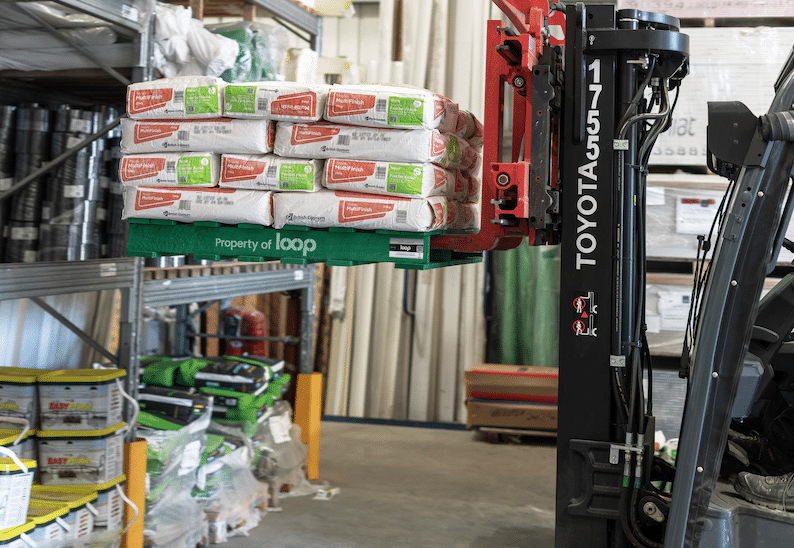

The delivery method for some building materials in the UK is undergoing significant changes, marking a pivotal shift towards sustainability.
- British Gypsum has begun using The Pallet LOOP’s reusable pallets for transporting products, starting with bagged plaster as early as May.
- By July, plasterboard deliveries will also utilise these circular economy pallets, addressing long-standing disposal issues in the industry.
- Annually, 20 million pallets are used in UK construction with the majority ending up as waste, highlighting the importance of this new approach.
- The Pallet LOOP’s initiative not only offers environmental benefits but also financial incentives, encouraging broader adoption across the industry.
The construction industry’s handling of building materials is set to become more sustainable, thanks to a new initiative aimed at reducing pallet waste. This summer, a notable change is taking place with the introduction of reusable pallets from The Pallet LOOP, specifically used for transporting British Gypsum products.
Initially, these green pallets were employed for the distribution of bagged plaster starting in early May. By July, British Gypsum expanded this eco-friendly approach to include plasterboard, marking a significant step towards sustainable logistics in the sector.
The current practice in UK construction involves the use of approximately 20 million pallets annually. Worryingly, 90% of these pallets are discarded after only a single use. This approach has long been criticised for its inefficiency and environmental impact, making The Pallet LOOP’s solution a welcome innovation.
The Pallet LOOP has designed a range of durable, reusable pallets that integrate into a circular economy. These pallets come with an efficient collection service, capable of retrieving pallets from construction sites within 72 hours. This not only streamlines the process but also substantially cuts down waste.
Each green pallet collected by The Pallet LOOP can earn up to £4 per pallet for principal contractors, housebuilders, and merchants, providing a financial incentive alongside the savings from reduced waste disposal costs. The initiative also includes the collection of white pallets, demonstrating a commitment to inclusivity and comprehensive waste reduction.
Projections suggest that by next year, over a million of these green pallets will circulate within the construction sector, with expectations for further growth as more manufacturers join the programme. This points to a transformative time for the industry as it pivots towards greener practices.
The UK’s construction industry is poised for a transformative shift towards sustainability with reusable pallets.
