

Northern Ireland’s Anamore diversifies to tackle concrete crises, extending services to address defective blocks like mica and pyrite.
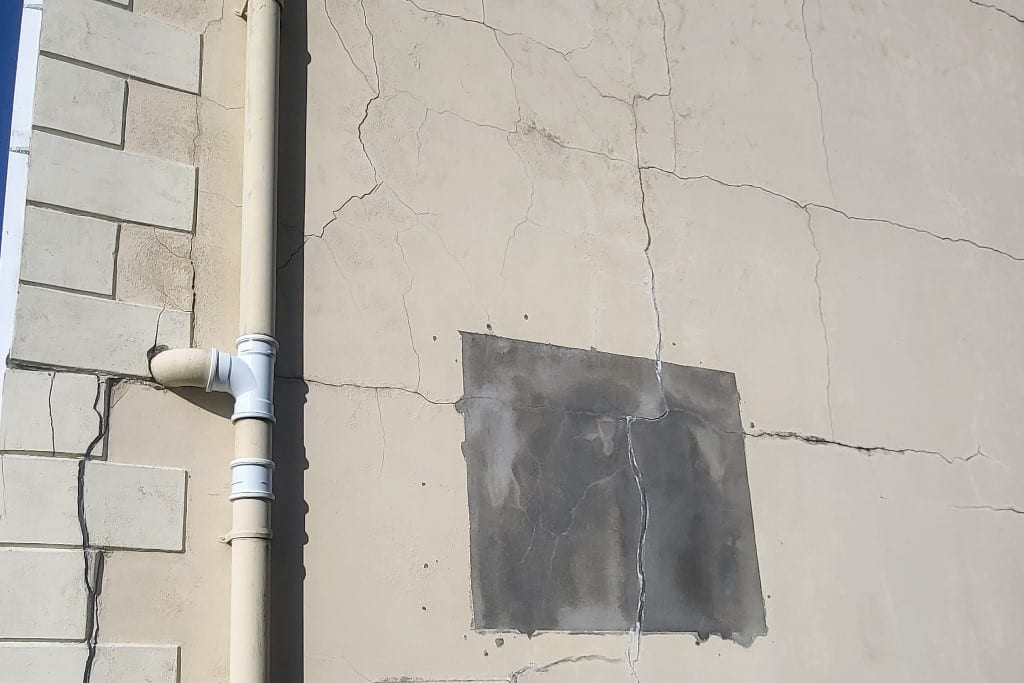
- High mica content, noted since 2013, led to cracked and crumbling concrete in County Donegal homes and buildings, including key public structures.
- Ireland’s government response included a 2020 compensation scheme, aiding homeowners in repairing properties affected by mica damage.
- Anamore offers remediation strategies: reconstructing outer walls or total rebuilds for severely affected homes, enhancing support under this scheme.
- Director James McCallan emphasizes crucial quality and regulatory standards to restore damaged homes.
The mica crisis in Ireland first emerged in 2013 in County Donegal, where concrete blocks in approximately 7,500 homes and other buildings such as schools and hospitals began to reveal significant structural damage. The visible deterioration, ranging from cracks to complete disintegration, rendered these structures unsafe and often uninhabitable. A governmental panel identified the high mica content in the aggregates as the primary cause, leading to the launch of a compensation scheme in 2020 designed to assist affected homeowners financially.
Despite the introduction of the compensation scheme, progress has been slow, with only about 230 homes having undergone repair out of the 1,900 that applied for aid. In this challenging context, Anamore has stepped forward to offer two main remediation options within the scheme framework. For properties with minor mica issues, the solution involves removing and reconstructing the outer leaf block walls down to the rising block walls, followed by re-rendering. This method is intended to restore the structural integrity without complete demolition.
For homes suffering from high levels of mica, Anamore proposes a more comprehensive solution involving the full demolition of the structure down to the foundation, followed by a complete reconstruction. This approach ensures that severely affected dwellings are entirely rebuilt to meet current regulatory standards. The goal is to provide homeowners not only with restored living spaces but with confidence in the safety and longevity of their homes.
James McCallan, Anamore’s co-founder and director, highlighted the unsettling impact of the crisis on communities. He emphasized the importance of the redress scheme in aiding the rebuilding process. McCallan stated, “The mica crisis has been a devastating time for many homeowners and communities across the northwest. To see load-bearing blocks crumble and large cracks appear on dwellings is an unsettling experience, but with the redress scheme now in place we hope that we can support these communities and rebuild their homes.” He stressed that ensuring structural integrity and compliance with quality standards is vital for reassuring homeowners of their homes’ future resilience.
Anamore’s initiatives signify a crucial step towards resolving the mica crisis, restoring safety and stability to affected communities.
