
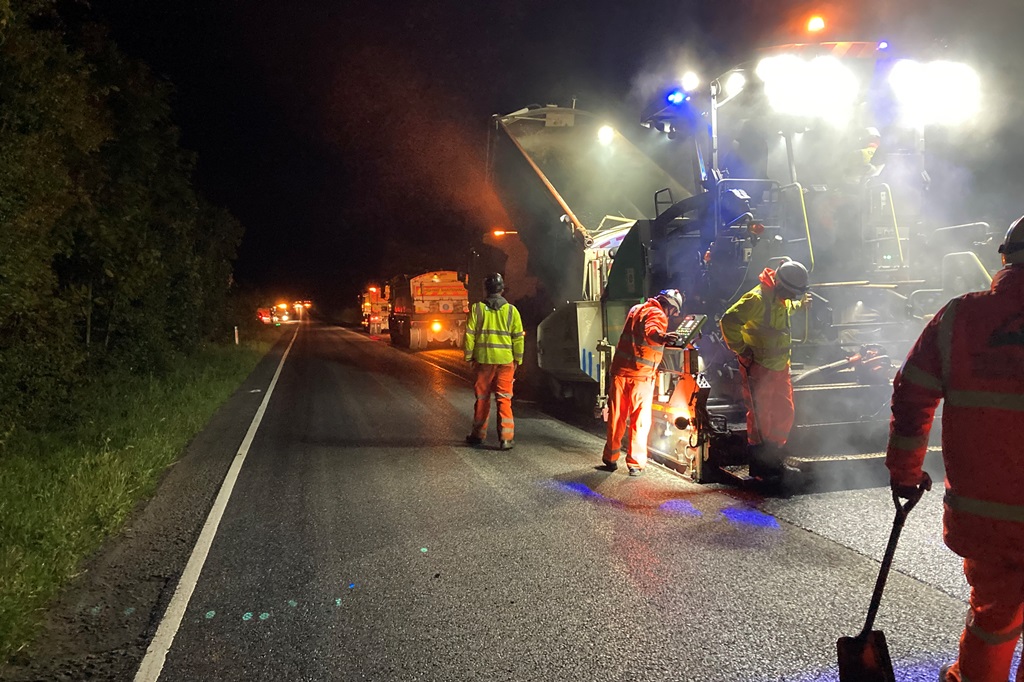

National Highways is trialling bio-binders with warm mix asphalt and recycled content to meet net zero goals.
- Trials include new eco-friendly asphalt mixes on key roads like the A2 and A34, featuring innovative materials.
- Bio-binders lock in CO2, not releasing it even when asphalt is recycled, which boosts sustainability.
- These trials aim to enhance asphalt durability and reduce maintenance frequency, cutting carbon emissions by 26%.
- Monitoring and lab testing are underway to compare new mixes against standard versions for performance and carbon impact.
National Highways is extending its trials using bio-binders in combination with warm mix asphalt and recycled content to promote environmentally friendly road construction methods. The trials, aimed at meeting the organisation’s net zero objectives, involve incorporating bio-binders into asphalt mixes. These substances contain biogenic material that absorbs CO2, ensuring the gas remains trapped and does not return to the atmosphere during recycling.
The trials on the A2 near Canterbury and A34 near Newbury feature several different compositions, including standard warm mix asphalt, CarbonLock PMB hot mix asphalt, and CarbonLock PMB asphalt with varying recycled asphalt content. Notably, the A34 trials explored options with up to 30% reclaimed asphalt, offering a significant step towards circular road construction practices.
Heidelberg Materials provided the trial asphalt mixes, which are expected to enhance durability and reduce the frequency of maintenance. This not only improves the lifespan of road surfaces but also contributes to a sizeable decrease in carbon emissions, reportedly cutting them by around 26% during the A2 and A34 projects.
In total, over 2,000 tonnes of CarbonLock asphalt were laid across both sites. The performance of these innovative materials is being closely monitored by National Highways in cooperation with the University of Nottingham and AtkinsRéalis Jacobs Joint Venture. These investigations are seeking to establish not only the environmental benefits but also the long-term economic advantages of adopting such advanced materials in mainstream roadworks.
The trials align with statements from experts like Adrian Hadley of Heidelberg Materials, who emphasised the importance of reducing the carbon impact of road maintenance. Umesh Parajuli from National Highways highlighted the successful performance of CarbonLock on previous projects and hopes that these developments will lead to the integration of low carbon solutions into official specifications.
These trials mark a significant advancement towards sustainable road construction, reflecting an essential shift in industry practices.
