
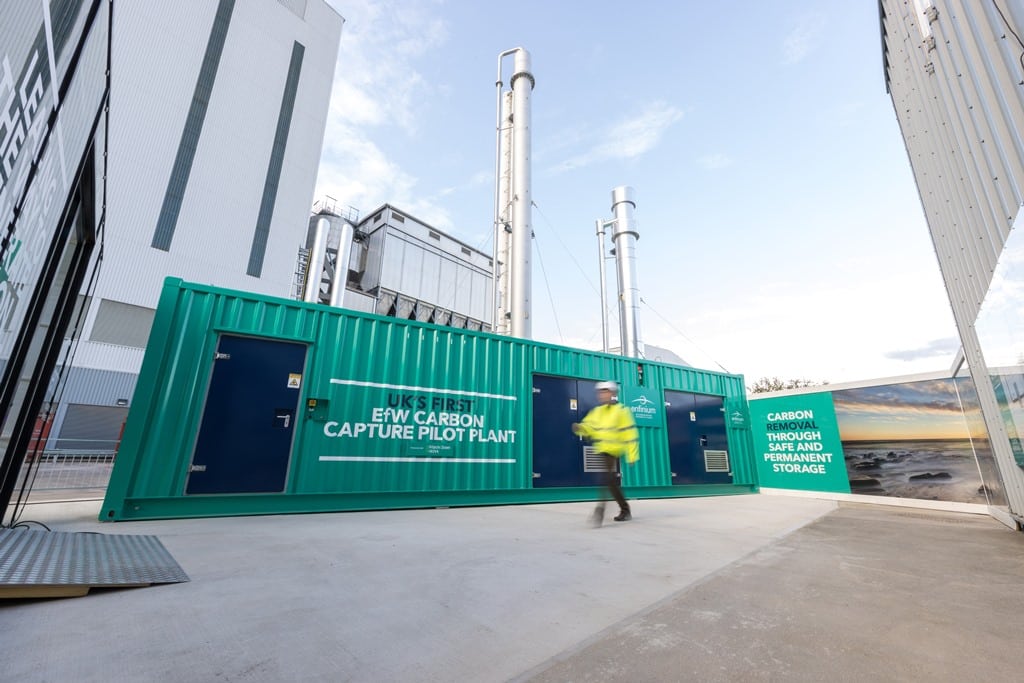

The initiation of the UK’s pioneering carbon capture pilot at a waste-to-energy facility marks a significant step in environmental innovation.
- The Ferrybridge-1 incinerator in West Yorkshire now hosts carbon capture technology, capturing one tonne of CO2 daily.
- This pilot aims to test scalability and gather vital performance data over a period of at least 12 months.
- The project seeks to achieve net zero by providing significant carbon removals through advanced CCS technology.
- Industry leaders view this as a pivotal moment for CCS deployment in energy-to-waste initiatives.
The launch of the carbon capture pilot at the Ferrybridge-1 incinerator, operated by Enfinium, signifies a major advancement in the UK’s efforts to integrate sustainable practices within its waste-to-energy sector. Located in Knottingley, West Yorkshire, the pilot employs technology from Hitachi Zosen Inova, aimed at capturing one tonne of CO2 emissions daily. This initiative highlights the potential for expanded use across Enfinium’s six energy-generating incinerators, supporting the broader goal of reduced emissions.
The primary objective of this pilot is to gather comprehensive operational data, focusing on the CO2 capture rate and the degradation of solvents. By assessing the performance of different amine solvents, the project is set to run for at least 12 months, enabling Enfinium to evaluate the practicality and efficiency of scaling up the technology. The insights gained from this trial are expected to forge the path towards a significant reduction in carbon emissions.
Mike Maudsley, chief executive of Enfinium, emphasised the critical role of carbon capture and storage (CCS) technology in the UK’s decarbonisation strategy, particularly concerning unrecyclable waste. He remarked, “CCS is also critical to generating carbon removals at scale so the UK can achieve net zero. Using carbon capture, the energy from waste sector can provide significant levels of carbon removals.” His comments reflect a strategic vision where CCS technology is integral to the waste-to-energy sector’s contribution to the UK’s net zero objectives.
Bruno-Frédéric Baudouin, chief executive of Hitachi Zosen Inova, reiterated the importance of this project, describing it as an exciting endeavour that aligns with global decarbonisation goals. He stated, “Our vision is to enhance decarbonisation, circularity and supply security for present and future generations, and this project embodies perfectly what we are striving for.” Such endorsements from industry leaders underscore the transformative potential of CCS technology in the waste management industry.
With the strategic backing of the Carbon Capture & Storage Association, represented by chief executive Olivia Powis, the Ferrybridge project stands as a landmark achievement. She noted the project’s role in generating clean power and establishing a viable greenhouse gas removal market, marking it as a crucial step towards meeting the UK’s clean power targets by 2030. This project not only sets a precedent for future initiatives but also solidifies the UK’s commitment to mitigating environmental impacts through innovative technology.
In conclusion, the Ferrybridge carbon capture initiative represents a fundamental advancement in sustainable waste management, setting a benchmark for future projects.
