
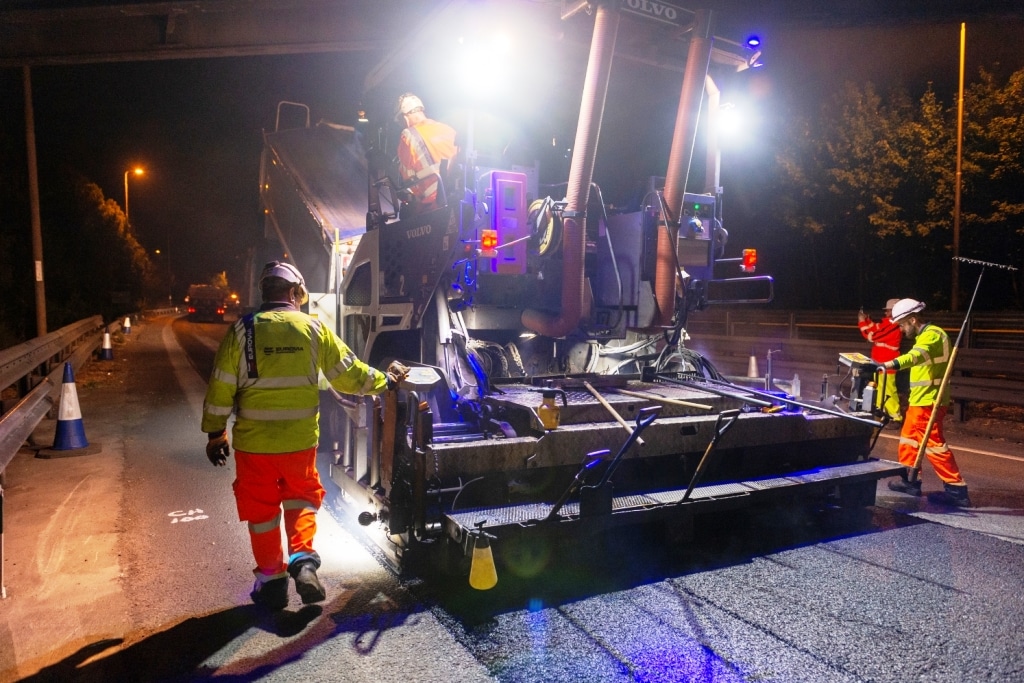

The A12 has become a testing ground for advanced road construction with the introduction of graphene-enhanced asphalt, a result of National Highways’ commitment to innovation.
- Following extensive trials across the UK, this cutting-edge material promises to extend road life and potentially revolutionise maintenance strategies.
- Cost-analysis studies reveal significant long-term savings despite higher initial costs, marking a transformative shift in road infrastructure management.
- Partnerships with leading industry and research institutions underscore the collaborative effort to assess this technology’s impact on durability and sustainability.
- This initiative supports a broader environmental strategy, aligning with carbon reduction targets and showcasing modern construction methodologies.
National Highways has implemented an innovative trial by resurfacing a section of the A12 with graphene-enhanced asphalt, marking a significant step in advanced road construction. This initiative follows several successful local authority trials in Oxfordshire, Kent, Staffordshire, and Essex, underscoring a commitment to integrating cutting-edge technology into national infrastructure.
Developed by Italian asphalt producer Iterchimica and graphene specialist Directa Plus, Gipave is a polymeric additive containing graphene—a material renowned for its strength, often described as stronger than steel. Its previous consideration for use on the M25 highlights ongoing interest in its potential benefits despite prior setbacks.
Last month, 1km of the A12’s northbound route, between Hatfield Peverel and Witham, was resurfaced using Gipave in conjunction with 40% reclaimed asphalt. Studies indicate this approach could reduce whole-life costs by 32%, suggesting compelling economic advantages over traditional materials.
This trial is part of the SPaTS 2 research initiative, which investigates emerging low-carbon asphalt products. The experiment is unique in adopting both hot and warm mix technologies, facilitating a comprehensive performance evaluation. Industry partners, including Eurovia, Jean Lefebvre (UK), AtkinsRéalis, Iterchimica, and Directa Plus, contribute their expertise to this endeavour.
Eurovia UK leads the A12 trial efforts, supported by Jean Lefebvre UK in mix design. Technical oversight by consulting engineer AtkinsRéalis includes comparing Gipave-enhanced asphalt against standard polymer-modified bitumen. Collaborative coordination by AtkinsRéalis-Jacobs is essential to monitoring and testing facilitated by the University of Nottingham and Jean Lefebvre UK, ensuring rigorous evaluation.
The previous exploration of graphene’s potential by National Highways includes repaving a section of the A1 using a graphene-enriched recycled asphalt mix in 2021. This earlier trial, organised by the Graphene Engineering Innovation Centre and Pavement Testing Services, set a precedent for utilising graphene in road construction.
Umesh Parajuli, the A12 project sponsor from National Highways, emphasised the trial’s alignment with strategic objectives of safety, customer satisfaction, and delivery efficiency. The adoption of innovative materials is seen as crucial for enhancing road durability whilst lowering carbon emissions, contributing to the 2040 net zero target.
Michael Wright, technical director at AtkinsRéalis, stated that the trial represents a pivotal move towards advanced construction techniques that promise substantial improvements in road durability, while fostering sustainability through a circular economy approach. Giulio Cesareo of Directa Plus reiterated Gipave’s role in advancing infrastructure towards eco-friendly solutions, enhancing road sustainability.
This pioneering trial on the A12 exemplifies a forward-thinking approach to sustainable road construction, potentially setting new standards for the industry.
