

With the world focused on the Paris Olympics, attention turns to extraordinary venues.
- The Grand Palais, originally built for a World’s Fair, is now a key venue for fencing and taekwondo.
- The Stade de France underwent significant upgrades to become the athletics and rugby hub.
- Adidas Arena boasts eco-friendly features, supporting sustainability goals.
- Infrastructure enhancements, including the Metro extension, improve accessibility for millions.
As the Paris Olympics draw near, global attention is riveted not only on the athletic prowess to be displayed but also on the venues hosting these events. Among the standout locales is the Grand Palais, a Beaux Arts marvel initially crafted for the 1900 Paris World’s Fair. Now serving as the stage for fencing and taekwondo, this structure, renowned for its vast glass roof, has been meticulously restored under the guidance of Chatillon Architectes. Leading the project, Antonin Gilles highlighted the intricate balance of modernising while preserving historical grandeur, a task complicated by both the building’s heritage and its contemporary functionality.
The Stade de France, originally inaugurated for the 1998 Football World Cup, has been transformed to serve as a focal point for Olympic athletics and rugby events. This transformation involved the replacement of the stadium’s iconic red track with a state-of-the-art nine-lane purple track, enhancing its visual and functional appeal.
Further bolstering Paris’s Olympic infrastructure is the Adidas Arena at Porte de la Chapelle, distinguished by its commitment to sustainability. This multipurpose facility, crafted largely from low-carbon materials, features extensive greenery coverage and a bespoke geothermal energy plant, exemplifying the eco-conscious ethos permeating much of the 2024 preparations.
The extension of Metro Line 14 stands as a critical advancement in Paris’s transportation network, having doubled in length to improve accessibility. This enhancement promises to accommodate a substantial increase in passenger flow, anticipated to reach one million daily commuters by 2025.
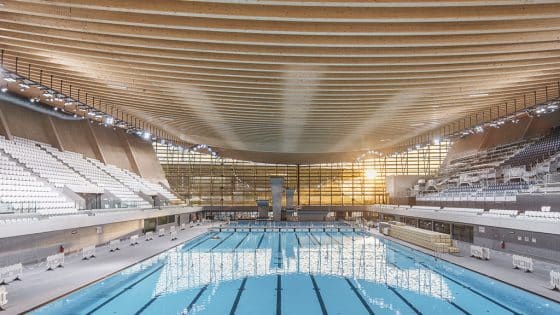
In addition to these, the construction of the Olympic Aquatic Centre showcases innovative use of bio-sourced materials, fulfilling more than a quarter of its electricity needs through photovoltaic technology. This venue is set to host marquee swimming and water polo events, continuing to serve the community beyond the Olympics.
The Paris Olympics venues not only celebrate sporting excellence but also architectural innovation and sustainability.
