
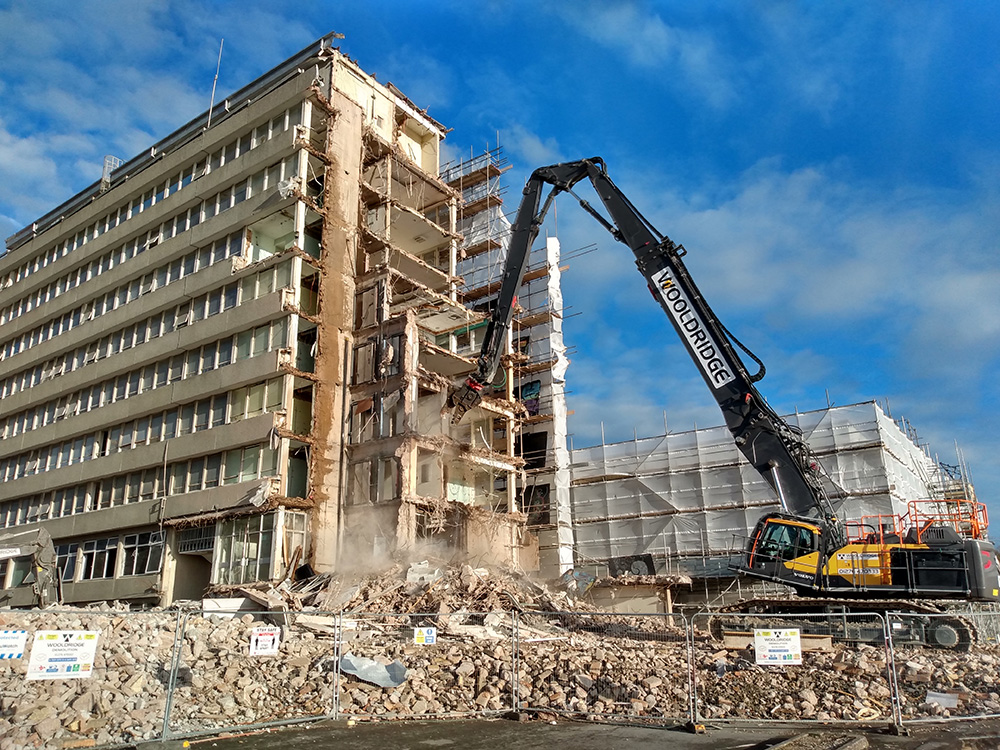

The demolition industry’s recent struggles underscore significant challenges facing the construction sector.
- Wooldridge, a top-20 firm, fell into administration, highlighting industry instability.
- Five demolition firms collapsed in four months, raising concerns about sector-wide impacts.
- The Competition & Markets Authority fined firms £60m for illegal bid-rigging activities.
- Factors like Brexit, Covid, and fluctuating material prices exacerbate demolition companies’ troubles.
The demolition industry, typically resilient, is now experiencing instability as exemplified by Wooldridge, a top-20 firm, entering administration. This event epitomises a broader trend affecting the sector amidst a turbulent economic climate. Following Wooldridge’s administration in February, the collapse of five demolition businesses within this short period has drawn notable attention, with significant implications for the industry’s future prospects.
The demolition sector has been notably impacted by the £60 million in fines administered by the Competition & Markets Authority (CMA) due to illegal bid-rigging practices. The ruling in March 2023, involving ten major firms, reflects serious compliance issues within the industry, although only Squibb Group has ceased operations, citing various economic pressures alongside its fines.
A critical examination reveals multiple factors contributing to the escalated failure rate among demolition firms. Brexit, the Covid-19 pandemic, and geopolitical tensions such as the war in Ukraine have collectively exacerbated operational difficulties. Additionally, soaring interest rates have pressured financial solvency, limiting firms’ ability to commence and sustain projects, thus increasing the likelihood of insolvency.
Economic analyses indicate that the construction industry is leading in UK insolvency rates, with demolition and specialist sectors such as mechanical and electrical engineering accounting for a significant portion of this increase. Market volatility, especially concerning material prices and interest rates, amplifies the financial strain on developers, prompting project delays which trickle down to contractors.
The decision-making paralysis surrounding an impending general election further complicates matters for demolition contractors. Uncertainties related to local planning authorities’ delays and the financial repercussions of postponed projects are sources of mounting concern within the sector. These delays result in elevated costs and risks, threatening the viability of businesses already stretched thin financially.
Despite these formidable challenges, the demolition industry is not without hope. The Bank of England’s efforts to mitigate interest rate impacts offer some respite, and there is ongoing industry diversification into areas like specialist engineering. Additionally, the eventual occurrence of a general election could provide the clarity businesses need to plan and execute future projects confidently.
The demolition industry must navigate complex economic and political landscapes to secure its future stability.
