
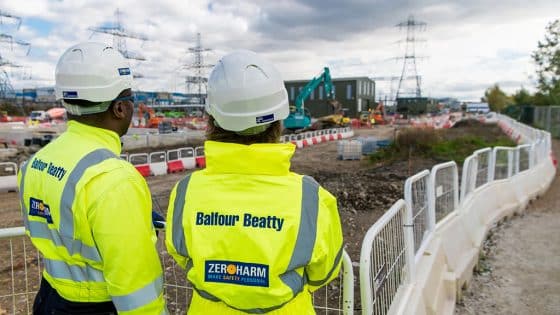

Balfour Beatty’s UK construction revenue experienced a decline during the first half of 2024, while worldwide turnover showed improvement.
- UK construction turnover for Balfour Beatty decreased from £1.52bn in 2023 to £1.46bn in 2024, despite an increase in overall profit margins.
- Globally, Balfour Beatty’s revenue rose to £4.7bn, boosted by significant growth in support services and the Hong Kong subsidiary, Gammon.
- The company faced challenges from increased infrastructure investment costs and issues stemming from past fraudulent activities in its US subsidiary.
- Despite current challenges, Balfour Beatty remains optimistic about future opportunities, supported by a substantial order book and strategic positioning in key markets.
Balfour Beatty’s UK construction sector struggled during the first half of 2024, with a noticeable decline in revenue from £1.52bn in 2023 to £1.46bn. However, this dip was contrasted by an increase in the company’s overall profit margin, rising from 2 to 2.3 per cent. This was due to a rise in underlying profits from £30m to £34m, signaling a modest improvement amid domestic challenges.
On the global front, Balfour Beatty demonstrated resilience, with a remarkable increase in revenue from £4.5bn to £4.7bn. This growth was significantly driven by a £91m increase in its support services sector and a £131m boost from Gammon, its subsidiary in Hong Kong. These gains underline the company’s strengthened global footprint and successful diversification strategy.
Despite these financial uplifts, the company faced substantial operational challenges. Increased costs associated with infrastructure investments, particularly due to capitalised bidding expenses, were reported. Such expenditures have impacted the underlying profits from total operations, which saw a slight decrease from £80m to £77m.
Balfour Beatty also navigated the consequences of historical misconduct by its US subsidiary, which had previously admitted to submitting false documentation concerning maintenance and resident satisfaction goals in military housing projects. The company incurred a £49m fine and agreed to independent compliance monitoring, which had further cost implications on its military housing operations.
Looking forward, Chief Executive Leo Quinn expressed optimism about Balfour Beatty’s long-term prospects. He highlighted secured contracts poised to drive growth from 2025 onwards, reinforced by governmental commitments to essential infrastructure projects. Quinn remarked positively on the UK government’s plans for economic expansion, energy and transport infrastructure investment, planning reforms, and workforce skills enhancement, viewed as aligning with the company’s strategic objectives.
Balfour Beatty’s strategic approach, despite current revenue dips, positions it well for future growth, leveraging global opportunities and government plans.
