
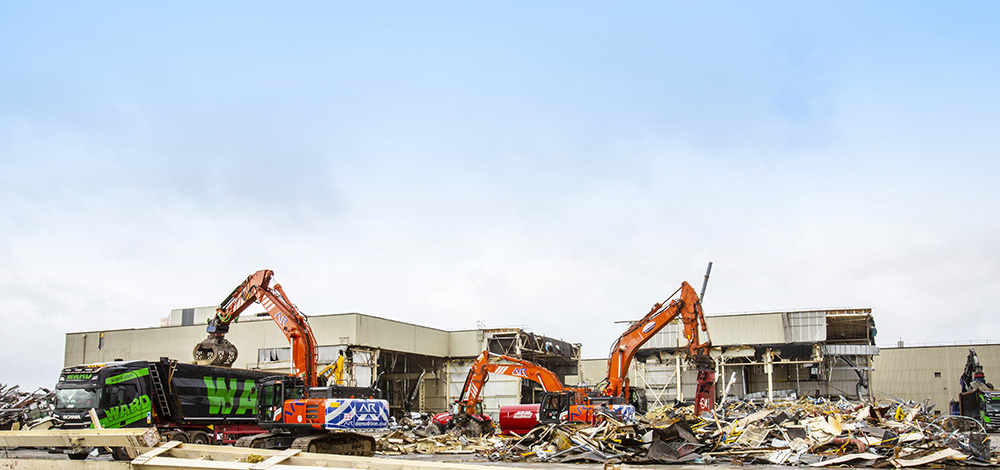

The closure of Honda’s Swindon factory marked a significant shift for the UK motor industry, leaving a lasting impact on the local community.
- Work is underway to transform the former Honda site into a modern industrial hub, a £900m project led by Panattoni.
- Demolition efforts prioritise sustainability, aiming to recycle and reuse materials, with expectations to complete by Christmas.
- The project stands as a symbol of economic recovery and innovation, promising 7,000 direct jobs and 9,000 indirect roles.
- Prime Minister Rishi Sunak’s visit underscores the site’s importance in the UK’s industrial resurgence.
The closure of Honda’s Swindon factory was a pivotal moment for the UK motor industry, profoundly affecting the local community and economy. The factory’s cessation became inevitable due to Brexit-related challenges and EU tariff changes, necessitating a strategic pivot for the site.
The transformation of this site is spearheaded by Panattoni, an industrial real estate developer, who intends to invest £900m in developing an industrial park. The ambitious plan includes constructing 11 net-zero emission buildings, tailored for logistics, manufacturing, and data centre operations, with an aim to generate 7,000 direct and 9,000 indirect jobs over the next decade.
Prominent in this redevelopment is the environmentally conscious approach to demolition. AR Demolition leads the charge, focusing on recycling and material reuse. An estimated 30,000 tonnes of steel and 150,000m3 of concrete and tarmac are being processed for reuse, significantly reducing waste. AR Demolition’s innovative techniques include the use of Hitachi-based Kiesel high-reach excavators, optimising the reuse of structural components.
The significance of this transformation has attracted attention at the highest levels of government, with Prime Minister Rishi Sunak endorsing the project. His visit highlights the site’s role in revitalising the South’s economy, symbolising broader national economic recovery.
Overseeing the construction for Winvic is Richard Reid, who brings a wealth of experience from previous phases of the site’s development. The project entails not only the demolition of existing structures but also intricate civil works, such as the diversion of a foul sewer main and the reinstatement of Marston Brook, highlighting the complex engineering involved.
This ambitious redevelopment project heralds a new era for Swindon, reflecting a commitment to sustainable industrial progress.
