
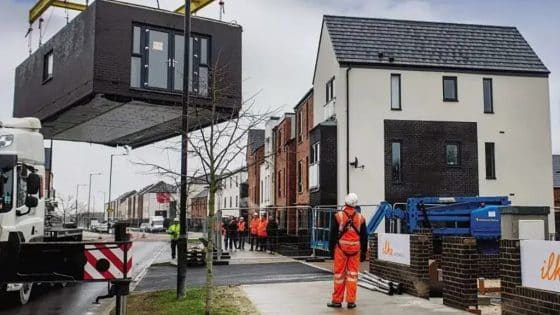

The call for the government to establish a clear strategy for modern methods of construction (MMC) has intensified amid delays and concerns.
- A House of Lords committee criticised the government’s investments in MMC, leading to calls for a formal strategy.
- The Ministry of Housing, Communities, and Local Government has been urged to act following continued postponements in their response to an MMC review.
- The MMC sector faces challenges, including an unpredictable planning system, hindering its potential to address the housing crisis.
- Industry experts stress that a clear and coherent MMC strategy is vital for sustainable and efficient housing development.
The House of Lords select committee has been vocal in its criticism of the government’s current approach to modern methods of construction (MMC). They have highlighted the lack of strategic direction in investments related to MMC as particularly concerning. The committee’s report, released earlier this year, underscored the pressing need for a coherent strategy, suggesting that current efforts are fragmented and insufficient.
Concerns have grown following revelations from the Ministry of Housing, Communities and Local Government, which admitted they are still in the process of determining the next steps for MMC. Notably, there has been a delay in issuing a formal response to the committee’s review, which initially called for action at the beginning of the year. This delay is causing frustration among stakeholders who await clarity.
Despite the government’s recognition of the potential role of MMC in delivering their commitment to 1.5 million homes, progress has been stalled. Former housing minister Lee Rowley had initially requested an extension for responding to the committee’s recommendations, aiming to reply by late spring, yet this was interrupted by the general election.
Lord Moylan, chair of the built environment committee, expressed disappointment over the government’s lack of a comprehensive plan to encourage MMC. He noted that there is limited confidence in the government’s current capability to foster the necessary framework. Such a position is seen as detrimental, especially given MMC’s importance in achieving housing aspirations.
The broader construction sector is now waiting for the new government to provide decisive resolutions on several pressing issues. Among these are skills development and planning reform – both critical for offering the necessary certainty for MMC investment. Without clear strategies and policies, there’s a looming risk that crucial funding for MMC could be reduced as budget reviews are conducted in Whitehall.
Industry voices, like Christy Hayes from Tide and Vision, have highlighted the importance of establishing a clear policy framework. Hayes emphasised the critical role MMC can play in providing sustainable housing, stating that current operations are hampered by unpredictable planning and regulatory environments. His firm’s production could significantly expand with a more stable policy landscape.
Without immediate and strategic government action, the potential of MMC to transform construction and meet housing demands remains underutilised.
