
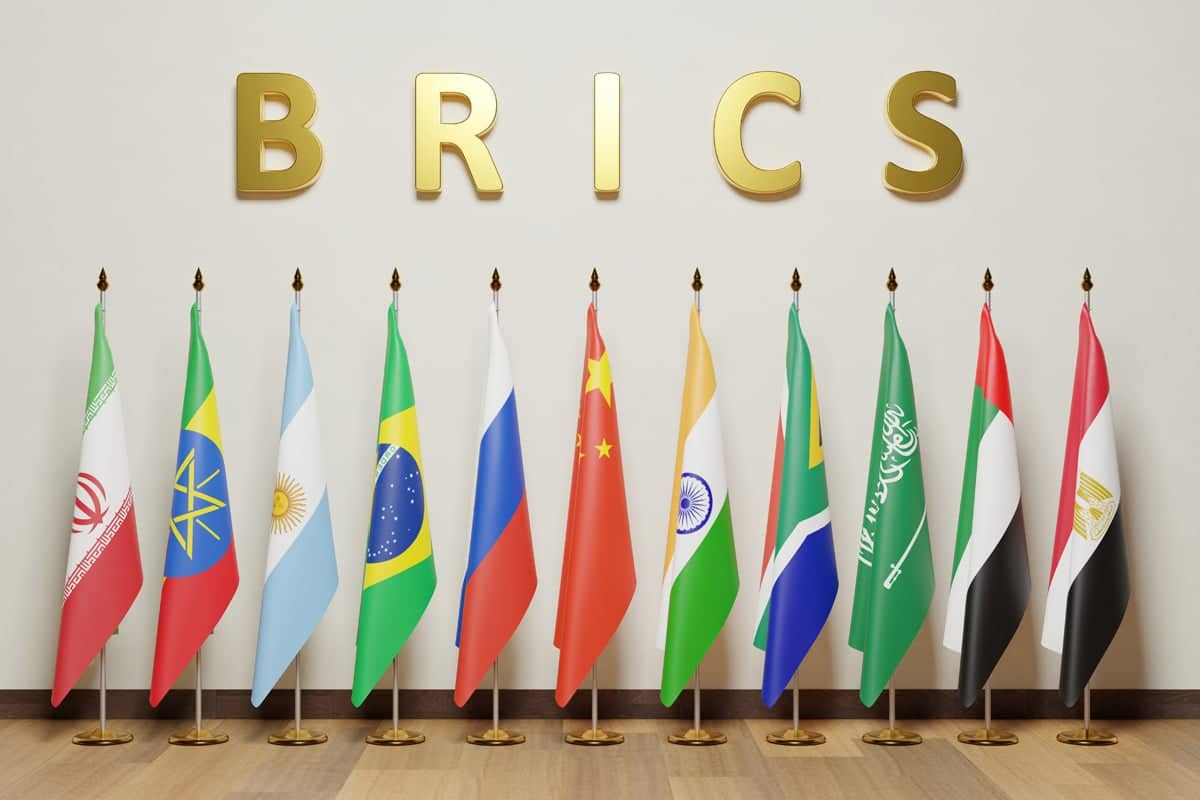

The BRICS alliance, a cornerstone of emerging market economies, is on the brink of a significant expansion.
In 2024, the bloc will discuss welcoming 10 new countries, a move set to reshape global trade and currency dynamics.
The 2024 BRICS Summit in Focus
The BRICS summit, set for October 22-24, 2024, in Kazan, Russia, is primed to address pivotal issues surrounding trade and currency. Presently, nine nations are expected to deliberate on these matters. The addition of UAE, Egypt, Ethiopia, and Iran as new members this year has broadened the bloc’s scope and influence.
Growing Interest in BRICS Membership
Amid global shifts, interest in joining BRICS is surging, with over 40 countries keen on membership. Approximately 25 have formalised their applications, and another 15 have shown informal interest. Many hail from Asia, Africa, and South America, regions seeking larger economic roles.
A significant driving force behind this interest is the desire to reduce reliance on the US dollar. Nations within these continents are eager to expand the use of local currencies in international trade, a shift that could reshape global economic landscapes.
Potential Induction of 10 New Nations
As reported, up to 10 new countries might be inducted into the BRICS bloc during the 2024 summit.
Maxim Ryzhenkov, the Foreign Minister of Belarus, has voiced optimism about their inclusion, highlighting BRICS as a crucial economic opportunity amid current sanctions. Belarus stands on the brink of becoming the first Eastern European nation in BRICS.
Currently, under significant pressure from US and EU sanctions, Belarus sees BRICS membership as a pathway to economic sustainability. The potential inclusion of Belarus in the BRICS bloc marks a strategic pivot away from Western economic dependency.
Implications of Expanding BRICS
The expansion of BRICS to incorporate more countries could significantly shift global economic power structures. With more members, the bloc’s collective economic and geopolitical influence would widen, potentially challenging established Western-dominated financial systems.
Should these nations join, the global reliance on the US dollar could diminish further. BRICS’ pursuit of local currency trade aligns with broader de-dollarization efforts, gradually altering international financial practices.
The Role of BRICS in Economic Resilience
For many aspirants, BRICS represents a means to achieve economic stability amidst Western economic turbulence. Countries like Belarus seek refuge in BRICS to counter the adverse effects of sanctions and align with rising global economic powers.
The bloc provides a platform for member countries to navigate economic challenges through mutual support and cooperation. Enhanced economic ties foster resilience against external economic pressures.
BRICS as a Catalyst for Change
The potential expansion to include 10 new members underscores BRICS’ role as a transformative force in global economics. The bloc’s commitment to embracing diverse economies further empowers its mission of economic inclusivity and cooperation.
With the looming addition of new members, BRICS is poised to become an even more potent collective voice in issues of global economic governance, potentially influencing international policy-making.
Future Prospects for BRICS and Global Trade
The continual growth of BRICS could redefine international trade dynamics, as more countries align with its vision.
As BRICS contemplates expansion, its impact on global economics could be profound.
The potential addition of new members may alter established financial norms. The future of BRICS will likely influence the international economic landscape.
