
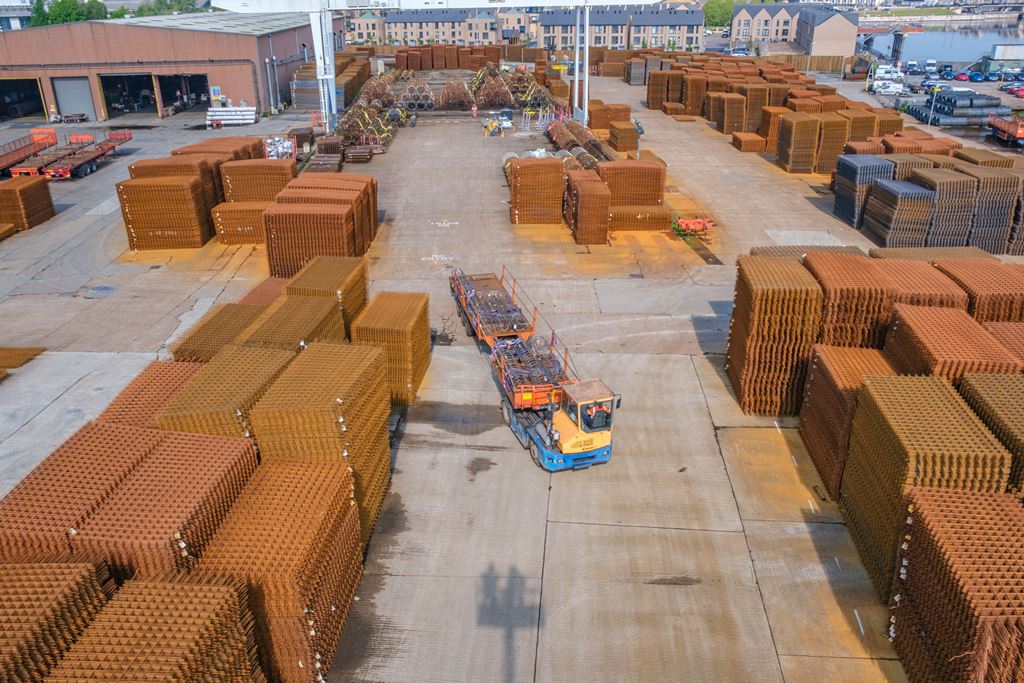

The redevelopment of Chatham Docks’ Basin 3 challenges the Labour government, testing its pro-housing policies against local industrial interests.
- The proposed closure of Chatham Docks is a critical test for the new Labour government, pitting economic growth against established industry.
- Labour chancellor Rachel Reeves advocates for development despite Peel Waters’ controversial plans to replace a key industrial site with offices.
- ArcelorMittal Kent Wire, a significant rebar supplier, faces displacement, threatening its substantial role in the UK construction industry.
- Local political shifts, including council and parliamentary changes, influence the redevelopment’s contentious decision-making process.
The proposed transformation of Chatham Docks’ Basin 3 presents a formidable early challenge for the new Labour government’s policy favouring new housing developments. In her inaugural speech as the chancellor of the exchequer, Rachel Reeves unequivocally stated that local opposition would not hinder Labour’s push for economic expansion. This statement directly intersects with Peel Waters’ intention to close the docks, intending to replace them with speculative office buildings. This decision underscores the complexity and potential ramifications of policy implementation beyond rhetoric.
Peel Waters’ contentious vision for Chatham Docks requires the relocation of ArcelorMittal Kent Wire, a pivotal supplier of reinforcing steel for the construction sector, accounting for about a third of the UK’s rebar supply. The plant employs over 800 individuals in conventional industrial capacities, illustrating the potential socio-economic disruption tied to the proposed redevelopment. The speculative nature of the proposed office development further complicates the scenario, challenging the government’s developmental agendas.
In May, Labour-controlled Medway Council approved Peel Waters’ plans, a decision that was subsequently contested by the then-Conservative MP for Rochester & Strood, Kelly Tolhurst, who pushed for a review. The political landscape has since shifted, with the new government in place, and the decision-making authority now rests with Angela Raynsford, the Deputy Prime Minister and the new Secretary of State for Levelling Up.
ArcelorMittal, apprehensive about the jeopardy of its operational site, has intensified its opposition against the closure. The company’s Managing Director, Matt Brooks, emphasized the critical role of their steel products in national infrastructure projects, reinforcing the argument against the dock’s redevelopment. He articulated a clear message to the government: the nation’s infrastructure needs should not be compromised by speculative redevelopment projects, urging the prioritisation of industrial stability and continuity.
The current political and economic climates, marked by a change in parliamentary representation and shifting local government dynamics, add layers of complexity to the decision-making process. Newly elected Lauren Edwards, who replaced Tolhurst, holds a significant position on Medway Council, aligning herself with economic and social regeneration efforts that could influence the development’s outcome.
The redevelopment of Chatham Docks will test the Labour government’s capability to balance industrial preservation with economic expansion.
