
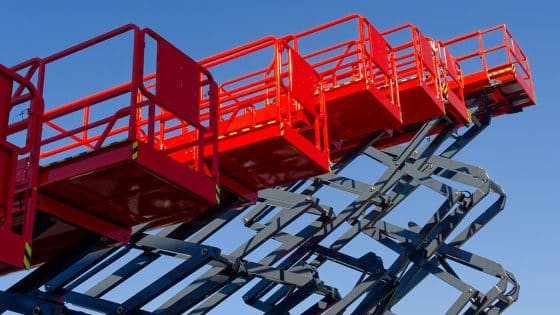

A recent inquest has highlighted the urgent need for improved rescue training following a fatal accident involving a mobile elevated platform.
- The tragic incident involved an electrician who became trapped while working at a height, ultimately leading to his death.
- In response, a coroner has written to six organisations, urging the inclusion of practical rescue drills in training courses.
- The current training for mobile elevated platforms does not sufficiently cover rescue scenarios, presenting a critical safety concern.
- The organisations have been called to action, with a deadline to respond with their plans to improve training protocols.
The necessity for enhanced rescue training was spotlighted following an inquest into an accident at a Winvic-operated site, which led to the unfortunate death of Jason Holland in February 2023. Holland, a self-employed electrician, was entrapped between a scissor-lift railing and a containment tray as he carried out cabling tasks. His precarious position over the railing prevented immediate movement of the lift due to the risk of a catastrophic fall from a considerable height of 20 metres.
The rescue operation, delayed by approximately 20 minutes, involved a harnessed operative performing a basket-to-basket rescue. This delay was critical, as Holland was later pronounced dead at Queen’s Medical Centre, Nottingham, having suffered a brain injury from cardiac arrest. Testimonies presented during the inquest uncovered that none of the personnel present had been trained on executing such rescues efficiently and safely.
Coroner Fiona Butler brought attention to the fact that while personnel holding an IPAF card undergo basic training, it inadequately addresses the practical aspects of executing rescue-at-height scenarios, such as basket-to-basket rescues. Butler remarked that a swift response is vital, pointing out the significant life-or-death implications, especially in instances of positional asphyxia. Notably, the existing qualifications for MEWP operators only superficially cover these rescue operations, failing to prepare operatives comprehensively for real-world emergencies.
Subsequent to the inquest findings, Butler took decisive action by contacting six key organisations, including the International Powered Access Federation (IPAF) and the Road Transport Industry Training Board, with a strict mandate to enhance their training curricula. These organisations were instructed to detail their strategies to incorporate practical rescue drills into training programs, responding within a 56-day period.
The correspondence also extended to Winvic Construction and several electrical engineering firms, highlighting the cross-industry nature of the training deficiencies. Butler underscored the importance of integrating practical rescue training not only within the construction industry but also across various sectors where similar equipment usage is prevalent. The expectation is that these adjustments will safeguard against future tragedies and enhance operative safety protocols significantly.
The call for improved rescue training underscores a critical step towards enhanced safety in industries reliant on mobile elevated platforms.
