
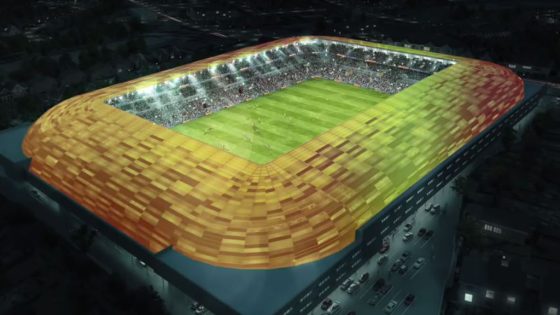

Significant delays and cost overruns have plagued the Belfast stadium project, raising concerns about the 2028 Euros schedule.
- The UK government has declined financial assistance due to fears that the stadium won’t meet the Euro 2028 deadline.
- Originally announced with a budget of £180m, the cost has now exceeded £400m, troubling stakeholders.
- Buckingham Group’s collapse has stalled the construction, further complicating the project’s timeline and budget.
- Despite setbacks, stakeholders remain hopeful about fulfilling commitments to Belfast’s sporting infrastructure.
The Belfast stadium project, destined to host five Euro 2028 matches, faces critical challenges poised to prevent timely completion. The UK government, confronted with escalating build costs, has withdrawn its financial support amid warnings that the venue might not be ready in time for the prestigious tournament.
Initially pegged at £180m when the proposal went public in October 2023, the stadium’s projected expenses have now surged beyond £400m. These unwelcome increases have emerged in the wake of the Buckingham Group’s unexpected financial downturn, pushing the entire project into uncertainty.
The Buckingham Group’s cessation of operations in late August 2023 placed the project’s progression in jeopardy. Having initiated enabling works for the 34,500-seat stadium, the construction firm’s downfall has heavily impacted timelines. Notably, Casement Park remains the singular Northern Irish venue in the Euro 2028 lineup, underscoring the importance of its completion.
Amid this turmoil, the Ulster Gaelic Athletics Association has encountered hurdles, leading to their decision to drop Heron Bros as their joint venture partner in November. Despite this, investment efforts exceeding £4m have been made to sustain momentum in preparatory works.
The GAA has expressed deep regret over the missed opportunity to host Euro 2028 matches, citing that significant measures were taken to preserve the project’s timeline and budget. Their statement reflects commitment to meeting longstanding promises for enhancing Belfast’s sports infrastructure, vowing to work closely with stakeholders to fulfil these obligations.
In light of these developments, UK and Irish government ministers acknowledge the necessity for a revised design proposal. This acknowledgment indicates that while current plans may face hurdles, the overarching goal to complete the stadium persists. Discussions continue to define the next steps, with financial contributions from various bodies remaining undecided.
Amidst political and economic debates, Casement Park’s uncertain future serves as a poignant reminder of the complexities inherent in large-scale construction projects. The stadium’s fate remains a topic of considerable interest, with potential repercussions for Northern Ireland’s role in hosting international sporting events.
The Belfast stadium’s future hinges on revised proposals and collaborative efforts to manage escalating costs and timelines for Euro 2028.
