

The integration of electric trucks is facing significant barriers due to grid capacity issues in the UK.
- Connected Energy highlights the risk posed by insufficient grid capacity to electric heavy goods vehicles (HGVs) deployment.
- High-capacity EV chargers for trucks require substantially more power, putting pressure on existing grid infrastructure.
- Industrial estates and business parks are unprepared for the electrical demands of truck electrification, potentially causing delays.
- Battery Energy Storage Systems (BESS) present an innovative solution to circumvent costly grid upgrades.
Connected Energy has issued a stark warning regarding the integration of electric heavy goods vehicles (HGVs) into the UK’s transport infrastructure. The company underscores that the current grid capacity is inadequate to support the high energy demands of these vehicles.
The challenges are particularly acute for high-capacity electric vehicle (EV) chargers, which require up to 50 times more power than standard car and van chargers. This discrepancy poses significant hurdles for fleet operators, dealerships, and service centres.
Nigel Dent, head of sales at Connected Energy, revealed through extensive modelling that many sites simply cannot accommodate a high-capacity charger of 150 kilowatts, let alone a 350kW unit. This limitation stems from the fact that most fleet depots and service centres were not designed with such power demands in mind.
In scenarios where the grid cannot support these chargers, upgrading the local grid by the distribution network operator (DNO) is possible. However, this process is often costly, time-consuming, and complicated, especially for businesses renting their premises.
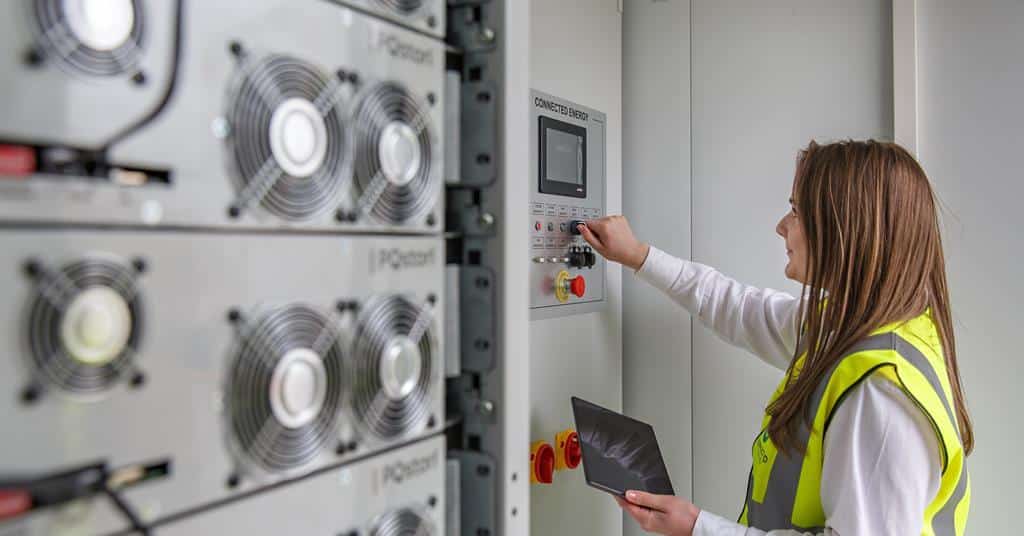
To address these challenges, Connected Energy advocates for the use of Battery Energy Storage Systems (BESS) as a viable and more cost-effective alternative. These systems function like energy reservoirs, trickle charging during periods of low demand and releasing energy when needed, thus avoiding the necessity for a DNO upgrade.
BESS not only supports high-capacity demands but can also facilitate the decarbonisation of fleet operations. By working in tandem with on-site solar arrays, BESS can store surplus solar-generated energy, enhancing the sustainability of electric HGVs.
Additionally, BESS offers financial incentives. By participating in programmes like the National Grid’s Demand Flexibility Service, businesses can reduce energy consumption during peak periods and potentially earn between £15,000 and £20,000 annually. Connected Energy has developed an online calculator to assist organisations in evaluating BESS for their EV charging sites.
The transition to electric HGVs in the UK necessitates innovative solutions like BESS to overcome grid capacity challenges.
