
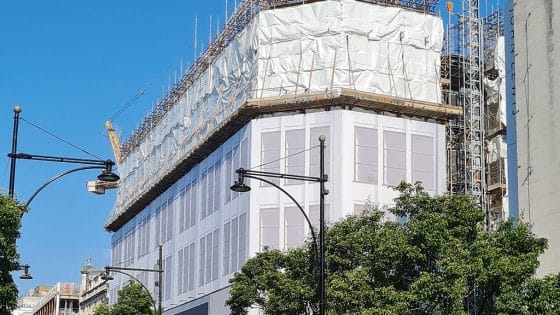

The redevelopment of the original DH Evans building on Oxford Street into a vibrant mixed-use space marks a new era for the UK’s high streets.
- Contractor McLaren is spearheading this £132 million transformation project, involving the complicated task of preserving historic elements while integrating modern facilities.
- The project entails removing the building’s top floors, adding a new eighth floor, and updating the remaining structure with a blend of retail, office, and leisure spaces.
- With environmental considerations at its core, the structure aims for a BREEAM Excellent rating, showcasing cutting-edge sustainability practices.
- Set to conclude in spring 2026, this development, backed by significant architectural and engineering expertise, promises to breathe new life into the area.
A landmark redevelopment is under way at 318 Oxford Street, a structure initially built in 1937, which once housed the iconic department stores DH Evans and House of Fraser. The project, led by contractor McLaren, represents a significant investment in the rejuvenation of the UK’s high streets. Originally comprised of seven floors and a basement, the building’s transformation includes the demolition of its upper floors to make room for the construction of a new eighth floor, specifically designed for modern retail and commercial use.
The architectural vision by Studio PDP merges past and present by restoring the historic stone facade of the lower five floors while introducing a contemporary aesthetic to the newly constructed levels. The undertaking reflects a broader trend of repurposing former retail giants into versatile mixed-use developments that can better serve current urban needs. With an anticipated completion in 2026, this endeavour underscores the resilience and adaptability of historic urban centres.
The project is not without its engineering challenges. Initial surveys revealed deterioration in parts of the facade, necessitating intricate restoration work. Furthermore, the internal structure required significant modification to support the contemporary open spaces desired in modern office layouts. A key feature of the renovation is the newly designed central stability core, utilising a 260-tonne 17×8 metre steel frame, incorporated without compromising the building’s historical aspect.
Sustainability is a pivotal factor in this redevelopment, aiming to achieve a BREEAM Excellent rating. The integration of innovative environmental techniques, including the use of recycled materials and advanced heating systems, highlights an effort to minimise the carbon footprint associated with construction. Actions such as retaining and reusing structural elements have been pivotal in reducing overall emissions, aligning the project with contemporary ecological standards.
The logistical intricacies of managing urban construction on such a scale involve precise coordination among various contractors and subcontractors. Scheduled to be completed by spring 2026, the complex project is further complicated by the necessity of maintaining the facade’s aesthetic integrity while incorporating state-of-the-art facilities. This comprehensive approach underscores the project’s ambition to not only preserve but enhance the architectural heritage of Oxford Street.
318 Oxford Street exemplifies the innovative fusion of historic preservation with modern urban development, promising a reinvigorated commercial and leisure destination.

