
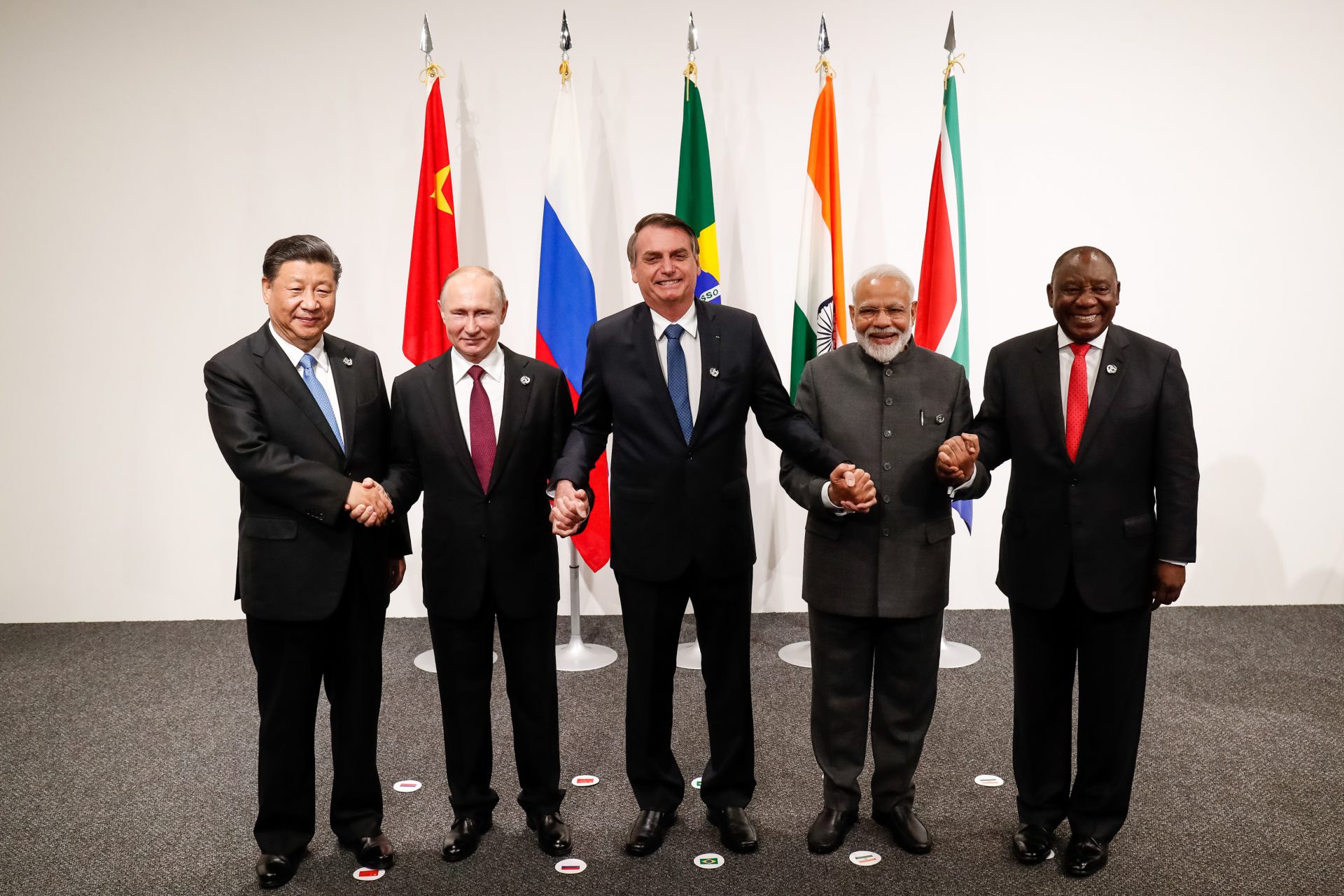

As the 2024 BRICS summit approaches, discussions around the potential of a shared currency are intensifying.
This emerging currency aims to enhance financial independence among member states and challenge traditional financial systems.
The Emerging Discussion on BRICS Currency
In recent discussions, President Vladimir Putin of Russia has highlighted the potential integration of a BRICS currency as a shift away from reliance on the US dollar and SWIFT payment systems. Although the concept remains in nascent stages, the suggestion has captured international attention.
President Putin underscored that while the BRICS currency could emerge as a strategic economic tool, its full potential remains under exploration. The initiative aims at strengthening financial sovereignty among member states and fostering economic stability by reducing dependence on dominant currencies like the US dollar.
Current Status and Future Prospects
Despite the ongoing dialogue, Putin clarified that the currency would not launch at the upcoming 2024 summit. “As regards the common BRICS currency, we do not consider this issue at the moment. It is not mature,” Putin stated.
The proposed currency’s gradual evolution signifies a careful approach towards implementation. Putin emphasised that, “We should be very careful; we need to act gradually, without haste in this regard.”
The Role of Local Currencies in Trade
Presently, BRICS is gravitating towards using local currencies for settling trade, thereby decreasing reliance on the US dollar.
This focus might dominate discussions at the 16th summit, potentially impacting the global financial landscape by encouraging a shift away from traditional currency reliance.
The ability for BRICS nations to conduct trade in local currencies fosters economic independence and may incentivise other countries to explore similar financial frameworks.
Implications for Global Financial Markets
The hypothetical introduction of a BRICS common currency represents a potential paradigm shift in the global financial order. By enabling emerging economies to utilise a shared currency, it could significantly affect the positioning of the US dollar.
The gradual shift towards local currency use in trade represents a strategic movement towards a more multipolar financial system. This could lead to alterations in global market dynamics by introducing alternative economic interactions.
However, the realisation of such a currency involves intricate considerations of economic alignment and operational infrastructure between member states.
BRICS 2024 Summit: A Strategic Platform
The upcoming BRICS summit in Kazan signifies the first meeting of the expanded alliance since 2023, providing a crucial platform for these discussions on financial independence.
The summit could act as a pivotal moment, addressing both the benefits and challenges of moving towards a BRICS currency.
As the member nations convene, the exploration of these financial alternatives places renewed attention on the autonomous economic strategies within the alliance.
Conceptual Challenges and Strategic Roadmap
The development of a shared currency within BRICS involves addressing several conceptual hurdles, including economic imbalance and political alignment.
While a common currency holds the promise of unified economic strength, it must navigate complexities such as fiscal policy coordination and exchange rate stability.
Conclusion: The Path Forward
In summary, the BRICS initiative to potentially establish a common currency remains a subject of intricate discussions and strategic planning.
The endeavour, while poised with challenges, promises a significant reconfiguration of economic alliances and global financial ecosystems in the coming years.
The prospect of a BRICS common currency represents a deliberate move towards economic autonomy.
Such developments could reshape global financial landscapes and alter the dynamics of international trade.
