
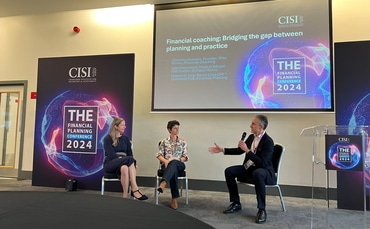

At the recent CISI Financial Planning Conference, experts discussed the role of financial advisers compared to financial coaches.
- The debate highlighted potential pitfalls when financial advisers take on coaching roles without adapting their regulatory mindset.
- Concerns were raised that strict regulatory adherence can sometimes hinder effective financial coaching.
- Experts underscored the importance of distinguishing between financial advice and financial coaching for better client outcomes.
- The session emphasised how flexible coaching approaches could benefit financial clients more than strictly regulated advice.
At the Chartered Institute for Securities and Investments (CISI) Financial Planning Conference 2024, a significant discussion emerged regarding the capabilities and limitations of financial advisers versus financial coaches. The event featured prominent speakers including Amyr Rocha Lima, managing director at Strategic Wealth Partners, Simonne Gnessen, founder of Wise Monkey Financial Coaching, and Julie Greenwood, the head of adviser distribution at Octopus Money.
Julie Greenwood, during the panel session, articulated a critical view, asserting that financial advisers might not always excel as financial coaches. She highlighted that the rigorous regulatory framework familiar to advisers often does not translate well into the more flexible realm of coaching. This perspective reflects a broader concern that the rigid adherence to regulation might inadvertently impede the relational and personalised aspects of financial coaching.
This debate underscores a vital distinction between financial advice, bound by regulation, and financial coaching, which thrives on adaptability and personalisation. Speakers at the conference stressed that while both roles aim to enhance the financial wellbeing of clients, the methodologies and mindsets required are inherently different. Therefore, it becomes essential for professionals to clearly delineate their roles to provide the most effective service to their clients.
The conversation at the conference pointed out that the key challenge for advisers attempting to cross into coaching lies in adjusting their approach. The coaching model necessitates a shift away from the predominantly regulatory compliance-focused framework towards a more client-centred, flexible strategy. Notably, this approach allows for a deeper client relationship and understanding, which is often limited when advisers are constrained by stringent regulatory obligations.
Effective financial coaching requires flexibility and personalisation, often absent in traditional advisory roles.
