

Employee well-being is increasingly crucial for Birmingham businesses as it directly impacts productivity.
- Office design plays a pivotal role in employee satisfaction yet often remains underappreciated.
- Strategic office fit-outs can transform workspaces into environments that foster creativity and productivity.
- Attention to detail in office planning can enhance daily worker experiences.
- Design choices in comfort, lighting, and layout significantly boost employee engagement.
Employee well-being has emerged as a paramount concern for organisations in Birmingham, primarily due to its substantial influence on productivity. Companies are becoming increasingly aware of the direct correlation between a happy workforce and enhanced performance. However, one critical aspect often overlooked in this dialogue is the physical workspace.
The design of an office can transcend mere aesthetics. Strategic office fit-outs are capable of morphing traditional workspaces into dynamic environments that not only boost morale but also stimulate creativity and promote physical health. This transformation represents a strategic investment, underpinning improved retention rates and broader performance enhancements.
Creating a conducive working environment does not necessitate complexity. With meticulous planning, companies can enact changes that substantially ameliorate employees’ daily experiences. From ergonomically designed furniture to thoughtful layouts promoting collaboration, a well-conceived office fit-out is instrumental in elevating both productivity and well-being.
Comfort is an indispensable element when designing office environments, given that employees invariably spend extended hours at their desks. Investing in ergonomic chairs, adjustable desks, and appropriately positioned screens can alleviate physical discomfort, thereby averting work-related injuries such as back strain and repetitive strain injury. This focus on health significantly contributes to sustained employee engagement and productivity.
Lighting constitutes another critical factor in assuring workplace comfort. While natural light is optimal, especially for regulating mood and energy levels, offices lacking abundant daylight can benefit from lighting solutions that mimic daylight conditions. Brightly lit spaces effectively reduce eye strain and fatigue, crucially maintaining workforce vitality throughout the day.
Modern office layouts increasingly champion collaboration. Open-plan designs stimulate interaction amongst employees, fostering robust teamwork and innovation. Nevertheless, it remains essential to strike an equilibrium between open and private spaces. Quiet zones for focused work are indispensable, providing employees with areas for uninterrupted concentration.
Promoting social interaction further invigorates morale. Dedicated breakout areas enable informal gatherings, serving as venues for spontaneous meetings and creative exchanges. Such adaptable spaces can inspire ideation and enhance team collaboration skills.
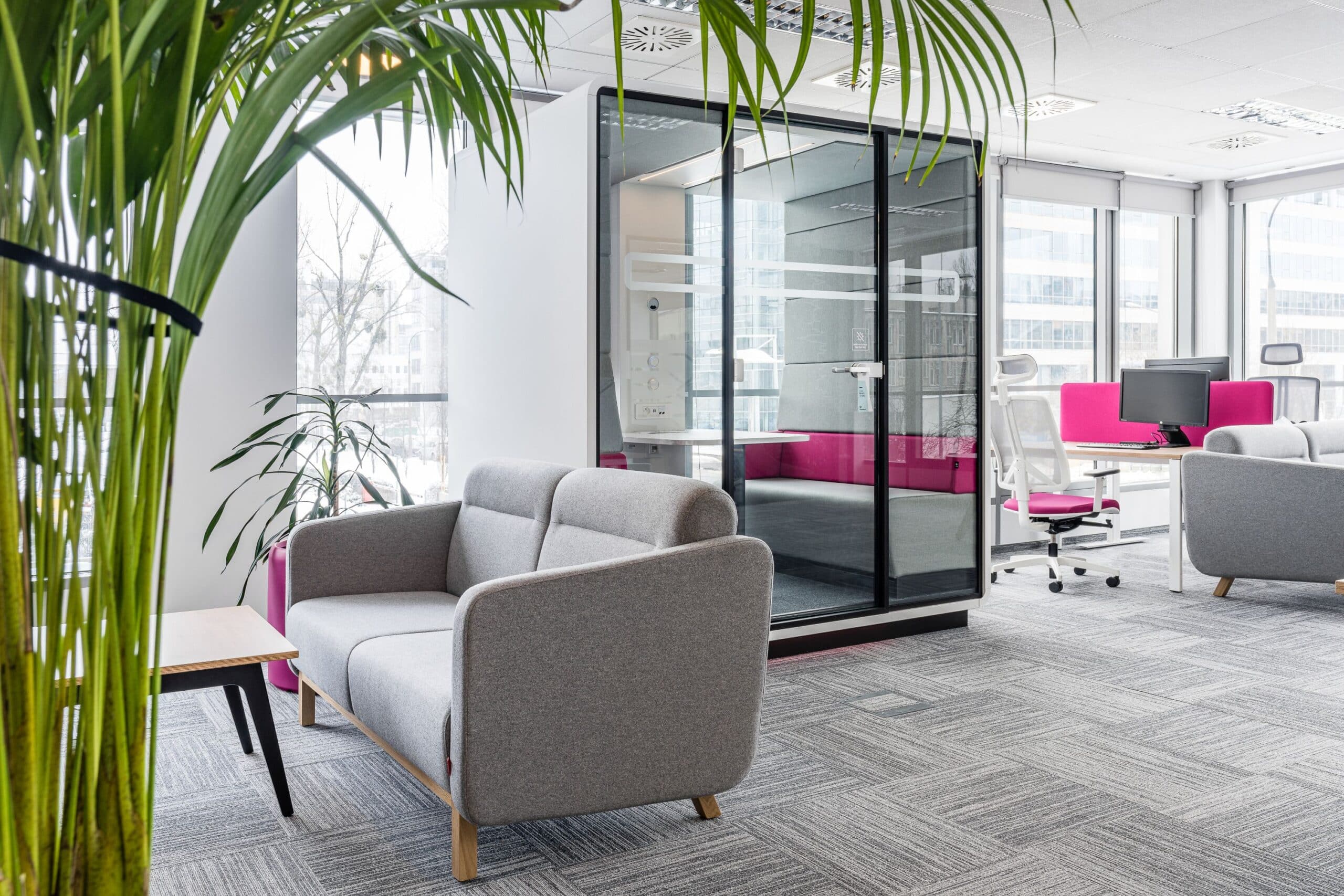
Flexibility in workspace design is gaining traction as organisations recognise diverse working preferences. Some employees excel in serene, private settings, while others thrive amidst a bustling atmosphere. Offering varied work environments—from private booths to communal tables—allows employees to tailor their spaces to suit daily tasks. Flexibility should be integral to office design, with modular furniture facilitating seamless transitions between different workspace functions.
Though layout and furniture are pivotal, the role of workplace amenities in nurturing employee well-being cannot be understated. Provisions such as well-stocked kitchens, relaxation zones, or fitness facilities substantively contribute to cultivating a healthier and more contented workforce. Demonstratively, these small perks show that employee welfare is a corporate priority.
Sustainability in office design is gaining relevance, especially as employees become increasingly mindful of environmental concerns. Eco-friendly initiatives, such as energy-efficient lighting, recycling facilities, and sustainable material choices, considerably boost employee morale. The integration of plants, which can improve air quality and enhance workplace aesthetics, offers additional advantages, including stress reduction and creativity boosts.
Measuring the outcomes of an office fit-out is vital to ascertain its efficacy. Soliciting employee feedback through surveys and informal communications can reveal whether the workspace supports both their professional activities and overall well-being. Concurrently, productivity metrics before and after the redesign offer tangible indicators of success, with increased engagement and reduced absenteeism signifying positive transformations.
A strategic office fit-out can significantly advance employee well-being, fostering both physical and mental health, and ultimately improve business success.
