
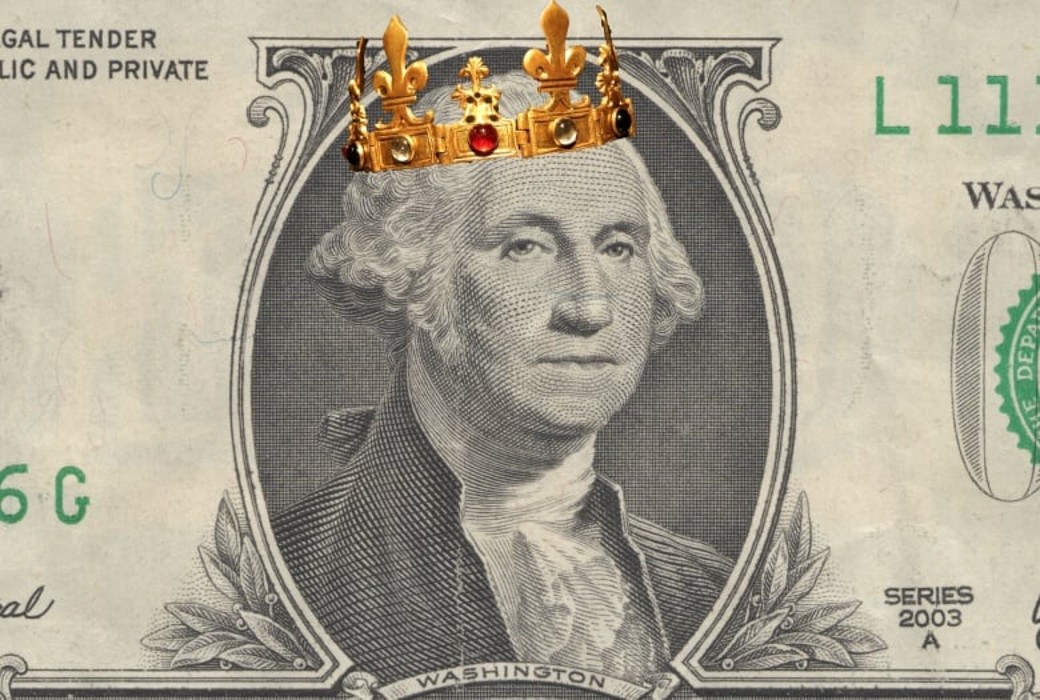

The US dollar maintains its status as a dominant currency, despite various global challenges. Its persistent strength continues to secure its position as the world’s leading reserve currency.
Striving to retain its supremacy, the US dollar remains resilient amid competition, particularly from the Chinese Yuan. While criticism and praise abound, its influence on international finance is undeniable.
US Dollar: The King of Currencies
Despite the Chinese Yuan’s attempts to challenge its status, the US dollar remains unparalleled in its global influence. According to the Economist, the King Dollar continues to lead in global finance, resisting pressures to relinquish its role as the world’s reserve currency. Its stronghold remains unshakeable even as its global reserve percentage slightly declines.
The international community still heavily relies on the US dollar for cross-border and forex transactions. The USD has only decreased from 75% to 59% in global reserves according to 2023 IMF data, which is less concerning than it appears. The currency’s dominant position is reminiscent of its historical performance in the 1990s.
Despite fluctuations, the USD remains a stabilizing force in the economy. This enduring stability reinforces its long-standing reputation and critical role in international trade.
Why the US Dollar Remains Strong
The notion that the Yuan may overtake the US dollar is called into question as most developed nations remain US allies, relying heavily on the dollar. This allegiance makes shifting to the Yuan a complex and risky venture.
Trade primarily involving advanced economies, excluding China, accounts for two-thirds of global trade. The likelihood of these nations switching to the Yuan is minimal due to potential trade disruptions.
Even when focusing on emerging markets, transforming trade flows to favour the Yuan presents significant risk, deterring countries from abandoning the trusted dollar.
Trump’s Plan to Safeguard the USD
In the context of upcoming US elections, Donald Trump has emphasised plans to protect the US dollar. His proposal includes imposing a significant 100% tariff on countries diverging from the dollar.
Such measures are intended to discourage de-dollarisation and safeguard economic stability. Trump’s ambition is to ensure that the global economic landscape remains favorable for the USD.
These political assurances may contribute to the USD’s gradual ascent, reinforcing its stature amid shifting economic dynamics.
The Global Currency Landscape
As the global economy evolves, the US dollar retains its pivotal role as a preferred currency. It continues to be a benchmark for global trade, amidst a myriad of challenges and shifts in international alliances.
Though its share in global reserves has decreased, the underlying trust and reliance on the USD endure. Its relevance in facilitating international transactions remains undiminished, fortifying its status despite emerging challenges.
Factors Influencing Currency Dominance
Economic factors, strategic alliances, and political actions significantly affect currency dominance. The dollar’s strength often correlates with the economic policies and international diplomacy of the United States.
Strategic global alliances significantly bolster the dollar’s international standing. Such relationships influence decision-making globally, preserving the dollar’s prominent role.
Future Outlook for the US Dollar
Insights into the future of the US dollar suggest a continued, albeit challenged, dominion amidst emerging global currencies.
Despite competition, the US dollar is likely to maintain its key role due to entrenched systems and long-standing global trust.
In conclusion, the US dollar’s dominance endures, fortified by strategic alliances and economic resilience. Despite emerging challenges, it remains the keystone of global finance.

