
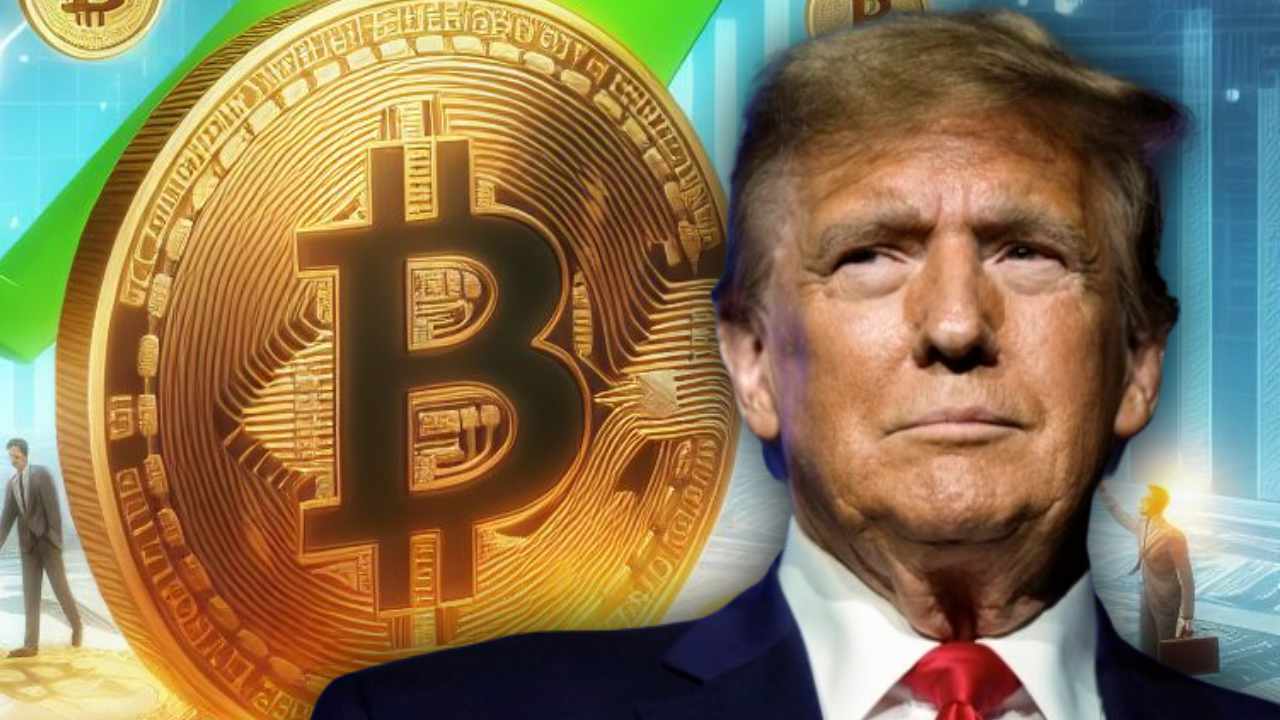

The geopolitical sphere is watching as former President Donald Trump proposes bold economic measures. With tariffs central to his strategy, the global economy stands at a crossroads.
Trump’s plan to levy 100% tariffs on countries abandoning the US dollar aims to fortify its status. However, such a move risks alienating key international partners.
Trump’s Bold Economic Strategy
Donald Trump has reiterated his firm stance on safeguarding the US dollar. His strategy includes imposing hefty tariffs on nations shifting away from using the US dollar as their reserve currency. Such bold statements aim to strengthen the American economy by discouraging other countries from abandoning the dollar.
Trump’s approach underscores his commitment to maintaining the US dollar’s global dominance. With a proposed 100% tariff on countries that favour alternative currencies, he believes this will deter any agendas threatening to diminish the dollar’s value. The potential for such a tariff has stirred significant debate and criticism, highlighting the broader implications for international trade.
Impact on ASEAN Nations
The repercussions of Trump’s tariff plan could be profound, particularly concerning the Association of Southeast Asian Nations (ASEAN). These countries, including Indonesia, Thailand, Malaysia, Singapore, and the Philippines, have long sought to lessen their dependency on the US dollar in favour of fostering regional economic resilience.
ASEAN’s exploration of alternatives, such as the Chinese Yuan, could gain momentum if Trump’s tariff policy takes effect. The interdependence within this regional bloc might be further fortified as they strive to insulate themselves from potential economic instability triggered by US policies.
[twitter-embed-display twitter_url=’https://twitter.com/WatcherGuru/status/1846269954972172420′]
Ripple Effects on Global Trade
Trump’s plan could catalyse a global trade shift, potentially sparking economic uncertainty across multiple regions. The imposition of 100% tariffs might disrupt established trade routes, prompting countries to reassess their reliance on the US dollar for international transactions.
As nations scrutinise Trump’s proposals, investor confidence could waver, leading to increased volatility in currency markets. The potential trade wars arising from such a move could prompt countries to seek more stable and reliable alternatives to the dollar, reshaping global economic alliances.
Potential for a New Trade Dynamic
A move towards a diversified currency system might be appealing for international trade partners. This shift, driven by countries seeking to mitigate risks associated with US economic policies, could usher in a new era of trade dynamics where multiple currencies are used for transactions.
Such a transition could offer countries more flexibility and control over their economic strategies. This prospect challenges the long-standing dominance of the US dollar, urging nations to pivot towards currencies that better suit their national interests.
ASEAN’s Strategic Currency Shift
The ASEAN bloc might be the vanguard in moving away from the dollar. Encouraged by Trump’s tariff aggression, these nations could decide to recalibrate their financial dependencies towards the yuan.
The yuan’s perceived stability has already attracted some ASEAN members. As these countries navigate the complexities of global currency markets, the Chinese currency offers a viable alternative to hedge against potential volatility induced by shifting US policies.
By embracing the yuan, ASEAN nations could enhance their regional economic autonomy. This strategic shift could promote stronger economic ties within Southeast Asia, reducing risks associated with over-reliance on the dollar and enhancing regional trade relations.
Global Economic Implications
Trump’s tariff proposal embodies a significant economic risk. The move may escalate tensions, leading to a fractious geopolitical climate that challenges existing economic alliances.
For nations heavily reliant on the US market, such tariffs could trigger a re-evaluation of trade policies. Nations might seek alliances elsewhere, promoting a multipolar economic landscape that bypasses traditional US-centric trade practices.
Conclusion: Navigating a Changing Economic Landscape
The potential for Trump’s tariff plans to reshape international trade relations is considerable. ASEAN nations, among others, may increasingly opt for currency diversification, fundamentally altering the economic landscape.
Nations globally are assessing their economic alliances in light of Trump’s proposals. As ASEAN nations lean towards diversification, the future of global trade may see a significant transformation.
