
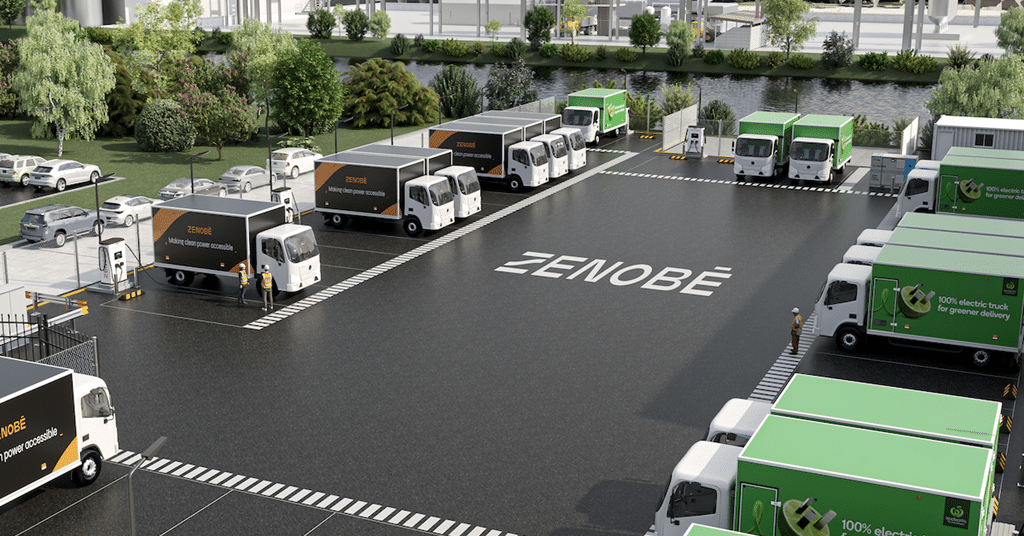

Zenobē is set to introduce its innovative EV shared charging infrastructure model to the UK, after a successful rollout in Australia.
- Partnering with Woolworths, Zenobē’s EVaaS model is revolutionising truck electrification by leasing fully electric trucks and developing off-site charging facilities.
- This initiative addresses operational and financial uncertainties in fleet electrification, providing comprehensive service through a monthly fee.
- The UK has witnessed progress in transport decarbonisation but needs significant advancements in the haulage sector, according to Zenobē.
- Prime ministerial delays on diesel and petrol car bans raise concerns and highlight the urgency of Zenobē’s plans.
Zenobē, a key figure in battery storage innovation, plans to introduce its Electric Vehicle (EV) shared charging infrastructure model to the UK following a successful deployment in Australia. The model, initially launched in collaboration with Woolworths, Australia’s largest supermarket chain, features an Electric-Vehicle-as-a-Service (EVaaS) approach, leasing 60 fully electric trucks to the retailer and establishing a multi-user charging facility.
The initiative seeks to mitigate challenges associated with fleet electrification, such as securing sufficient power, installing and maintaining charging infrastructure, and ensuring reliable service. Zenobē’s EVaaS offering, which includes comprehensive financing, long-term operation, and maintenance services, effectively eliminates these risks for customers, who pay a standard monthly fee. This flexibility allows entities like Woolworths to choose their repair and maintenance routines without being tied to manufacturer contracts.
Nicholas Beatty, founder and director of Zenobē, emphasises that while the UK transport sector has made commendable strides towards decarbonisation, the haulage industry lags behind in scaling necessary changes. He asserts that Zenobē’s established expertise in partnering with governments and stakeholders worldwide uniquely positions the company to propel the UK towards heightened emissions reduction, maximising green investment through this pioneering model.
Despite advancements, the UK’s commitment to a cleaner transport sector faces hurdles, notably highlighted by Prime Minister Rishi Sunak’s recent decision to delay the ban on new diesel and petrol vehicle sales until 2035. The announcement has sparked criticism within the logistics sector, which calls for a coherent and robust strategy to be laid out by the government. Zenobē’s proposition might serve as a crucial component in driving forward the nation’s net-zero ambitions.
BP Pulse’s recent efforts in expanding ultra-fast charge points in the UK underscore the critical need for infrastructure enhancements to support electric vehicles on a large scale. The relationship between these developments and Zenobē’s strategic plans highlights a convergence of interests aimed at facilitating a smoother transition to electric transport solutions across the country.
Zenobē’s shared charging model may provide a vital boost to the UK’s decarbonisation goals amidst evolving regulatory landscapes.
