
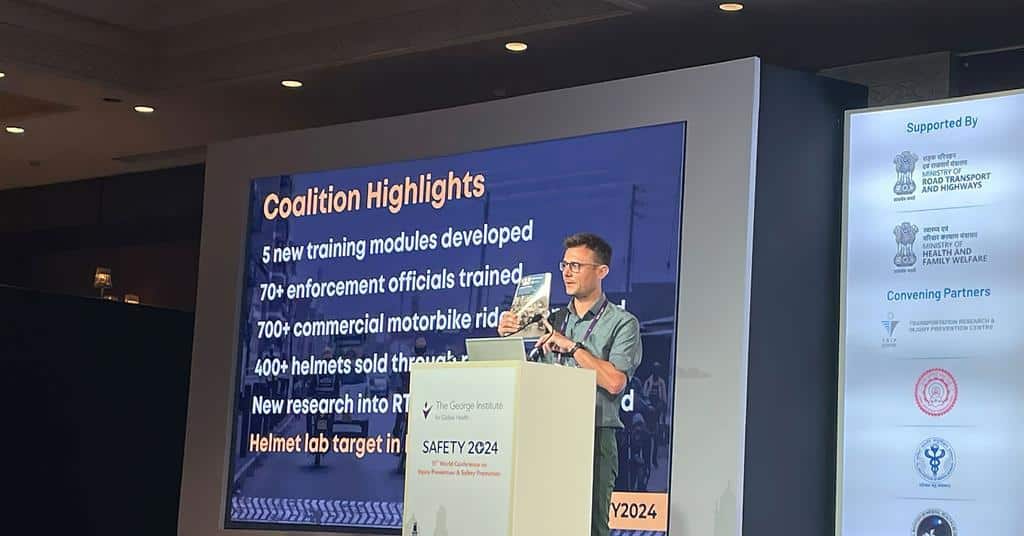

International transport charity, Transaid, recently highlighted its ongoing initiatives to enhance motorcycle safety in Kenya at an injury prevention conference in New Delhi.
- The charity emphasised the presence of a robust helmet standard in Kenya, though its application and provision remain insufficient.
- Transaid is working to ensure sustainable change by engaging diverse stakeholder groups in Kenya.
- Originally tasked by the FIA Foundation in 2021, Transaid’s project has been extended and further financed to continue through 2023.
- The conference, covering a broad array of safety topics, was hosted by the George Institute for Global Health and the World Health Organization.
International transport charity, Transaid, recently shared its pioneering work on motorcycle safety in Kenya at the prestigious 15th World Conference on Injury Prevention and Safety Promotion held in New Delhi. The organisation is striving to improve the enforcement of helmet standards, critically lacking in the region, and aims to increase access to quality helmets. Transaid’s Programmes Support Manager, Jason Finch, addressed the attendees, highlighting the necessity for cross-sector collaboration to drive meaningful, long-lasting improvements in safety protocols.
According to Finch, Kenya’s existing helmet regulations, though robust on paper, face challenges in practical implementation and accessibility. He stressed that addressing these issues requires a holistic approach involving both obvious and non-traditional sectors to secure widespread stakeholder engagement. Finch mentioned, “We’ve taken an approach to fixing this by recognising that real, lasting change requires buy-in from stakeholders across numerous sectors, including ones that may not be initially obvious.” This strategy underscores the importance of a unified regional effort, especially concerning the frequent use of motorcycle taxis or ‘boda bodas.’
Transaid’s involvement dates back to its initial selection by the FIA Foundation in 2021 to establish a national helmet wearing coalition in Kenya. Their continued efforts have been recognised and financially supported, as demonstrated by recent funding to extend the project for another 18 months. This commitment affirms the global community’s recognition of the need to address helmet safety, not only in Kenya but potentially across other regions facing similar challenges.
The conference, an influential gathering organised by the George Institute for Global Health and the World Health Organization, underscored the critical nature of injury prevention worldwide. Topics ranged beyond road safety to include discussions on drowning, falls, global surgery, trauma, child injuries, violence, disability, and rehabilitation. The breadth of issues discussed signifies the multifaceted nature of global public health challenges and the importance of targeted interventions like those in Kenya to enhance safety and prevent injuries.
Transaid’s innovative approach to improving motorcycle safety in Kenya, showcased in New Delhi, highlights the need for collaborative solutions to global safety challenges.

