
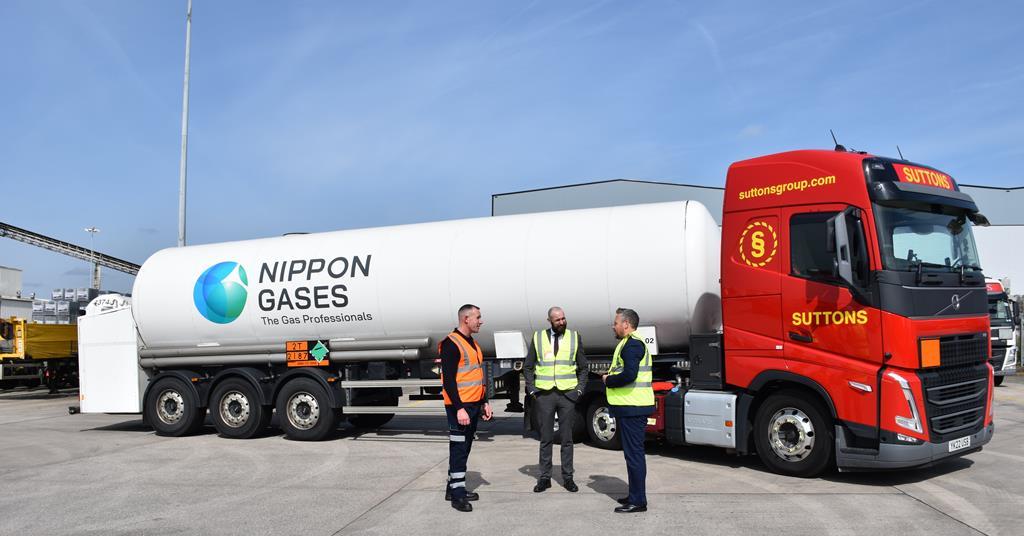

Suttons Tankers and Nippon Gases UKI are jointly testing hydrotreated vegetable oil (HVO) to reduce carbon emissions.
- The three-month trial focuses on Nippon Gases’ logistics operations, aiming for significant emission cuts.
- Previous trials showed an 80% reduction in emissions, promising considerable environmental benefits.
- HVO, made from waste, offers a 90% reduction in greenhouse gases compared to conventional diesel.
- The trial may result in broader HVO adoption across Suttons’ Nippon Gases fleet.
Suttons Tankers, headquartered in Widnes, in collaboration with Nippon Gases UKI, has commenced a promising three-month trial using hydrotreated vegetable oil (HVO) to significantly reduce carbon emissions within the logistics operations of Nippon Gases. Drawing from past experiences, where Suttons Tankers achieved an 80% carbon reduction across a select fleet, this trial seeks to explore the further benefits of HVO fuel in operational settings.
HVO stands as a renewable fuel sourced from used cooking oil and waste materials, providing an impressive reduction of up to 90% in greenhouse gas emissions compared to traditional diesel. This trial specifically utilises HVO certified by the Zemo Partnership, with both the sustainability of feedstocks and supply chains being rigorously certified by the International Sustainability and Carbon Certification (ISCC).
In this endeavour, a selected fleet of Suttons Tankers’ vehicles, stationed in Stockton and dedicated to Nippon Gases’ operations, is now operating on a blend of HVO. The trial incorporates extensive data gathering on performance metrics to assess fuel efficiency and emission reduction potential. The first month alone has shown promising results, with an emission reduction of 87 tonnes.
Rajat Bhardwaj, ESG manager at Suttons Tankers, expressed confidence in the trial, highlighting its build upon previous successes and reinforcing national commitment to sustainable solutions for customers. Similarly, Joanne Rawlinson, Nippon Gases UKI supply chain manager, expressed her enthusiasm for the partnership and the project’s alignment with Nippon Gases’ sustainability goals. Early results are encouraging, and the potential for long-term benefits across wider operations is under keen exploration.
Should the trial continue to yield positive results, the adoption of HVO across Suttons Tankers’ fleet servicing Nippon Gases could become a reality.
