
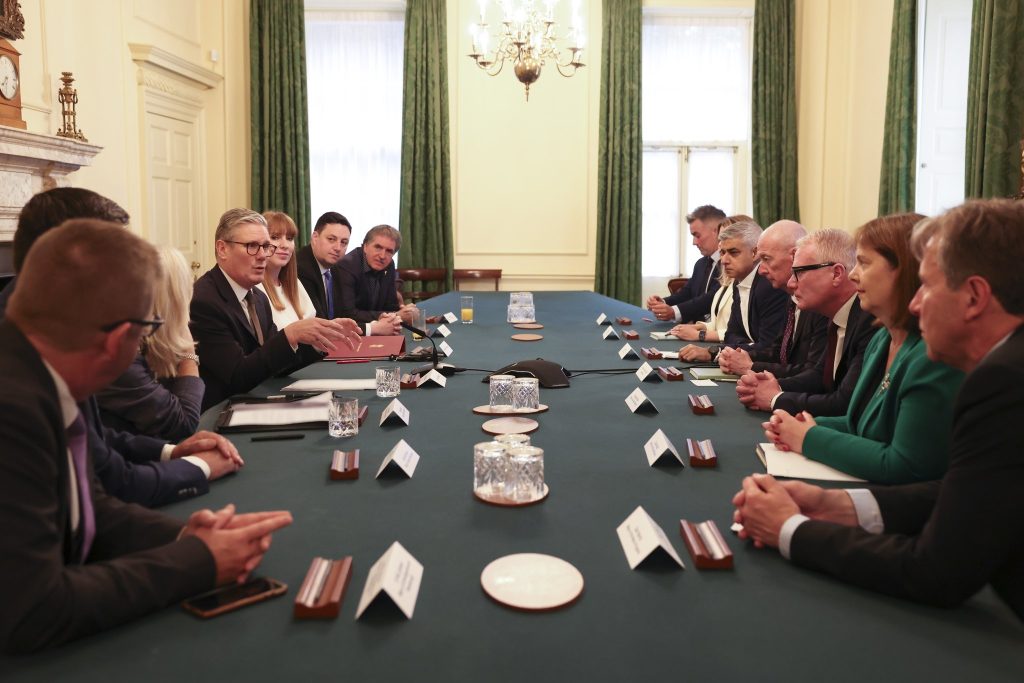

A pivotal meeting was held by the prime minister with England’s regional mayors to initiate a major devolution programme.
- Mayors gathered at 10 Downing Street to discuss shifting power from Westminster, aiming to empower all regions of England.
- The devolution initiative is expected to bolster infrastructure development and promote economic growth across various regions.
- Mayors expressed enthusiasm for the new collaborative spirit, viewing it as a significant shift towards regional empowerment.
- Key infrastructure projects could accelerate as a result of this focus on regional governance and planning.
In a significant move, the prime minister and deputy prime minister convened at 10 Downing Street with England’s regional mayors, marking the onset of a new devolution initiative. This programme is designed to decentralise power from Westminster, aiming to invigorate economic growth and infrastructure development across the country. The roundtable meeting symbolised a ‘reset in relationships’ between central and local governments, focusing on cooperation and mutual respect.
Discussions during the meeting highlighted a new partnership approach, with mayors and ministers agreeing on a series of early actions to enhance devolution. The government’s stance is to enable regions to deliver change tailored to their communities, thus aiming to alleviate regional inequalities. Additionally, the government has pledged to consider requests for devolution from more areas, reinforcing its commitment to broadening local governance.
A shift in departmental identity accompanies the devolution programme, with the Department of Levelling Up, Housing and Communities being renamed to the Ministry of Housing, Communities and Local Government. According to the National Infrastructure Commission, this devolution could lead to more effective planning and decision-making, as it allows local authorities to focus on their specific priorities.
Several significant infrastructure projects are likely to benefit from this new approach, including the West Yorkshire Mass Transit system, the Mersey Tidal scheme in the Liverpool City Region, and the enhancement of rail connections between Manchester and the West Midlands. The mayors collectively viewed the meeting as a catalyst for action, where solutions and aspirations could transform into tangible progress.
Mayors shared their perspectives post-meeting. West Yorkshire’s Tracey Brabin emphasised the energising effect of the discussions and the potential for economic and infrastructural advancements. Greater Manchester’s Andy Burnham welcomed the direct dialogue with the prime minister and the alignment of objectives aimed at developing homes and improving public transport systems. LibNorth East mayor Kim McGuinness stressed the importance of addressing child poverty through enhanced local powers as a crucial step toward regional transformation.
This meeting heralds a transformative shift in UK’s approach to governance, fostering local empowerment and regional growth.
