
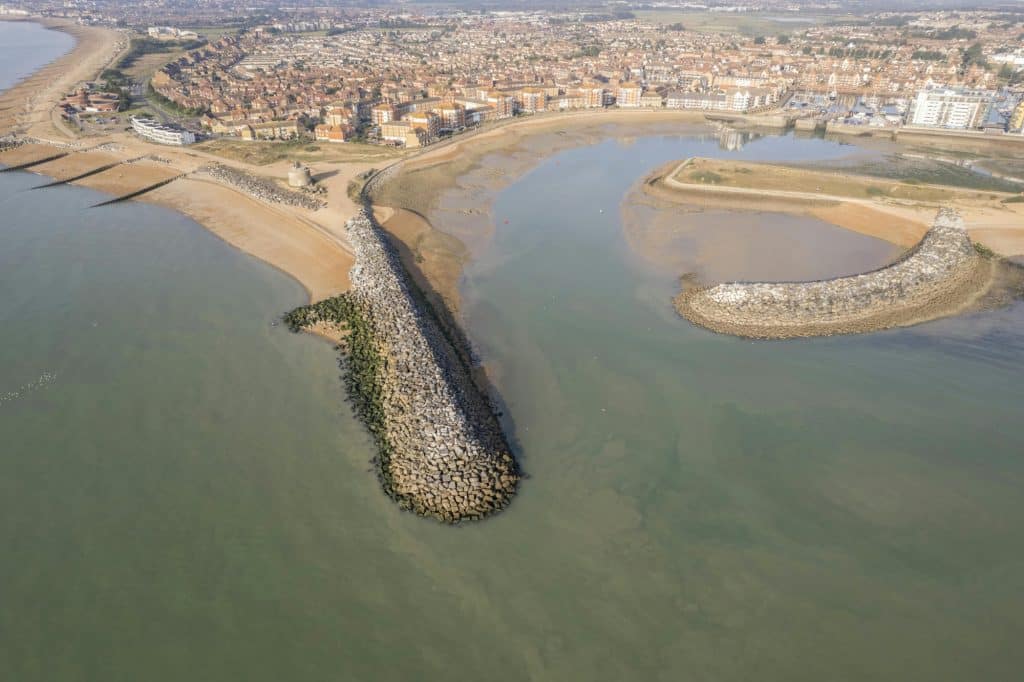

The medium-term plan for protecting 15km of Eastbourne’s coastline has been unveiled, aiming to safeguard key infrastructures and homes. This plan, spearheaded by the Environment Agency, addresses the impending threat of sea level rise.
- Shingle beach enhancements are on the horizon, set to commence in 2025, as part of a strategic initiative to mitigate coastal erosion and flooding.
- The scheme will preserve significant local landmarks, ensuring ecological and landscape improvements throughout Eastbourne and surrounding areas.
- The Environment Agency is pioneering a flexible adaptation pathway to accommodate future sea level and weather changes.
- Proactive measures will be adopted to reduce carbon emissions from heavy machinery, contributing to more sustainable coastal management.
The Environment Agency has confirmed a strategic medium-term plan designed to protect Eastbourne’s extensive coastline, stretching over 15km. This initiative is crucial for safeguarding over 10,000 homes, key heritage sites, and vital conservation areas from the looming threat of sea level rise exceeding 1m over the next 80 years. The project, known as the Pevensey Bay to Eastbourne Scheme Coastal Management Scheme, represents a collaborative effort with the Eastbourne Borough Council.
Set to begin in 2025, the project will undertake subtle but essential enhancements to the shingle beaches at Pevensey Bay, Sovereign Harbour, and Eastbourne. The intended work revolves around maintaining the current beach management practices with necessary improvements, aiming to defend the area against flooding and erosion over the coming 15 years. According to the Environment Agency, these interventions are among the optimal solutions for both the community and the local environment.
This coastal scheme leverages a flexible adaptation pathway approach, allowing for modifications in response to observed and anticipated changes in sea levels and extreme weather conditions. This method, previously applied to coastal flood projects in towns like Looe, Cornwall, ensures the project remains adaptable to future challenges.
An integral part of this plan is the environmental aspect, as the agency explores alternative fuel options for heavy machinery used in shingle maintenance, thereby minimising carbon emissions. This adds a layer of eco-friendliness to the scheme’s implementation, aligning with broader environmental goals.
Further details regarding the beach improvements are expected in autumn 2024, post-completion of the ongoing design phase. Public dissemination of the detailed engineering drawings will be aligned with the procurement phase in 2025, verified by JBA Consulting, the engineering designer.
The adaptation pathway and strategic approach, dubbed ‘Hold the Line’, adheres to keeping the shoreline in its current position, as prescribed by the existing Shoreline Management Plan. This choice reflects the importance placed on precise timing and investment, with the continuation of beach management schemes proposed until 2037 as the most effective strategy.
Statements from Environment Agency officials underscore the escalating risks of climate-induced sea level rise and extreme weather, projecting a sea level increase of 1.15m by 2100. The commencement of shingle management improvements sets the stage for a comprehensive long-term plan addressing these rising risks along the coastline from Holywell in Eastbourne to Cooden Beach, east of Pevensey Bay.
This medium-term approach marks a significant initial step in a broader strategy to combat future coastal risks, ensuring long-term sustainability and resilience for Eastbourne’s coastline.
