
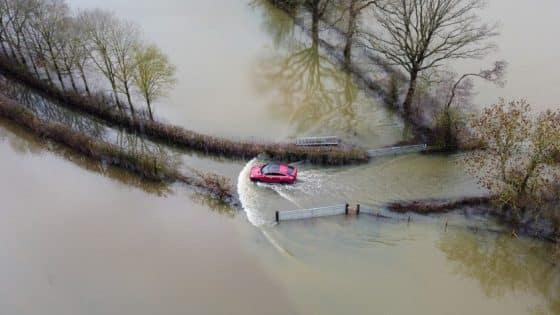

The District Councils’ Network (DCN) has raised alarms over the government’s inadequate funding of Internal Drainage Boards (IDBs), which are crucial for flood management in low-lying areas of England.
- IDBs manage vital flood defences, yet face funding shortages due to government restrictions on council tax increases, impacting local services.
- Energy costs, increased weather events, and inflation have driven up costs for IDBs by 28% since the 2022/2023 financial year.
- The financial burden on taxpayers is significant, with council tax covering much of the increased costs, hitting districts like Boston hard.
- DCN and other stakeholders urge the UK government to address funding challenges to prevent flooding risks and maintain necessary public services.
The District Councils’ Network (DCN) has raised significant concerns regarding the government’s failure to adequately support Internal Drainage Boards (IDBs), which are pivotal in managing flood risks in England’s lowest-lying areas. These small public bodies facilitate both flood defence and economic growth but are struggling financially due to insufficient government support.
Under existing regulations, district councils are responsible for collecting levies for IDBs, despite being constrained by strict limits on council tax increases. These limits restrict councils’ ability to offset rising costs attributed to IDBs, thus impacting their capacity to fund other essential services. The situation is exacerbated by the fact that IDB costs have surged by an average of 28%, driven by escalating energy and fuel prices, more frequent extreme weather events, and increasing wage demands.
This year, taxpayers are facing a total bill of £49.94 million, primarily funded through council tax and levies on landowners. In Boston Borough Council, for instance, the drainage levy comprises a staggering 22% of its annual budget, with 61% of council tax revenues allocated to cover these costs. Such financial strain is largely attributed to the rise in energy prices, notably the standing charges critical for the operation of pumping stations—some facing over 500% increases.
The Association of Drainage Authorities provides data showing that 112 IDBs protect nearly 10% of England’s total land area. This encompasses 1.18 million hectares, including vital infrastructure such as motorways, railways, power stations, and valuable agricultural land. Moreover, IDBs manage water levels across 400 sites of special scientific interest, highlighting their environmental significance.
DCN chairman Sam Chapman-Allen has emphasised the necessity of proper funding to uphold flood defences nationwide, stressing the essential role these defences play in protecting lives and livelihoods. Similarly, Paul Redgate of the Local Government Association (LGA) underlined the dramatic impact of funding shortfalls on councils since 2013, calling for urgent government intervention to devise a sustainable funding solution.
With increasing concerns from local authorities, farmers, and environmental groups, there is a consensus on the need for reform. Advocates highlight the cost-effectiveness of natural flood management over traditional infrastructure, encouraging government support and investment in sustainable practices. The impending launch of a Flood Resilience Taskforce by the government is intended to bolster strategies in flood defence and climate adaptation.
Historically, funding for IDBs was derived directly from those benefiting from their services. However, since the 1970s, this model has shifted to one where councils collect these funds via general taxation methods. This system has become unsustainable due to drastic reductions in governmental financial support, leaving councils unable to meet both IDB levies and other essential community services.
Addressing the funding crisis for Internal Drainage Boards is vital to ensure the security and prosperity of vulnerable communities across England.
