
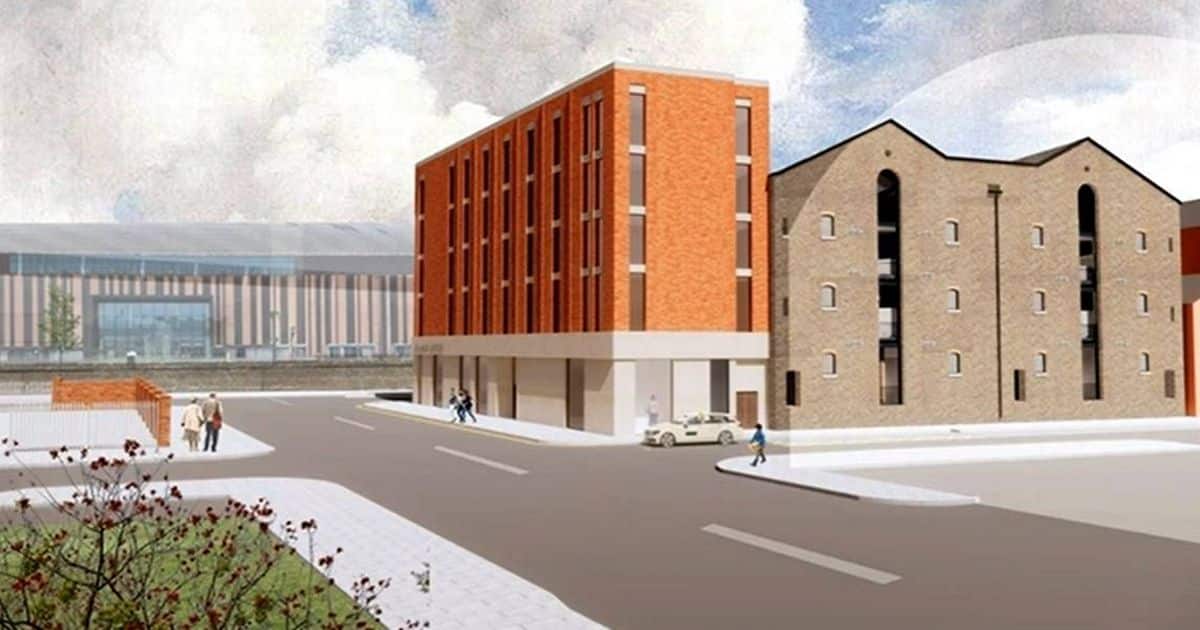

Liverpool Council has approved the construction of a new hotel near Everton’s new stadium at Bramley-Moore Dock.
- The 80-bed hotel will be developed by Fast Growth Homes on a site currently housing industrial and warehouse buildings.
- The new development will integrate a Grade II listed former mill, preserving historical architectural features.
- The construction aims to revitalise the area and support Liverpool’s role as a hub for tourism and culture.
- Councillors unanimously supported the project, highlighting its potential economic benefits.
Liverpool Council has granted approval for the development of a new 80-bed hotel near Everton’s promising new home at Bramley-Moore Dock, marking a significant addition to the area’s hospitality infrastructure. This development is spearheaded by Fast Growth Homes, a company known for its successful projects in the region, aiming to enhance both tourism and local culture by bringing new facilities to the fore.
The site, strategically located between Regent Road, Blackstone Street, and Fulton Street, currently hosts a mix of industrial and warehouse infrastructure, including a Grade II listed former mill. This historical building is set to house 32 of the hotel’s rooms, with the remaining 48 bedrooms being part of a new construction. This blend of preservation and modernisation is crucial, as evident in the plans to maintain key historical elements such as the cast-iron door frames and exposed brickwork, adding cultural value and architectural interest to the project.
Dylan Jones, representing Fast Growth Homes, underscored the site’s historical significance. Originally built around the 1850s as a fireproof warehouse, the site has undergone various iterations, from storing commodities like cotton and corn to later serving as artists’ studios. The recent five-year vacancy period has left the building underutilised, making its transformation into a hotel a welcome change that respects its historical roots while offering economic revitalisation.
The architectural design involves a blend of the old and new, retaining the old mill’s charm while adding a new, modern structure. The ground floor will feature a series of shared spaces including the Regent and Fulton Bars, alongside a central lounge and reception area, aiming to foster a social environment for guests and visitors. Such thoughtful planning dovetails with the area’s developmental goals, providing necessary amenities in the proximity of the stadium which is expected to draw large crowds.
The council’s decision reflects unanimous support, acknowledging the project’s alignment with Liverpool’s strategic objectives for tourism and economic growth. Chris O’Flaherty, managing director at Fast Growth Homes, stated that the project is not only a testament to successful advocacy for building preservation but also a catalyst for further development in the Ten Streets district, supporting Liverpool as a bustling centre for major events.
The approval of the new hotel project marks a promising development for Liverpool’s economic and cultural landscape.
