
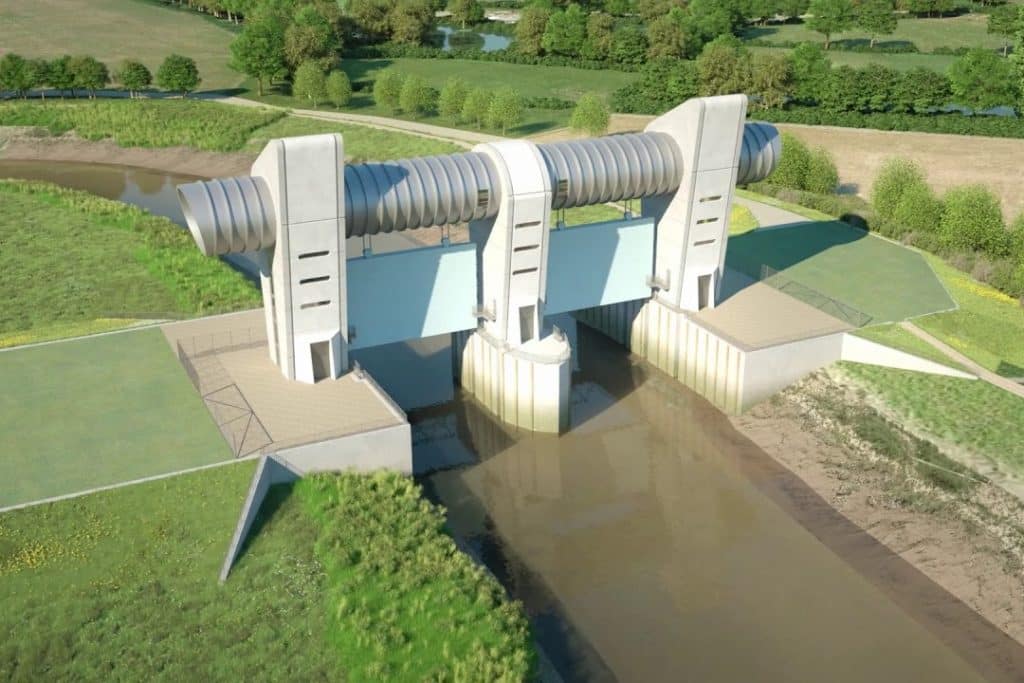

The £249M Bridgwater tidal barrier project has received full business case approval, ensuring it will proceed to protect homes and businesses from flooding.
- Originally costed at £100M, the project faced several challenges, including asbestos discovery, leading to a revised cost of £249M.
- Strategically crucial, the barrier aligns with Somerset’s 20-year flood action plan, which aims to enhance resilience and maintain regional connectivity.
- The project partners include the Environment Agency, Somerset Council, Somerset Rivers Authority, and the Local Enterprise Partnership.
- Once completed, the scheme promises substantial protection benefits to 12,800 properties with an anticipated £2bn in local advantages.
The Bridgwater tidal barrier, a significant £249M flood defence project, has recently secured approval for its business case, marking a pivotal step towards its realisation. This news provides the utmost assurance that the barrier’s construction across the River Parrett, intended to mitigate tidal flood risks, will progress. Initially approved in March 2022 at an estimated cost of £100M, unforeseen complications, such as the discovery of asbestos, necessitated a review and subsequent increase of the project’s budget to £249M by late 2023.
The barrier represents a cornerstone of the Somerset 20-year flood action plan, a strategic initiative formed in response to the severe floods that devastated the Somerset Levels and Moors in 2013-14. This plan seeks to not only lower the incidence and severity of floods but also ensure ongoing access for communities and bolster resilience across various sectors including agriculture and wildlife. By preserving critical transport links and promoting regional growth, the plan underscores the barrier’s foundational role in local development.
The construction of the barrier is a collaborative effort, involving the Environment Agency and Somerset Council, with crucial support from the Somerset Rivers Authority and the Local Enterprise Partnership. Designed to span the River Parrett between Express Park and Chilton Trinity, the barrier will feature two ‘vertical lift’ gates to obstruct high tide water flow, as well as a footbridge to maintain pedestrian and cycling access across the river. These efforts are complemented by enhancements to downstream defences near Chilton Trinity.
Earlier this year, the Somerset Rivers Authority announced the completion of the access track to the barrier and the site compound, with ongoing efforts focused on extending the haul road to local defences. In a bid to manage costs, the project team is actively pursuing design and building efficiencies. Test piles installed last September continue to contribute valuable data to refine the scheme’s design.
Recognised as a flagship project, the barrier is expected to shield 12,800 properties and yield a significant £2bn in benefits for the Bridgwater area, with a projected return of £7.50 for every £1 spent. Discussions at the governmental level, involving the Environment Agency, Defra, and HM Treasury, are in progress to secure any necessary funding to ensure the barrier becomes operational by early 2027.
The Bridgwater tidal barrier stands as a transformative endeavour, promising significant flood protection and economic benefits for Somerset.
