
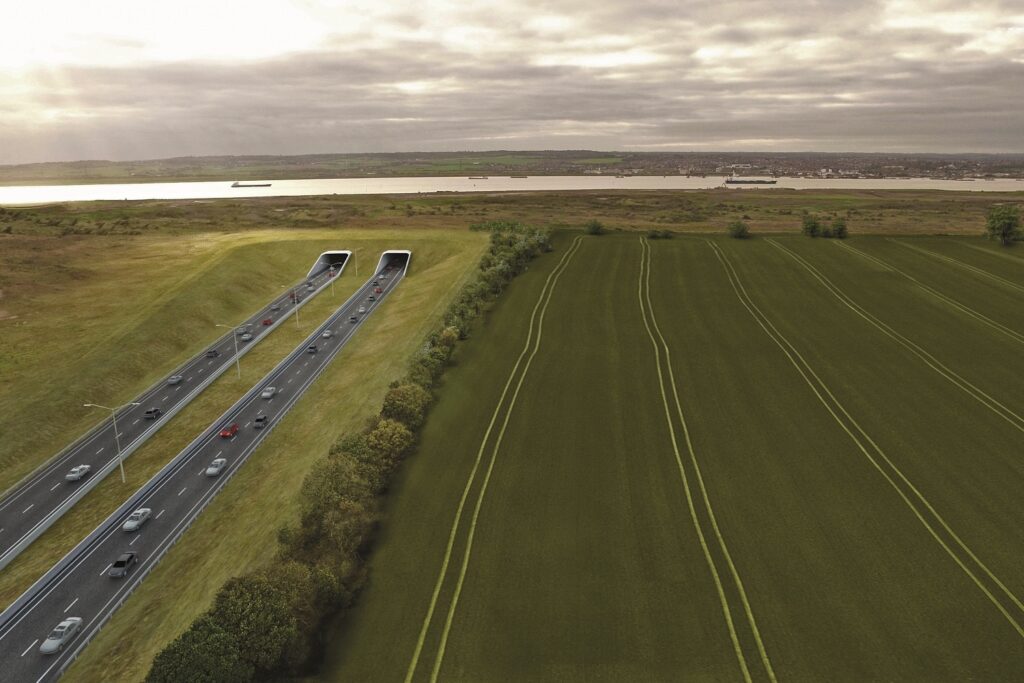

The proposed Lower Thames Crossing (LTC), the UK’s largest road project, faces further delays.
- The £9 billion venture remains unresolved as the decision on its Development Consent Order (DCO) is postponed.
- LTC aims to connect critical road networks with a 3.4km tunnel under the River Thames.
- Delays stem from bureaucratic processes and economic challenges impacting infrastructure projects.
- Stakeholders express concerns over recurring postponements affecting the project’s timeline.
The ambitious Lower Thames Crossing (LTC), envisioned as the nation’s most extensive road infrastructure undertaking, has encountered another setback. The latest announcement confirms that a decision on its Development Consent Order (DCO) will not occur until May 2025, extending the project’s timeline further. Initially intended to facilitate connectivity between Kent and Essex, the LTC encompasses a 3.4km tunnel under the Thames, intended to alleviate congestion at the heavily utilised Dartford Crossing.
Having been under development for seven years, with expenditure nearing £300 million, the DCO submission by National Highways represents a significant procedural accomplishment. The extensive document, spanning close to 360,000 pages, underscores the complexity of this infrastructure venture. Planned to create a vital artery connecting the A2 and M2 in Kent with the A13 and M25 in Essex, the LTC project aims to address the persistent traffic bottlenecks impacting the South East’s economy and infrastructure.
The origin of the scheme dates back to an Orbit Multi-Model Study conducted in 2002, which identified orbital transport issues around London. Subsequently, the Department for Transport (DfT) explored various corridor options for the River Thames crossing by 2009. These deliberations culminated in the selection of “Option C” in 2017, with a projected route and design evolving through successive consultations and environmental assessments.
Notably, the project has faced numerous design revisions and administrative hurdles. Initial proposals to enhance connectivity through additional road links have undergone “tweaks” to refine access and environmental integration. Despite anticipations for completion by 2027, issues such as ground investigations and management shifts have compounded delays, necessitating further assessments and consultations to address traffic, air quality, and ecological impacts.
The LTC scheme’s designation as a “pathfinder” for carbon-neutral construction highlights its strategic environmental focus. National Highways has integrated sustainability objectives to align with the UK’s net-zero targets, applying innovative procurement practices to minimise carbon footprints. This pioneering approach positions LTC as a critical study in sustainable infrastructure development, albeit amid ongoing administrative challenges.
As stakeholders await a resolution, the project’s timeline remains uncertain, fostering unease within the infrastructure and freight sectors. The delay, attributed to governmental fiscal reviews and electoral logistics, reflects broader economic and bureaucratic dynamics influencing major public works. However, assurances have been made by the Transport Secretary that the postponement should not be viewed as indicative of a rejection of the project.
Ultimately, the Lower Thames Crossing continues to represent both an ambitious infrastructural goal and a challenge in project management.
