
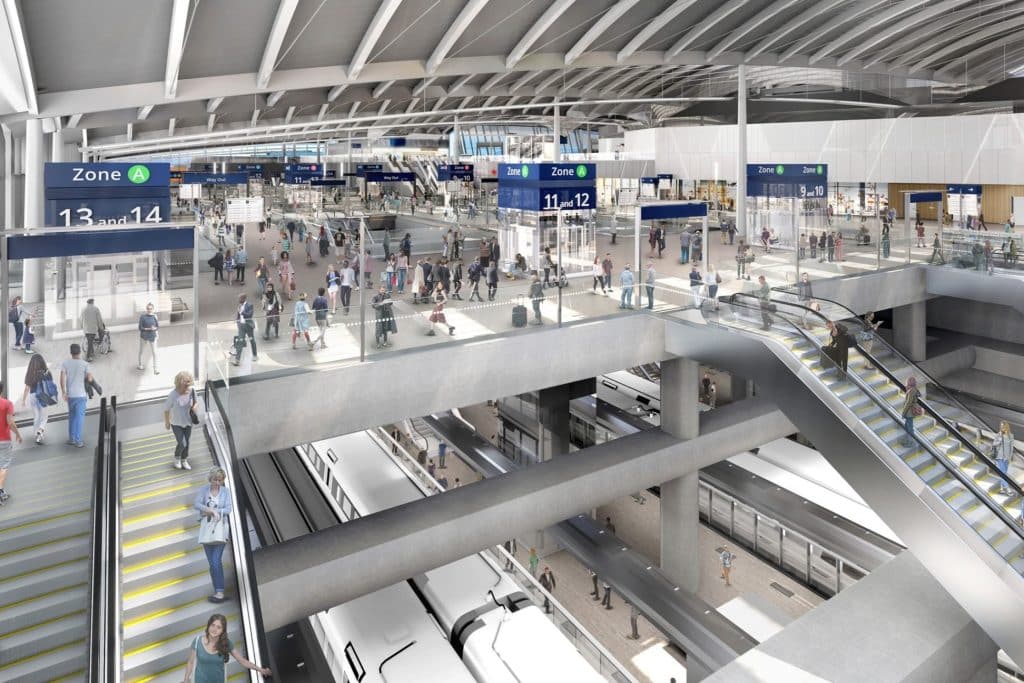

The absence of guaranteed level boarding at Old Oak Common station has raised significant accessibility concerns.
- HS2 Ltd admitted that the current design lacks level boarding for non-HS2 trains at this £1.67bn super hub.
- The incident involving Paralympian Tanni Grey-Thompson highlights the broader issue of inaccessibility in UK stations.
- Transport for All and London TravelWatch have voiced strong criticisms regarding accessibility inadequacies.
- HS2’s ongoing feasibility studies and past equality impact assessments aim to address these challenges.
High Speed 2 (HS2) Ltd is currently unable to ensure accessibility at the new Old Oak Common station in west London, particularly in terms of level boarding for non-HS2 trains. Level boarding is a crucial accessibility requirement designed to match the train floor heights with platform heights, thereby facilitating easy access for passengers with disabilities. This issue has drawn criticism from various quarters, including accessibility campaigners who have labelled the situation as ‘scandalous’.
The urgency of the matter became stark following an incident involving Paralympian and House of Lords member Tanni Grey-Thompson, who had to crawl off a train at King’s Cross. Following this incident, Emma Vogelmann of Transport for All highlighted ongoing issues with inaccessible stations, particularly significant developments along the HS2 route. HS2 Ltd has acknowledged that level boarding is not factored into the current access designs for non-HS2 trains at the futuristic £1.67bn interchange.
Old Oak Common station, under construction, is pivotal as a major interchange for HS2 services, linking passengers to central London and Heathrow Airport. The station will feature six platforms dedicated to HS2 and an additional eight serving conventional rail services, Heathrow Express, and the Elizabeth Line. HS2’s spokesperson clarified that these platforms adhere to Network Rail standards, each presenting different floor heights based on the trains they serve. HS2 is conducting feasibility studies to potentially incorporate level boarding for Elizabeth Line services, though many complex variables influence the outcome.
The HS2 project, despite its scale and ambition, has faced scrutiny regarding its equality and accessibility measures. Campaigners have intensified calls for regular Equality Impact Assessments (EqIAs) to predict and document implications on equality. Although EqIAs are not mandated by the Equality Act 2010, they are suggested to ensure compliance with the Public Sector Equality Duty. HS2 has conducted EqIAs for Phase One and continues efforts on emerging station designs, collaborating with partners like Arup and Network Rail.
The lack of guaranteed level boarding has also attracted comments from London TravelWatch, the statutory transport watchdog for the city. A spokesperson described the situation as financially and socially scandalous, especially given the substantial public investment in HS2. They emphasised the importance of implementing step-free access and level boarding from the outset to ensure all rail passengers could benefit from these public transport links.
Ensuring accessible and inclusive transport infrastructure must remain a core focus as UK rail developments progress.
