
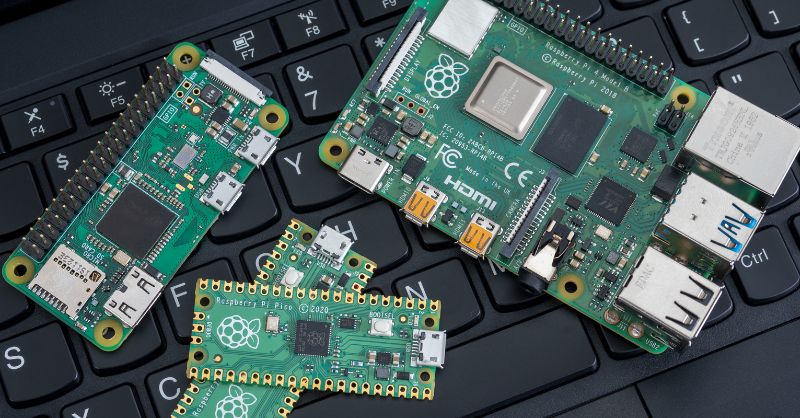

Raspberry Pi is poised to make a transformative leap with its proposed initial public offering (IPO) on the London Stock Exchange (LSE).
This strategic move is expected to invigorate the European tech IPO market, which has experienced a downturn, and position Raspberry Pi for future growth and innovation in tech.
A Journey from Innovation to Dominance
Founded in 2012 by computer scientist Eben Upton, Raspberry Pi began with a mission to democratise computing for education. The compact, cost-effective single-board computer swiftly became a sensation among educators and tech enthusiasts worldwide.
With over 20 million units sold by 2023, Raspberry Pi has cemented its status as a leader in the single-board computer market. Its influence extends globally, fostering creativity in both educational and hobbyist circles.
Empowering Education and Creativity
Beyond hobbyists, Raspberry Pi has driven innovation in education, providing invaluable coding and hardware skills. A 2023 study revealed its use in 40% of UK schools, underscoring its educational impact.
The device’s versatility permits it to be used in projects ranging from robotics to media servers. Its user community, now over 8 million strong, thrives on creativity and innovation.
The IPO: A Step Towards Future Growth
Raspberry Pi’s IPO seeks to raise $40 million, aimed at engineering advancements and supply chain optimisation. A portion is also earmarked for employee stock ownership plans.
These initiatives are intended to ensure Raspberry Pi’s technological relevance and cater to its vast community of users and developers.
As Europe faces a decline in tech IPOs in 2024, Raspberry Pi’s successful IPO could revitalise investor confidence in tech firms with robust user bases.
Navigating Market Challenges
Despite its popularity, Raspberry Pi faces competition from cheaper alternatives like Arduino. It must outline a clear growth strategy for investors.
The distinctive governance structure, with the Raspberry Pi Foundation holding the trademark, requires careful management. Investors will need clarity on how this influences company decisions.
Understanding these dynamics is crucial for stakeholders eyeing Raspberry Pi’s potential market performance post-IPO.
Adapting to Public Market Realities
Raspberry Pi’s dual approach of combining public funding for innovation and a focus on educational efforts presents both opportunities and challenges.
The company’s ability to maintain its pioneering role in computing while capitalising on market opportunities will be closely watched by investors.
The IPO offers Raspberry Pi a platform to bolster its educational mission and fortify its commercial ventures.
Anticipating the Future of Raspberry Pi
Raspberry Pi’s legacy of enabling accessible computing positions it favourably in the tech ecosystem. However, its ability to evolve in a competitive market remains crucial.
The potential IPO presents an opportunity to access resources necessary for innovation, sustaining its role in the educational and tech sectors.
This journey into the public realm could redefine Raspberry Pi’s future, requiring steadfast commitment to its founding principles and strategic adaptability.
Conclusion
Raspberry Pi’s IPO marks a pivotal moment in its journey, bridging educational initiatives with commercial expansion. As it transitions to the public market, its ability to balance innovation and education will determine its future impact.
Raspberry Pi’s potential IPO signifies a crucial evolution in its journey, poised to enhance its educational and technological influence.
Success in the public market will depend on aligning its innovative ethos with investor expectations. Raspberry Pi’s story, deeply rooted in accessible education and tech advancement, continues to unfold, inspiring future generations.
