
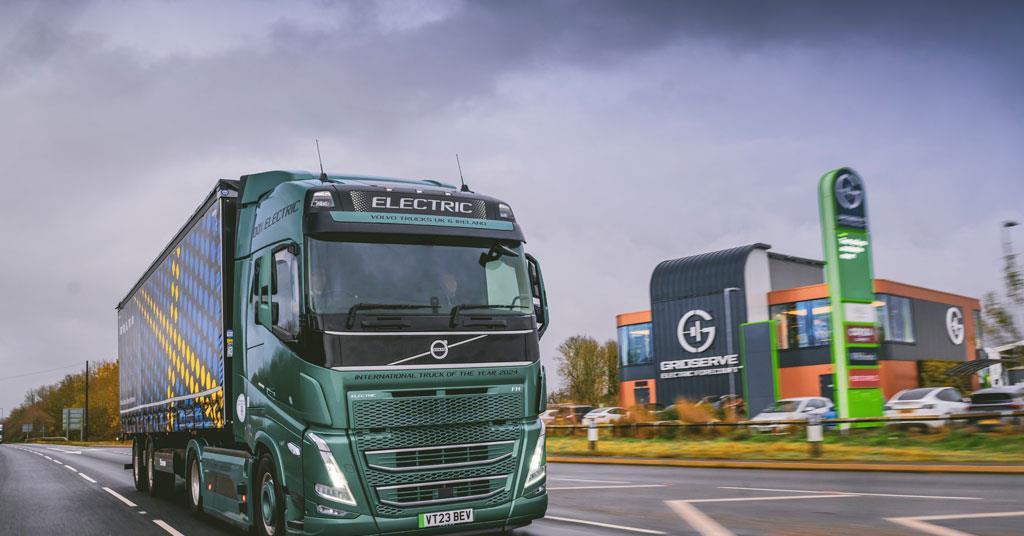

Sam Clarke, a pioneer in road freight decarbonisation, has been named Motor Transport’s top Decarbonisation Power Player for 2024.
- Clarke’s leadership in electric vehicle logistics and charging infrastructure has been transformative.
- He led successful bids for major government funding to advance electric Heavy Goods Vehicles (HGVs).
- His previous ventures include founding Gnewt Cargo, the UK’s largest zero-emission logistics fleet.
- Clarke’s current role at GRIDSERVE focuses on expanding EV charging networks and supporting mass EV adoption.
Sam Clarke has been recognised as the leading figure in the decarbonisation of road freight transport for 2024, described by judges as a continual presence in the industry with a positive attitude towards environmental logistics. His efforts have tackled the classic ‘chicken and egg’ conundrum regarding the precedence of vehicles or charging infrastructure, marking significant progress in decarbonisation.
Clarke’s journey in electric vehicles began with the founding of Gnewt Cargo, which became the UK’s largest zero-emission logistics fleet before its acquisition by John Menzies. Initially unaware of the vast potential of EVs in logistics, Clarke evolved his objectives from commercial success to prioritising environmental impacts, driven partly by his personal motivation to leave a positive legacy for future generations.
At GRIDSERVE, where he serves as Chief Vehicle Officer, Clarke aims to push forward the expansion of electric vehicle charging networks. His work involves supporting the development of charging infrastructure to enable mass adoption of electric vehicles, underscoring GRIDSERVE’s mission to deliver sustainable energy solutions across the vehicle spectrum from cars to HGVs.
Clarke has led successful initiatives such as the Electric Freightway project, securing £63 million in government funding to enhance the charging infrastructure necessary for electric HGVs. This project seeks to establish a nationwide network dedicated to electric HGVs, aiming to significantly reduce the emissions from the transport sector.
His scepticism towards hydrogen in road transport underlines a commitment to battery electric solutions, arguing that these vehicles are more viable today given their proven efficiency and the need for immediate action on climate change. Clarke’s stance reflects his broader strategic vision for rapid transitions towards electrification in road transport.
Clarke exemplifies the drive towards sustainable logistics, setting benchmarks in the industry’s transition to decarbonisation.
