
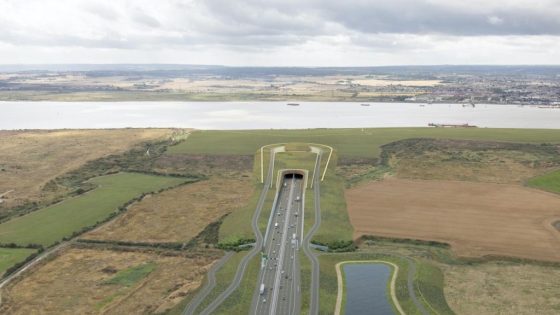

A pressing call has been made for the Lower Thames Crossing to receive development consent by 4 October.
- The request is backed by over 60 businesses and organisations, highlighting the crossing’s economic significance.
- The decision has been delayed due to the upcoming general election, affecting several key infrastructure projects.
- Concerns mount over the delays in major infrastructure progress, despite government’s growth commitments.
- Campaigners argue for alternative investment in rail freight to address congestion sustainably.
A coordinated letter spearheaded by Logistics UK and endorsed by over 60 businesses and entities, including the Civil Engineering Contractors Association and the Road Haulage Association, has been sent to Transport Secretary Louise Haigh, with a copy to Chancellor Rachel Reeves. It calls for the Lower Thames Crossing to be granted development consent by 4 October. This effort underscores the pressing need to alleviate congestion at the Dartford Crossing, which poses a significant economic burden estimated at £200 million annually due to delays and decreased productivity.
The decision on the Lower Thames Crossing’s development consent order has been postponed due to the timing of the 2024 general election. This delay affects not only the Lower Thames Crossing but also numerous other major infrastructure initiatives awaiting approval. The letter emphasizes that consenting the project in the current year would enable construction to commence prior to the next general election cycle, thereby potentially making the crossing operational by 2030 or 2032. It is seen as emblematic of the government’s focus on growth and productivity, reinforcing national interest over local dissent.
There is a growing impatience with the slow pace of progress on critical infrastructure, despite government promises to prioritise the national interest. The Finch ruling from the Supreme Court has introduced additional challenges by mandating rigorous environmental impact assessments for projects in the planning phase, further complicating timely decision-making for developments such as the Lower Thames Crossing and Sizewell C.
The letter articulates the precarious position of Britain’s exporters, who face uncertainty each time they use the Dartford Crossing. The unpredictability akin to a gamble is untenable for exporters, highlighting the Lower Thames Crossing as a potentially transformative project capable of delivering a £40 billion stimulus to the UK economy. Moreover, it could harness private financing avenues, expediting economic returns.
Despite the vocal support from businesses, some sustainable transport advocates, including Michael Solomon Williams from the Campaign for Better Transport, question the notion that new roads mitigate congestion. They argue for increased investment in rail freight and public transport, suggesting that these alternatives could yield substantial economic, environmental, and health improvements for regions like Kent and Essex.
A timely decision on the Lower Thames Crossing is crucial for addressing congestion and enhancing economic growth.
