
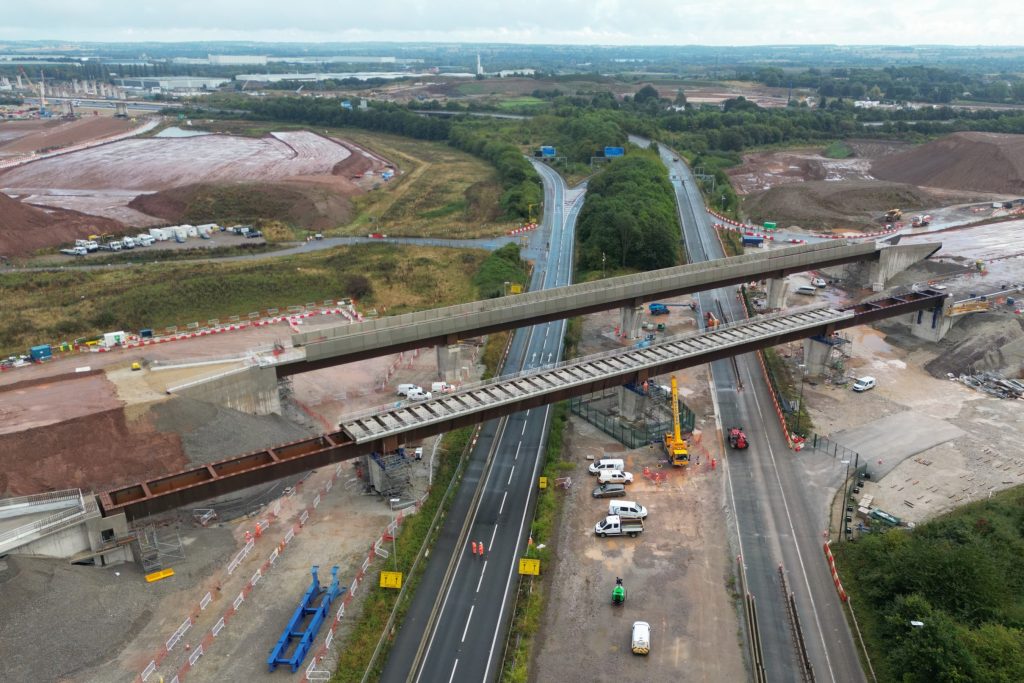

In a significant engineering feat, two viaducts have successfully been placed over the M42 and M6 link roads at the HS2 Delta Junction.
- The West Link Viaduct’s relocation, a 158m-long and 1,100t structure, was accomplished in just 11 hours.
- This task was completed ahead of schedule, allowing for earlier-than-expected reopening of motorway link roads.
- The East Link Viaduct followed similar processes earlier in the year, enhancing logistical capabilities for the HS2 project.
- The Delta Junction, with its complex layout, is pivotal in facilitating high-speed rail connections across key UK cities.
In an impressive display of engineering precision, the final phases of placing two parallel railway viaducts over the M42 and M6 link roads were completed recently. These viaducts, representing a crucial component of HS2’s Delta Junction in North Warwickshire, are the first to be completed in this significant infrastructure project. The West Link Viaduct, which is 158 metres long and weighs 1,100 tonnes, was moved into position over the weekend in just 11 hours. This operation was especially notable for being completed quicker than planned, which led to the reopening of the motorway link roads six and a half hours ahead of the original schedule. A team from Victor Buyck Steel Construction, working for Balfour Beatty Vinci (BBV), utilised a push-pull jacking system to achieve this remarkable feat.
Following the successful relocation of the West Link Viaduct, the East Link Viaduct was positioned earlier in the year using a similar two-stage process. This procedure, carried out during two weekend operations in February and April, demonstrates the efficiency and forward-planning involved in the HS2 construction efforts. The East Link Viaduct is now being prepared for use as an internal haul road by the end of December, which will facilitate the movement of materials from Bromford Tunnel to Delta Junction without overburdening the local road network with additional lorries.
The Delta Junction itself is a complex infrastructure node comprising embankments, cuttings, and thirteen viaducts that span motorways, local roads, existing rail lines, rivers, and floodplains. It includes a combination of six precast segmental viaducts, four composite viaducts, and three low viaducts. Notably, this junction facilitates the connection of high-speed trains between London, Interchange Station in Solihull, and Birmingham Curzon Street Station, with routes branching towards Manchester. This ambitious layout underscores the transformative impact of the HS2 project on the UK’s rail network.
According to Panos Psathas, senior project manager for HS2 Ltd, the completion of the viaducts marks a significant advancement in the construction of the Delta Junction. Psathas emphasised the collaborative effort of thousands of specialists, including engineers, architects, and designers, all utilizing state-of-the-art technology to realise Britain’s new high-speed railway. Echoing this sentiment, BBV’s senior project manager, JoseLuis Preciados, expressed pride in the team’s tireless work and precise execution of these complex operations.
The innovative use of a push-pull jacking system, implemented for the first time in the UK by Victor Buyck Steel Construction, facilitated the bridges’ movement. Project Manager Tibo Suvée highlighted the system’s flexibility in allowing the structure to be adjusted backward or forward as required during the launch. Supporting these sentiments, National Highways network planner David Patmore acknowledged the intricacies involved in such operations, underscoring the collective efforts made to minimise road user disruptions during the process.
The HS2 Delta Junction viaduct placements signify a major milestone in enhancing the UK’s railway infrastructure.
