

Recent safety insights emphasise the critical need for careful planning in crane construction near sites with excavation.
- A significant safety report highlights overlooked risks in installing tower cranes at excavation sites supported by tension piles.
- Potential flaws in crane erection designs can lead to severe consequences, underscoring the importance of meticulous planning.
- The emergency correction of a design flaw prevented possible disaster, serving as a preventive lesson for the construction industry.
- The report underscores the necessity of comprehensive staging and verification in engineering projects to avoid past mistakes.
In a recent safety report, the importance of careful design considerations for tower cranes near excavation sites has been accentuated. The insight, sourced from an anonymous reporting channel for engineers, Cross, underscores the need for the industry to learn from previous incidents to prevent recurrence.
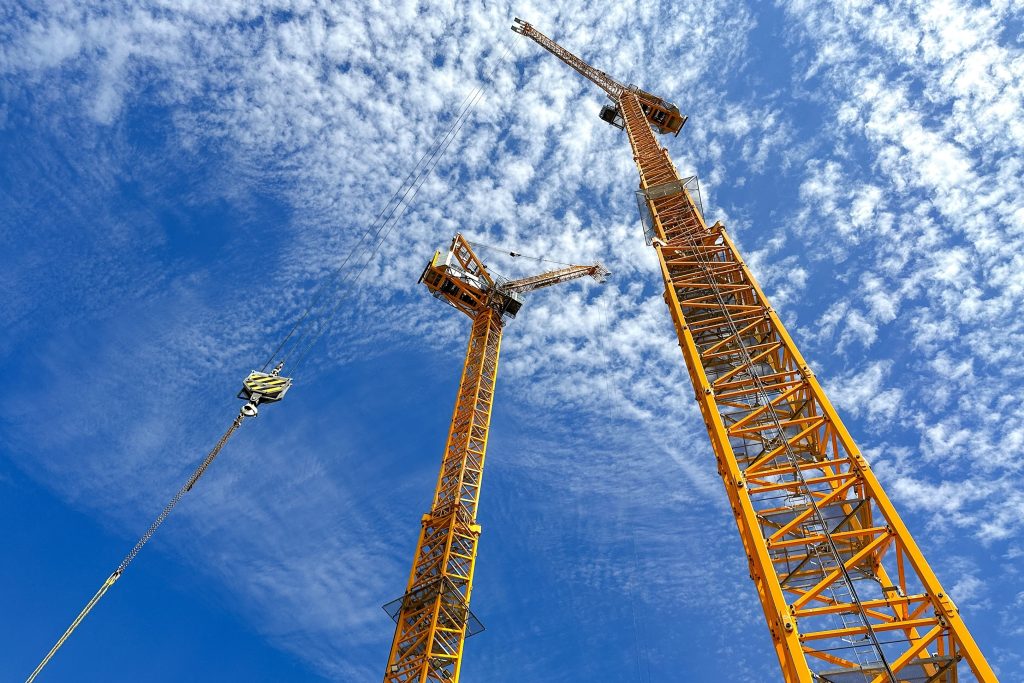
On a particular site, two tower cranes were erected near the edge of an excavation, supported by structures such as sheet piles and struts. The excavation revealed bedrock about 2m below the surface. To support these cranes, four piles were constructed, which under certain working conditions, could experience tension. The design assumed uplift forces could be countered by the weight of the soil and rock below. However, it failed to consider the impact of soil and rock removal, compromising the tensile capacity.
The reporter points out that while early crane installation can streamline initial construction phases, improper design poses significant risks, including the potential for crane collapse, property damage, and casualties. Fortunately, in this instance, the design shortfall was discovered and rectified before any adverse events could occur.
This report serves as a crucial reminder of the need for thorough planning and assessment in construction projects, echoing past disasters like the 2022 crane collapse in Hong Kong, which resulted from a failure at the base. As Cross’s expert panel remarked, this scenario exemplifies the significance of temporary works and the necessity of revising designs as construction progresses to ensure assumptions remain valid.
Moreover, the panel stresses the importance of a thorough ground investigation and realistic design safety evaluations. Temporary works should be meticulously briefed and coordinated, highlighting the critical role of a temporary works coordinator in overseeing such operations.
This case underscores the critical importance of continuous assessment and revision in construction design to prevent potentially catastrophic outcomes.
