
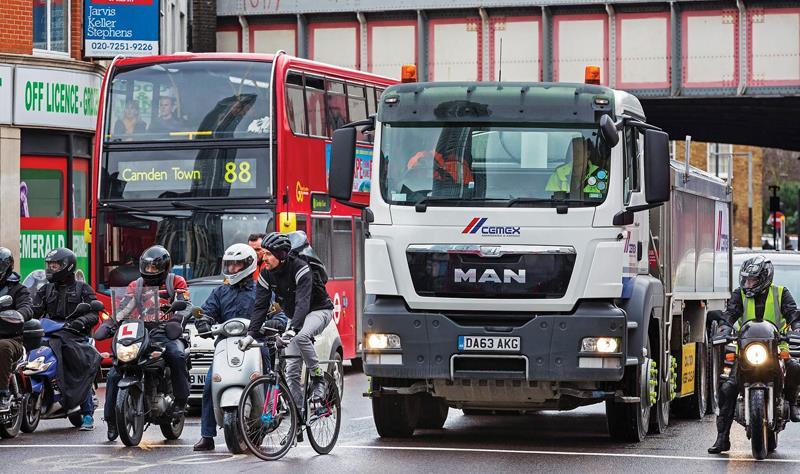

Hauliers are urged to verify the compliance of their radar systems with London’s Direct Vision Standards (DVS) amidst growing concerns.
- Recent reports indicate that numerous radar systems may falsely claim to meet DVS criteria, posing dangers to pedestrians and cyclists.
- SM UK has initiated emergency testing facilities to address potential non-compliance issues detected in certain radar models.
- A video released by SM UK demonstrates the shortcomings of some radar systems, highlighting a shortfall in the required sensor range.
- The industry shows significant demand for testing services, with available slots quickly filling, underscoring the urgency of the situation.
In recent times, concerns have emerged over the compliance of radar systems installed in commercial fleets, specifically regarding adherence to London’s Direct Vision Standards (DVS). With certain devices falsely claiming to meet these stringent requirements, there is an imminent risk posed to the safety of pedestrians and cyclists in the capital.
Commercial fleet safety firm SM UK has promptly responded by establishing emergency testing bays in Tamworth and Leeds. These facilities aim to identify radar systems that do not comply with the necessary DVS standards, particularly those with flat casings that fall short of providing the mandated sensor range. This proactive measure addresses the industry’s mounting worries about vehicles’ blind spots, which endanger vulnerable road users.
A demonstrative video released by SM UK has highlighted the inadequate performance of some radar systems, which only offer a visual range of 150 degrees instead of the requisite 180 degrees mandated by the DVS 2024 regulations. The video further reveals that these systems fail to signal drivers when the radar beam is obstructed, thereby endangering unprotected road users. The video has accumulated over 8,000 views, pointing to a high level of concern within the haulage industry.
The response from SM UK, led by Chairman Steve MacDonald, underscores a commitment to ensuring robust safety measures within commercial fleets. According to MacDonald, it is crucial for fleet operators to fit the correct safety equipment to prevent potential harm to vulnerable road users. The opening of emergency HGV bays for testing is testament to their dedication towards enforcing compliance with the TfL DVS standard effectively.
Due to the widespread apprehension regarding non-compliant radar systems, demand for SM UK’s testing services is on the rise, with appointments being fully booked until July. This intense demand reflects the necessity for urgent checks to uphold safety on London’s roads and protect all road users, including drivers and pedestrians alike.
Ensuring radar system compliance with DVS regulations is essential for safeguarding vulnerable road users and maintaining safety standards.
