
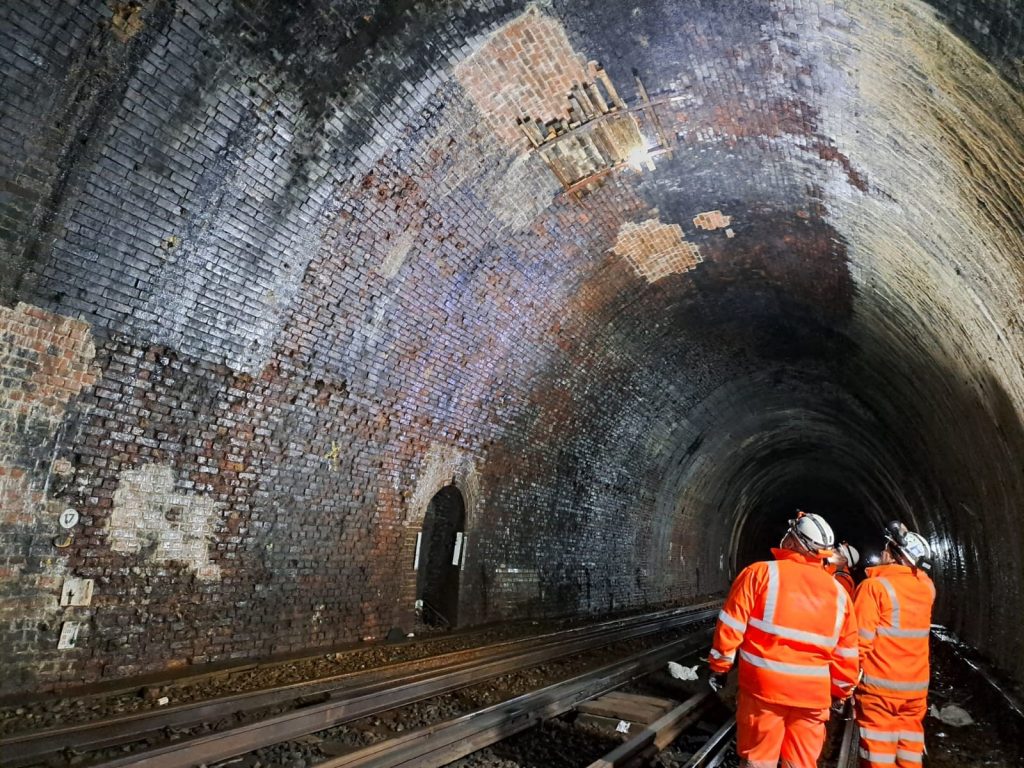

Over the summer, Network Rail conducted essential repairs on the historic Blackheath tunnel in South London, a task that required a complete shutdown of the tunnel for ten weeks.
- A suspension of train services until August 12 allowed comprehensive restoration of the tunnel’s ageing infrastructure.
- The repairs involved significant structural work, including the use of over 10,000 bricks to address damage in the tunnel’s lining.
- Further plans are underway, as Network Rail aims to enhance the tunnel’s resilience against water ingress through advanced techniques.
- The initiative is part of a £10M investment to ensure the tunnel’s longevity and improve journey reliability for passengers.
Network Rail undertook a significant project to repair the Blackheath rail tunnel, which necessitated an uninterrupted closure for ten weeks. The tunnel, a key feature of South London’s railway infrastructure, dates back to 1849 and has long suffered from structural issues due to its age. By August 12, the closure had allowed sufficient time for extensive maintenance work to be executed, ensuring safer and more reliable journeys through this historic passage.
The endeavour involved meticulous cleaning and repair measures, including the removal of years’ worth of soot accumulated from steam train operations. This cleaning was achieved using a specialist industrial vacuum. Moreover, the project saw the installation of more than 10,000 bricks to mend the damaged tunnel lining, which had been compromised by persistent leaks and water ingress. Such issues have been especially problematic, leading to substantial delays and speed restrictions for Southeastern rail customers in the year prior to the renovation.
Understanding the root causes, the repairs addressed the freezing and thawing cycles that allow rainwater to infiltrate through the ground, damaging the tunnel’s brickwork. These adverse conditions have not only harmed the structure itself but also the track and electrical systems within, necessitating a thorough remedial approach. Consequently, Network Rail carried out detailed structural and ground surveys to plan the next phase of repairs effectively.
David Davidson, Network Rail’s Route Director for Kent, conveyed the ongoing commitment to optimising the tunnel’s condition. Emphasising a long-term strategy, Davidson indicated that future works would involve advanced measures such as spray concrete lining and a complete overhaul of the track infrastructure. This plan is indicative of Network Rail’s proactive approach to preserving Victorian-era engineering while meeting contemporary travel demands.
This repair programme forms a part of a broader £10 million investment aimed at improving Blackheath tunnel’s infrastructure. Scott Brightwell, Southeastern’s operations and safety director, highlighted the significance of these efforts in delivering enhanced travel experiences for passengers. Notably, the decision to execute these repairs in continuous blocks, rather than staggered weekend work, maximised operational efficiency under challenging conditions.
Network Rail’s strategic investment in the Blackheath tunnel aims to secure its structural integrity and improve rail travel reliability.
