
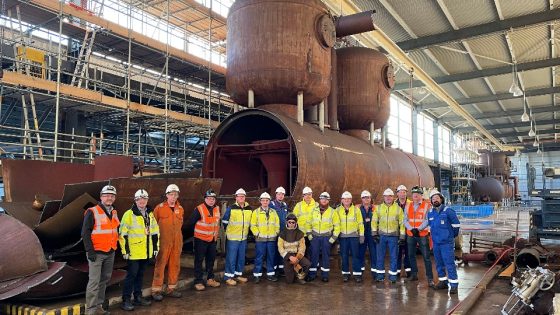

The planned demolition of Sizewell A’s turbine hall marks a significant step forward in nuclear site restoration.
- Erith, in collaboration with NRS, commenced preparatory works for the demolition in July 2022, awaiting final approval.
- A substantial amount of metal and cabling has been safely removed and recycled, bringing economic benefits.
- The demolition process is expected to transform the skyline and clear large areas for future use.
- Nuclear Decommissioning Authority and involved teams express commitment to safe and sustainable decommissioning.
The demolition of Sizewell A’s turbine hall, managed by Nuclear Restoration Services’ (NRS) principal contractor Erith, signifies an important phase in the decommissioning process as they make preparations to change the landscape significantly by March 2025. Erith has been proactive, beginning initial tasks in July 2022 by leveraging previous experience in turbine hall demolition to set the groundwork, even before receiving formal permission.
Sizewell A, which halted its twin nuclear Magnox reactors on 31 December 2006 after 40 years of operation, is undergoing a massive clean-up. The site is noteworthy as Sizewell B, a pressurised water reactor, was completed in 1995, with plans for Sizewell C, an EPR (European Pressurised Reactor), as a future prospect. This historical context adds layers to the ongoing restructuring activities at Sizewell A.
Significant work has been undertaken, with over 45,000 work hours devoted to dismantling scaffolding and hazardous material removal, ensuring site safety. An additional 25,000 hours were allocated to cleaning and managing asbestos. Essential decommissioning efforts also involved removing and recycling 2,498 tonnes of metal from the turbines, and an extensive 57.3 kilometres of cabling. The recycled metals are projected to generate an income of up to £4.5 million.
Ashley Notman from Erith highlighted the comprehensive preparatory operations, which involved collaboration with NRS and the Office of Nuclear Regulation. They adopted targeted explosive demolition methodologies to break down the concrete plinths efficiently. This approach was crucial in cutting down traditional demolition duration by approximately 40%, bringing reduced environmental disruption and improved project efficiency.
Nuclear Restoration Services Sizewell A site director Alan Walker praised the project’s progress, noting its positive impact on local economies and alignment with strategic goals to diminish old structures. Meanwhile, senior project manager Wendy Heath pointed out the momentous nature of the project, which clears an area comparable to a football pitch and results in substantial material recycling. Both expressed enthusiasm over the contributions this makes towards achieving broader decommissioning targets.
Alan Cumming of the Nuclear Decommissioning Authority reiterated their dedication to safely and sustainably repurposing the site, affirming the commitment of all contributors who have played a pivotal role in advancing the decommissioning mission. The demolition of the turbine hall is a clear indicator of progress towards these objectives.
The Sizewell A turbine hall demolition proceeds as a significant stride in decommissioning efforts, promising ecological and economic benefits.
