

MSC Cruises is taking a significant step towards reducing its carbon footprint.
- A new tool, OptiCruise, aims to reduce ship emissions by up to 15% by 2026.
- Developed with the University of Genoa, the tool optimises itinerary planning.
- The tool factors in energy efficiency alongside traditional itinerary appeal.
- MSC Bellissima has trialed this technology across 17 Mediterranean ports.
MSC Cruises is proactively addressing environmental concerns through the introduction of a sophisticated itinerary planning tool known as OptiCruise, aiming to achieve a substantial reduction in ship emissions of up to 15% by the year 2026. This initiative is part of MSC’s broader strategy to transition towards net-zero greenhouse gas emissions by 2050, marking a significant commitment to sustainable maritime operations.
The development of OptiCruise is a collaborative effort involving a research company associated with the University of Genoa. This advanced mathematical model assesses various factors impacting itinerary efficiency, optimising energy use while retaining appeal to holidaymakers. OptiCruise’s algorithms meticulously craft itineraries by evaluating port sequencing, departure and arrival timings, vessel speed, destination appeal, shore excursions, and operational costs such as fuel and port charges.
Traditionally, cruise itinerary planning has predominantly focused on the desirability of ship destinations. However, OptiCruise expands this scope significantly by incorporating energy efficiency into the planning equation. This move aligns with MSC Cruises’ dedication to enhancing operational efficiency and reducing environmental impact through digitalisation and innovative technology.
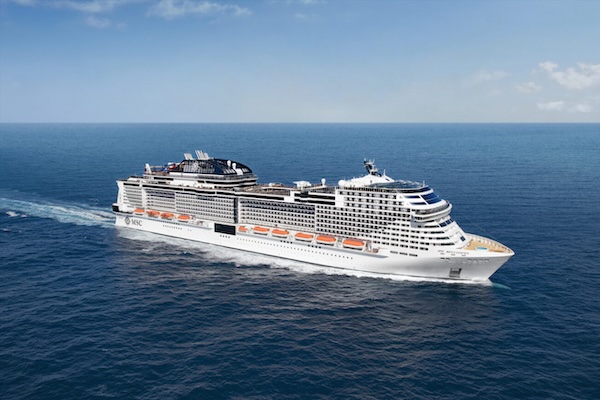
The MSC Bellissima has served as the testbed for this pioneering technology, conducting a comprehensive 12-month trial around 17 Mediterranean ports. The insights garnered from this evaluation will inform the deployment of OptiCruise across MSC’s growing fleet, expected to reach 24 ships by 2026. Michele Francioni, Chief Energy Transition Officer, emphasised the importance of such technological advancements in optimising itinerary planning to curtail emissions fleet-wide.
OptiCruise is projected to yield average fuel savings and emissions reductions between 10% and 15%, a notable milestone on the journey towards achieving MSC’s ambitious environmental goals. This blend of operational efficiency and sustainability illustrates MSC Cruises’ forward-thinking approach to ecological responsibility in the cruise industry.
MSC Cruises’ adoption of OptiCruise underscores its commitment to sustainability and innovation, setting a new standard in eco-friendly maritime travel.
