
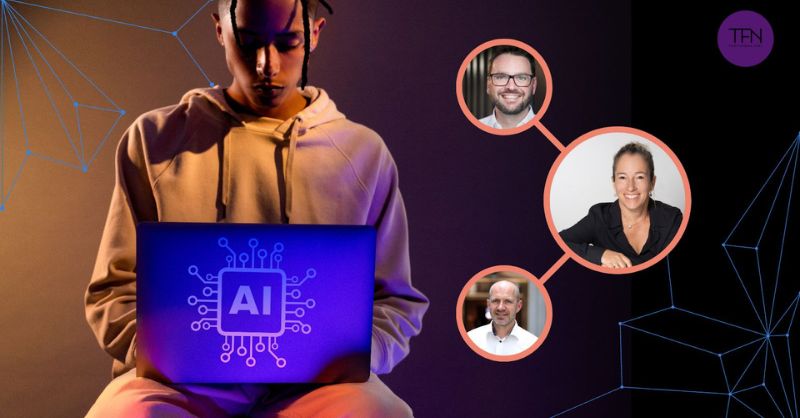

While Generative AI continues to revolutionise technology, misconceptions abound. This article explores these myths and presents expert insights.
Generative AI (GenAI) is reshaping industries globally. However, myths about its capabilities lead to misunderstandings that need addressing.
The Misconception of GenAI as a Human Replacement
Concerns about GenAI replacing jobs are growing as AI technologies advance. Jobs involving routine tasks, such as data entry, basic analysis, and administrative roles, are particularly vulnerable to automation. Even creative fields like content creation, music, and art are feeling the impact, as GenAI models can now generate written content, music, and artwork.
The economic implications of this shift are significant, raising fears of widespread job displacement and an increased demand for new skill sets in AI development and oversight. Traditional roles may diminish, altering job market dynamics and potentially increasing unemployment in certain sectors.
In a podcast earlier this year, Sam Altman expressed concern about the rapid pace at which society will need to adapt to AI, suggesting that the resulting changes in the labour market could be daunting. Addressing these concerns, Steve Salvin, founder and CEO of Aiimi, states, “AI won’t replace human jobs, but it will disrupt the world of work.”
Accuracy Challenges in GenAI
Although GenAI tools are advanced, they still face significant challenges in producing perfect and accurate results. One primary concern is the inherent unpredictability and variability of these models.
GenAI systems rely on vast amounts of data and complex algorithms to generate outputs. This complexity can lead to errors, biases, and inaccuracies, especially when the models encounter ambiguous or incomplete data.
Aiimi’s Salvin adds, “The most effective AI is trained on high-quality data sets, thereby minimising the chances of error. But even then, we must keep humans in the loop for quality control and stress-test models.”
Data Privacy Concerns with GenAI
Concerns about data privacy in GenAI primarily stem from the extensive amounts of data these models require for training.
During the training process, GenAI systems can learn and retain details from the training data, potentially exposing private information in their outputs.
Salvin insists, “Everyone engaging with Generative AI should be thinking about data privacy. This is particularly true when GenAI tools are being used in the workplace.”
Ensuring privacy and security in GenAI deployments involves careful data management practices, transparency, and compliance with legal standards to protect individual rights.
The Societal Impact of GenAI Myths
The persistence of GenAI myths significantly shapes public perception and policy.
Misinformation can hinder the adoption of beneficial GenAI technologies and lead to unnecessary fears and resistance.
Steve Salvin stresses the need for accurate information, “People must understand both the capabilities and limitations of GenAI to use it effectively.”
Balancing Innovation and Ethics in GenAI
Balancing innovation with ethical standards is crucial in the development of GenAI.
Ethical considerations include preventing biases, ensuring fairness, and safeguarding privacy.
Tal Barmeir highlights, “GenAI systems often process vast amounts of personal and sensitive information, making them subject to strict regulations.”
Organisations must implement robust ethical frameworks to maximise the benefits of GenAI while minimising potential harms.
Advancing towards Responsible GenAI Usage
Advancing towards responsible GenAI usage involves educating stakeholders about its potential and limitations.
As the landscape evolves, continuous learning and adaptation are necessary for individuals and organisations.
Tal Barmeir underscores the importance of continuous oversight, “GenAI products simply can’t produce perfect results without supervision. They still require human oversight to ensure accuracy, handle exceptions, and provide ethical guidance.”
Myths surrounding GenAI can obscure its true potential. By addressing these misconceptions, we can better harness its benefits.
Clear understanding and strategic integration of GenAI can lead to more effective and ethical deployment across sectors.
